

Table of Contents
- Types of Construction Debris Junk Removal Services Accept
- Dumpster Rental vs Junk Removal for Construction Waste
- How to Estimate Construction Debris Volume for Your Project
- Construction Waste Disposal Cost: What to Expect
- Scheduling and Preparing Your Site for Professional Debris Removal
- Sustainability and Recycling in Construction Debris Removal
- Why Professional Hauling Beats DIY Disposal
- Conclusion
Last Updated: August 21, 2026
Types of Construction Debris Junk Removal Services Accept
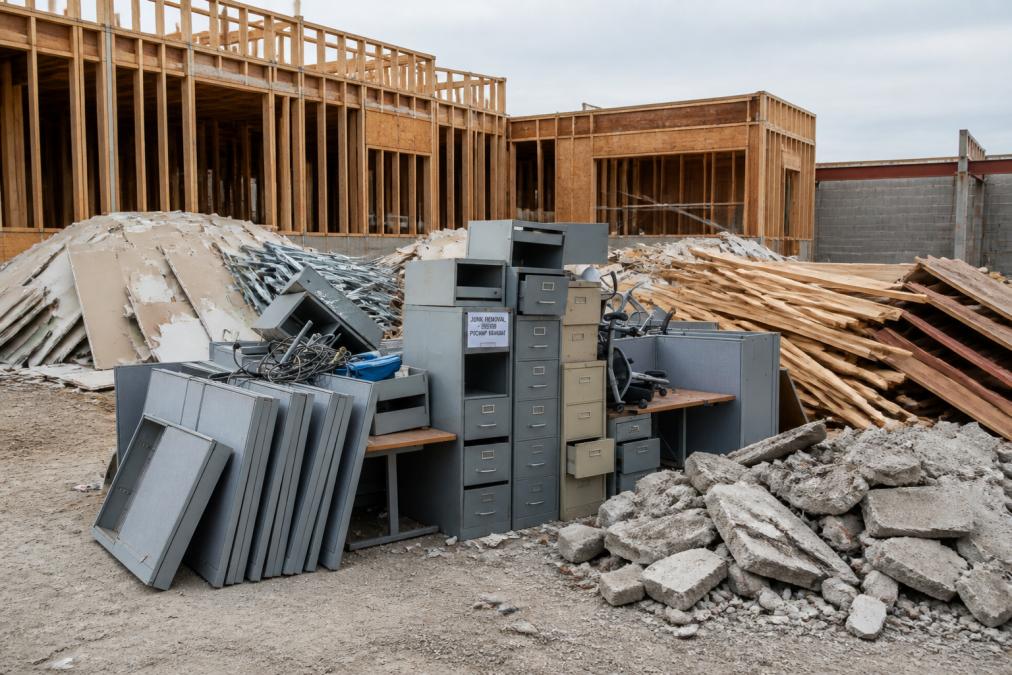
Construction and demolition debris comes in many forms. Professional junk removal services accept drywall, lumber, concrete, masonry, roofing materials, metal scraps, insulation, flooring remnants, appliances, fixtures, and mixed renovation waste. Legitimate services have the equipment and disposal logistics to manage these materials responsibly.
What separates professional debris removal from basic dumpster rental is sorting capability. Many services separate recyclable materials like scrap metal and wood from general waste, reducing landfill diversion costs and supporting sustainability goals.
Some materials require special handling. Hazardous materials like asbestos, lead paint, or certain insulation types need certified disposal (the EPA). A reputable service will identify these during initial assessment and either handle them with proper licensing or refer you to a specialist.
The volume of debris your project generates determines whether you need a single pickup or multiple trips. Professional services estimate volume during consultation, so you know exactly what to expect before work begins.
Dumpster Rental vs Junk Removal for Construction Waste
The choice between dumpster rental and professional junk removal depends on your project scope, timeline, and site constraints.
Dumpster rental works best for projects where you control loading and have consistent debris volume over several days or weeks. You fill it at your own pace, and the company picks it up when full or at rental's end.
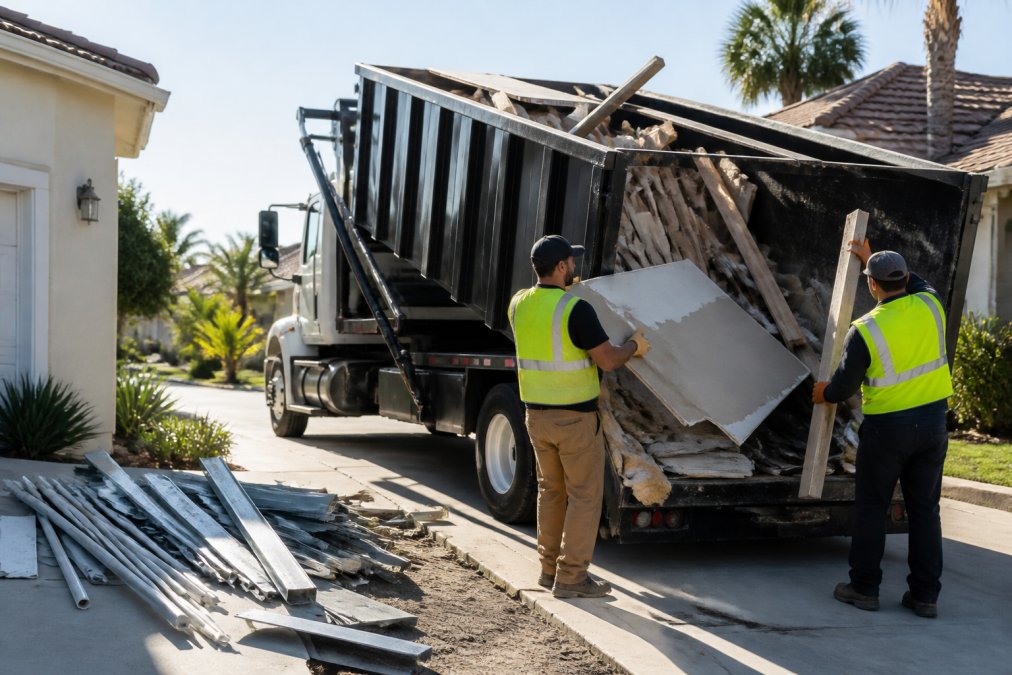
Professional junk removal is hands-off. A crew arrives, loads debris for you, and hauls it away in a single visit or scheduled pickups. This eliminates physical labor and is faster for smaller projects or urgent site cleanup.
Dumpster rentals charge a flat rate plus overage fees if you exceed weight limits. Professional removal services charge based on volume and weight upfront, avoiding surprises. Dumpster rentals also require dedicated space on your property, which may not fit tight residential lots or urban areas. Professional crews use smaller trucks that navigate tighter spaces.
Timeline differs significantly. Dumpster rental typically involves multi-day rental periods, while professional junk removal can often be scheduled for same-day or next-day service.
| Aspect | Dumpster Rental | Professional Junk Removal |
|---|---|---|
| Setup Time | 1-2 hours | Same-day or next-day |
| Loading | You manage | Crew handles |
| Pricing Model | Flat rate + overages | Volume-based upfront |
| Space Required | Dedicated area needed | Flexible, multiple locations |
| Best For | Multi-day projects | Quick, complete cleanup |
| Overage Risk | High for heavy debris | Included in estimate |
How to Estimate Construction Debris Volume for Your Project
Accurate volume estimation prevents costly surprises and helps you choose the right disposal method. The standard measurement is cubic yardage, one cubic yard equals a 3-by-3-by-3-foot cube and typically weighs between 400 and 1,500 pounds depending on debris type (the EPA).
For a renovation removing flooring, fixtures, and wall sections from a 500-square-foot room, expect 3-5 cubic yards. A full kitchen remodel might generate 4-8 cubic yards. Complete demolition of a small building could exceed 50 cubic yards.
A practical approach is to photograph the debris pile from multiple angles and share images with the junk removal service. Professional estimators can usually provide accurate volume assessment from photos. Many services offer free estimates and can calculate volume during on-site visits, eliminating guesswork.
For ongoing projects, track debris as it accumulates. Weekly photographs help you understand accumulation rates and plan pickup schedules. Heavy material hauling requires special attention, concrete rubble takes more space than the same weight in drywall. Mention significant concrete or masonry demolition explicitly when getting estimates.
Construction Waste Disposal Cost: What to Expect
Construction waste disposal costs vary based on volume, material type, distance to disposal facilities, and local market conditions. Volume is the primary cost factor, most services charge per cubic yard or per truckload. A single-truck removal of 5-10 cubic yards typically ranges from reasonable to moderate depending on local rates and material type.
Material composition affects pricing because disposal fees vary by type. Concrete and heavy masonry cost more than mixed wood and drywall. Hazardous materials like asbestos require certified disposal and cost significantly more. Specify your material breakdown when requesting estimates.
Distance to disposal facilities impacts pricing. Urban areas typically have lower disposal costs due to proximity; rural projects may face higher per-yard charges. Services that sort and recycle materials may charge slightly more upfront but generate revenue from scrap metal and recyclables, offsetting disposal fees.
Mike's Top Junk Removal provides free estimates with upfront pricing, so you know total cost before work begins. Same-day or next-day availability means debris removal won't delay your project.
For commercial projects, disposal costs may be tax-deductible as project expenses. Keep detailed records of junk removal services and receipts for accounting purposes.

Scheduling and Preparing Your Site for Professional Debris Removal
Contact the junk removal service at least a few days before your target removal date, though many services offer same-day or next-day availability. Provide details about debris volume, material type, and site access. Mention narrow driveways, low-hanging branches, or restricted parking so the crew brings appropriately sized equipment.
Clear the area around the debris pile before the crew arrives. Remove obstacles, vehicles, or personal items that could impede loading. Consolidate scattered debris into a central pile when possible to speed up loading.
Confirm access points with the crew. Will they enter through the front gate, side yard, or driveway? Clear communication prevents confusion on arrival day.
Weather can affect scheduling. Heavy rain makes debris muddy and harder to load. Coordinate with the removal service to reschedule if severe weather is expected.
Ensure the debris pile is stable and won't collapse during loading. Communicate any hazardous materials, sharp metal edges, broken glass, or unstable piles so the crew takes appropriate precautions.
Have site contact information available for the crew. If you won't be present, leave clear instructions and ensure someone responsible is available to answer questions.
Sustainability and Recycling in Construction Debris Removal
Professional junk removal for construction debris services now routinely sort materials for recycling, reducing landfill impact and supporting circular economy principles.
Scrap metal recycling is the most straightforward and profitable material recovery. Steel, copper, aluminum, and other metals are separated during loading and sold to recycling facilities, generating revenue that offsets disposal costs.
Wood and lumber recovery makes environmental and economic sense. Usable framing lumber and flooring are salvaged for reuse or chipped for mulch. Damaged or treated wood goes to specialized disposal facilities.
Concrete and masonry recycling has grown significantly. Crushed concrete is used as aggregate for new construction, road base, and landscaping, extending the material cycle and reducing quarrying impact.
Drywall recycling facilities process drywall to recover gypsum for new wallboard production, creating closed-loop recycling that reduces both waste and virgin material demand.
Hazardous material identification and proper disposal protects environmental compliance. Materials containing asbestos, lead, or other regulated substances require certified handling at licensed facilities, preventing illegal dumping and regulatory violations.
Why Professional Hauling Beats DIY Disposal
DIY disposal creates hidden costs, safety risks, and often violates local regulations. Physical labor is the first reality, a typical cubic yard of mixed construction debris weighs 400-1,500 pounds. Moving this manually increases injury risk and consumes time better spent on actual construction work.
Disposal logistics become complicated quickly. Most residential trash services don't accept construction waste. You'll need to identify a transfer station or landfill, learn their requirements, and make multiple trips. Each trip costs fuel and time.
Permit requirements vary by location and project type. Some jurisdictions require permits for debris removal. Unpermitted disposal can result in fines and legal liability.
Hazardous material handling is where DIY disposal becomes genuinely risky. Improper handling of asbestos-containing materials or lead paint contaminates soil and creates health hazards (the CDC). Licensed disposal facilities and trained professionals are required.
Recycling and material recovery require sorting expertise and facility relationships. Professional services have established relationships with recycling centers and scrap yards. DIY efforts often result in all debris going to landfills because sorting logistics are too complex.
Insurance and liability add another layer. If someone is injured during DIY loading or transport, you're personally liable. Professional services carry liability insurance and workers' compensation, protecting you from legal exposure.
Mike's Top Junk Removal handles these logistics entirely. The crew manages loading, transport, and proper disposal through established facilities. You get same-day or next-day service with transparent upfront pricing and peace of mind that debris is handled responsibly.
Conclusion
Managing construction debris removal efficiently protects your project timeline, budget, and environmental compliance. Professional junk removal for construction debris services handle the logistics that make DIY disposal impractical, volume estimation, material sorting, hazardous waste identification, and responsible disposal through proper facilities.
Mike's Top Junk Removal simplifies the entire process with free estimates, upfront pricing, and same-day or next-day availability. Our family-owned team handles everything from volume assessment to responsible disposal, ensuring your construction site cleanup is complete and compliant. Get your free estimate today and reclaim your space without the hassle.
For contractors managing multiple projects, our commercial cleanouts and B2B services provide the reliability and scalability you need. We work around your schedule and handle debris volumes that other services struggle with. Contact us for a consultation on your next project's waste management needs.
Frequently Asked Questions
How much does it cost to remove construction debris?
Construction debris removal costs depend on volume, material type, and hauling distance. Factors like hazardous material handling, recycling diversion, and site access affect final pricing. Get a free estimate to see your exact cost, Mike's Top Junk Removal provides upfront pricing with no hidden fees.
What's the best way to estimate construction debris volume for my renovation?
Measure your project area in square feet and multiply by the depth of debris in feet, then divide by 27 to convert to cubic yards. A typical bathroom renovation generates 3-5 cubic yards; kitchen remodels produce 5-8 cubic yards. For mixed debris, add 20% to your estimate to account for irregular shapes. If unsure, professional removal services can assess on-site and provide accurate volume calculations.
Is dumpster rental or junk removal better for construction waste?
Dumpster rental suits long-term projects where you control loading; junk removal works better for quick cleanups and heavy items. Dumpsters require permits and fixed rental periods; junk removal offers flexibility and handles hauling labor. For renovation debris, junk removal eliminates the need to sort and load materials yourself. Compare costs and timelines for your specific project to choose the right option.
How do I know if my construction debris will be disposed of responsibly?
Ask your removal service about their disposal practices, recycling partnerships, and landfill diversion rates. Responsible haulers separate recyclables like scrap metal and wood, divert debris from landfills, and follow environmental compliance regulations. Request documentation of where materials go. Mike's Top Junk Removal prioritizes sustainable waste management and can explain how your debris is handled from pickup to final disposition.
Can you handle hazardous materials found during construction debris removal?
Many construction sites contain hazardous materials like asbestos, lead paint, or treated wood that require special handling. Professional junk removal services trained in hazard identification can safely assess and remove these materials in compliance with regulations. Always disclose potential hazardous items before pickup. Improper disposal of hazardous waste carries fines and liability, professional handling protects you and the environment.
This article was written using GrandRanker