

Table of Contents
- Assess and Sort Your Renovation Debris
- Same Day Junk Removal: When Speed Matters
- Construction Debris Removal: Your Disposal Options
- Garage Cleanout Service: Professional Debris Removal
- Safety Precautions for Heavy Lifting and Debris Handling
- Step-by-Step Garage Cleanout Process
- Common Mistakes to Avoid During Debris Removal
- Conclusion
Last Updated: August 27, 2026
Assess and Sort Your Renovation Debris
Before calling for removal, spend 30 minutes sorting what you're dealing with. This step determines your disposal options, cost, and timeline.
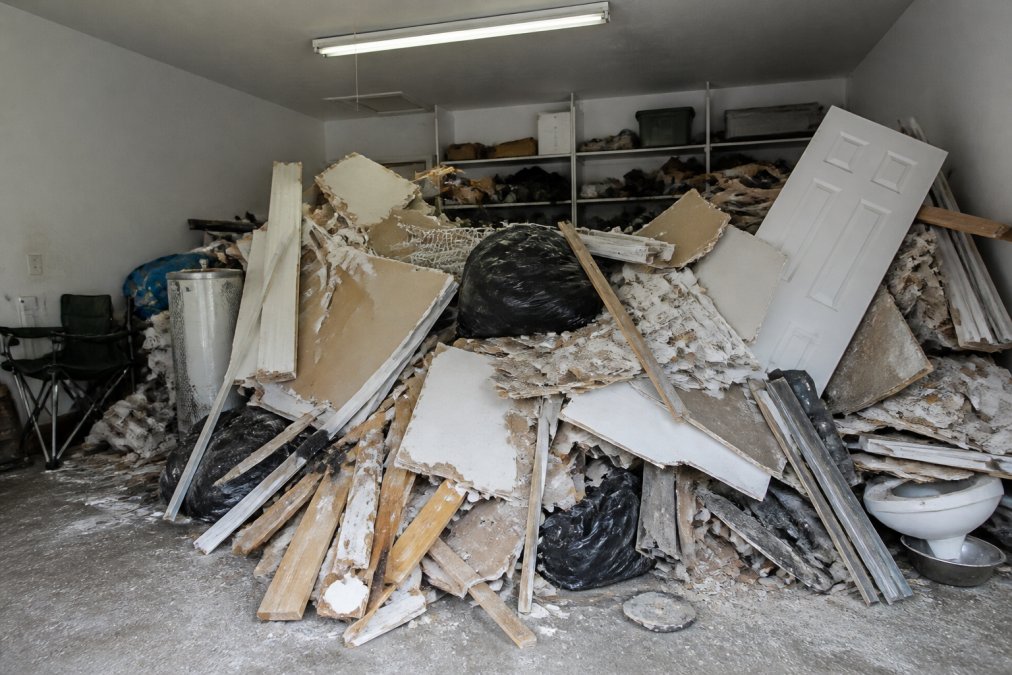
Renovation debris removal starts with understanding what's in your space. Drywall, lumber, concrete, metal, insulation, roofing materials, and flooring each require different handling. Some items can go to recycling centers; others need specialized disposal. Hazardous materials like asbestos or lead paint demand professional removal.
Separate into Four Categories
Sort everything into four piles: Keep, Trash, Recycle, and Hazardous.
Keep includes salvageable items, doors, fixtures, cabinets, or materials for the next project phase. Set these aside to prevent mixing back into debris.
Trash is broken, damaged, or contaminated material that can't be recycled: water-damaged drywall, insulation, non-recyclable mixed materials. This goes to a landfill or general waste facility.
Recycle covers clean wood, metal, concrete, and cardboard. These materials have value at recycling centers and reduce your overall disposal volume significantly.
Hazardous includes asbestos, lead paint, old batteries, chemical containers, or foam insulation containing CFCs. These require certified disposal and cannot go into standard dumpsters.
This approach saves time later. Proper sorting reduces overall debris volume, and materials in the Recycle pile often require no disposal fee at all.
Identify Hazardous Materials
Before touching anything, identify what's hazardous. Homes built before 1980 frequently contain asbestos in insulation, roofing, and drywall joint compound (the EPA). Lead paint was standard until 1978 (the EPA). Both require professional remediation.
Check for loose insulation that looks fluffy and white or yellow, old pipe wrapping, ceiling tiles, or any material labeled "asbestos." If you suspect hazardous materials, don't disturb them. Disturbing asbestos releases fibers into the air, creating serious health risks (the CDC). The same applies to lead paint; sanding or scraping it creates toxic dust.
Hazardous waste disposal regulations vary by jurisdiction, but most areas require certified contractors to handle removal. Improper disposal violates environmental law and creates liability.
Same Day Junk Removal: When Speed Matters
When you need debris cleared quickly, for staging a property, meeting a construction timeline, or freeing space immediately, same-day junk removal becomes essential. However, same-day removal requires advance coordination and proper preparation.
Prerequisites for Same-Day Removal
Same-day removal works only when specific conditions are met. Debris must be sorted or consolidated in one area. If materials are scattered throughout the garage, attic, and driveway, the crew spends hours locating and assessing rather than loading. You need to know your approximate volume, whether you're dealing with a single room's worth of drywall and lumber or an entire renovation's output. Your property must be accessible; the removal truck needs a clear path to the debris pile and adequate parking space.
Before calling for same-day service, do a quick walkthrough. Identify any hazardous materials and communicate these upfront. Hazardous items often require separate scheduling or certified handling, which delays same-day removal. Clear a path from the debris pile to the street or driveway. Remove vehicles, personal items, and anything you're keeping.
The Same-Day Removal Timeline
When you call in the morning for same-day service, expect the crew to arrive within a 2-4 hour window. The crew will assess the debris, confirm volume and material types, and begin loading immediately. For a typical garage renovation, loading takes 45 minutes to 2 hours depending on material density and accessibility.
Stay available to answer questions about materials you're keeping, point out hazardous items, or clarify what goes where. The crew will work methodically, protecting your floors and walls with blankets or cardboard during loading. Once complete, they'll do a final sweep and confirm the space is clear.
When Same-Day Removal Makes Sense
Same-day removal is valuable when your timeline is compressed. If you're staging a home for sale and need the garage cleared before showings, same-day service eliminates the multi-day dumpster rental window. If you're a contractor managing back-to-back jobs and need the space cleared to move equipment in, same-day removal keeps your schedule on track. If you're a property manager handling a foreclosure cleanout or estate cleanout, rapid debris removal frees up the space for the next phase of work.
The trade-off is reduced scheduling flexibility. You're working within the service provider's availability window rather than choosing your preferred date and time.
Preparation Checklist for Same-Day Removal
- Clear access routes: Remove vehicles, personal items, and obstacles between debris and the exit.
- Consolidate materials: Group debris in one area if possible; scattered piles slow the process.
- Identify hazardous items: Point out anything you suspect is asbestos, lead paint, old batteries, or chemical containers.
- Separate salvageable materials: Mark items you want kept aside clearly.
- Confirm volume estimate: Have a realistic sense of how much debris you have.
- Communicate special instructions: Let the crew know about floor or wall protection needs, restricted areas, or timing constraints.
When you've completed these steps, same-day removal becomes straightforward: the crew arrives, loads everything, and your space is cleared within hours.
Construction Debris Removal: Your Disposal Options
Construction debris removal differs fundamentally from household junk removal. The materials are heavier, the volume is larger, and disposal regulations are stricter. You have three primary options: renting a dumpster, hiring full-service hauling, or using a combination approach.
Renting a Dumpster vs. Full-Service Hauling
Dumpster rental puts the responsibility on you. You rent a container (typically 10, 20, or 30 cubic yards), load it yourself over several days or weeks, and the rental company picks it up when full. This works for ongoing projects where debris accumulates gradually.
The advantage: you control the timeline and can spread loading over time. The disadvantage: you're doing the physical work of loading heavy materials. Drywall, concrete, and lumber are heavy. Loading a dumpster yourself takes hours and creates injury risk, especially for older homeowners or anyone with mobility limitations.
Full-service hauling means a crew arrives, loads everything themselves, and hauls it away. You point to the debris; they handle the heavy lifting. This eliminates the physical labor and injury risk.
The advantage: speed and convenience. Your space is cleared in hours, not days. No heavy lifting on your part. The crew handles material sorting and proper disposal. A professional garage cleanout service arrives, assesses the debris, loads everything, and handles disposal responsibly. The crew manages hazardous materials appropriately, recycles what can be recycled, and disposes of the rest through proper channels.

Recycling and Salvage Centers
Before hauling everything away, check what your local recycling center accepts. Many facilities take clean wood, metal, concrete, and cardboard at no charge or for a minimal fee. Some even accept mixed construction debris.
Salvage centers and deconstruction specialists buy materials like doors, windows, fixtures, and quality lumber. If your renovation produced usable materials, these centers may accept them.
If you're already hiring professional removal, the crew can drop materials at appropriate facilities as part of the service. This is more efficient than making multiple trips yourself.
Garage Cleanout Service: Professional Debris Removal
When your garage is buried under renovation debris, a professional garage cleanout service handles the entire process: assessment, sorting, loading, hauling, and responsible disposal.
Professional removal makes sense when debris volume exceeds what you can handle yourself, materials are too heavy for safe DIY loading, you lack adequate space to rent a dumpster, your timeline is compressed, or you need hazardous materials handled properly.
A garage cleanout service evaluates what you have, determines disposal methods for each material type, provides a transparent estimate, and executes the removal. The crew handles all heavy lifting, manages material sorting, and ensures proper disposal. This eliminates guesswork and multiple trips.
Safety Precautions for Heavy Lifting and Debris Handling
If you're handling renovation debris yourself, safety is non-negotiable. Construction debris causes thousands of injuries annually.
Wear proper safety gear: heavy-duty work gloves to prevent cuts and splinters, steel-toed boots to protect your feet from dropped materials, and a dust mask when handling materials that create dust. For larger projects, consider safety glasses and a hard hat.
Use proper lifting technique. Bend at the knees, not the waist. Keep heavy items close to your body. Don't twist while lifting. For items over 50 pounds, ask for help or use equipment like a dolly or hand truck.
Watch for hidden hazards. Nails stick out of lumber. Broken glass hides in drywall. Metal edges are sharp. Concrete is heavy and unstable. Move deliberately and stay aware of your surroundings.
If debris includes materials you suspect are hazardous, don't touch it. Call a professional. Asbestos, lead, and other hazardous materials require certified handling.
Step-by-Step Garage Cleanout Process
A professional garage cleanout follows a clear sequence. Understanding the process helps you prepare and know what to expect.
Step 1: Prepare Your Space and Gather Equipment
Before the crew arrives, clear a path to the debris. Remove vehicles and personal items you're keeping. If you have materials already sorted, indicate which piles are trash, recyclable, and hazardous.
Gather any equipment you'll need: brooms, dustpans, and bags for small items. Communicate any special instructions: materials you want salvaged, areas that are off-limits, or concerns about floor or wall damage. Professional crews protect your property, using blankets or cardboard to shield walls and floors during loading.
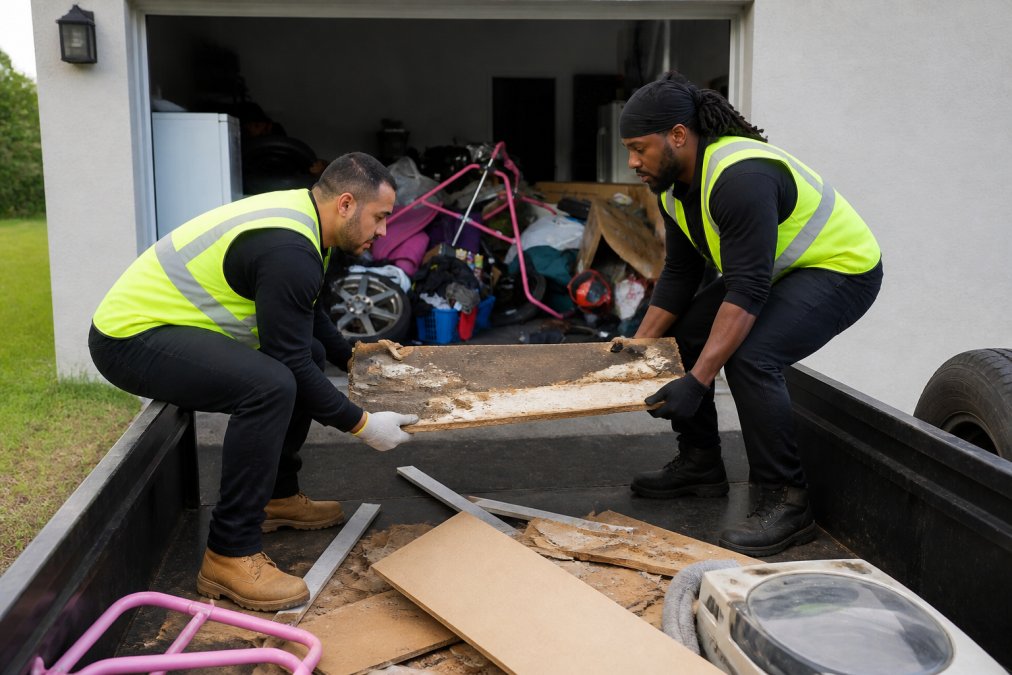
Step 2: Sort Materials Into Disposal Categories
The crew assesses debris and sorts it into disposal streams: general waste, recyclables, salvageable materials, and hazardous items. This sorting determines where each load goes and ensures compliance with disposal regulations.
If you've already done initial sorting, this step moves faster. Either way, materials are categorized correctly for their final destination.
Step 3: Remove or Arrange Pickup
Materials are loaded into the truck or arranged for scheduled pickup by recycling or disposal facilities. The crew handles all heavy lifting. This step typically takes 1-3 hours depending on volume.
Step 4: Final Cleanup and Verification
Once debris is removed, the crew sweeps the space and does a final walkthrough. You verify that everything is gone and your space is clear. Your garage is ready for the next phase: parking, storage, or continued renovation work.
Common Mistakes to Avoid During Debris Removal
The biggest mistake homeowners make is underestimating volume. A renovation that feels manageable while it's happening creates surprising debris. Drywall, lumber, and concrete take up enormous space. Plan for more volume than you expect.
Another common error is mixing disposal methods inefficiently. If you're renting a dumpster and also trying to recycle materials, you end up making multiple trips or paying for disposal of recyclables that could be free. Coordinate your approach upfront.
Many people delay hiring professional help, hoping to handle it themselves. This stretches timelines, creates safety risks, and often costs more when you factor in your time and potential injury. If your debris pile is significant, professional removal is efficient and safe.
Failing to identify hazardous materials before disposal creates regulatory and health risks. If you're uncertain about any material, ask. It's always better to get professional assessment than to guess.
Overlooking local disposal regulations is another trap. Some materials require specific handling or disposal methods in your area. Professional services know these regulations. DIY approaches often miss them, creating liability.
Frequently Asked Questions
Q: What's the fastest way to remove construction debris from a garage?
A: Professional construction debris removal services offer the fastest approach, handling heavy materials in a single trip. If you need same day junk removal, contact a local service to confirm availability. For DIY speed, rent a dumpster and load continuously, or break the project into smaller loads if you're using your own truck. Sorting materials beforehand, separating metal, wood, and mixed debris, accelerates the loading process significantly.
Q: Can professional junk removal services handle heavy renovation waste?
A: Yes. Professional garage cleanout services are equipped to handle heavy renovation debris including drywall, lumber, metal fixtures, and appliances. They have the proper equipment, labor, and liability insurance to manage materials safely. Many services, like residential junk removal options, specialize in construction-site cleanup and can remove large volumes in a single appointment. Always confirm they accept the specific materials you have before booking.
Q: What types of renovation debris are considered hazardous?
A: Common hazardous materials include asbestos (in older insulation and flooring), lead-based paint, refrigerants from old HVAC units, and certain adhesives or sealants. Before disposal, test suspect materials or consult your local waste management authority. Many recycling centers and waste disposal facilities have specific protocols for hazardous waste. Never mix hazardous materials with regular construction debris, as it complicates disposal and may violate environmental regulations.
Q: Should I rent a dumpster or hire a professional service for renovation debris?
A: Renting a dumpster works well if you have time to load it yourself and don't mind managing multiple trips or waiting for pickup. Professional debris removal saves time and physical effort, the crew handles all heavy lifting and hauling in one appointment. Consider dumpster rental if your debris volume is moderate and you have flexible timing. Choose professional removal if you need same day junk removal, have heavy materials, or want the job completed quickly without personal labor.
Renovation debris doesn't have to become a long-term garage problem. Whether you're sorting materials yourself or calling in professional help, the key is acting quickly and disposing responsibly. Mike's Top Junk Removal handles construction debris removal with the expertise and efficiency your project needs. We sort materials properly, recycle what can be recycled, dispose of hazardous materials safely, and clear your space completely. Get your free estimate today and reclaim your garage.
This article was written using GrandRanker