

Table of Contents
- Assess Your Furniture and Plan the Removal
- Best Tools for Moving Heavy Furniture
- Step-by-Step Technique for Lifting and Moving
- Preventing Injury and Floor Damage
- How to Dispose of Old Furniture Responsibly
- Furniture Removal Services Cost and When to Hire Help
- Common Mistakes to Avoid
- Conclusion
Last Updated: August 22, 2026
Assess Your Furniture and Plan the Removal
Before moving anything, evaluate what you're dealing with and map your route. A few minutes of planning prevents hours of regret and injury.
Start by measuring the furniture's width, depth, and height, depth especially catches people off guard when rotating pieces through doorways. Next, measure every doorway, hallway, and stairwell the furniture will pass through, including diagonal measurements. Write these numbers down; don't estimate.
Measure doorways and hallways
A standard interior doorway is 32 inches wide (28 inches of actual opening) (ada.gov). Most hallways are 36 inches, but older homes can be tighter. Measure at the narrowest point of each passage.
For staircases, measure the width and height from floor to ceiling at the turning point. Sectional sofas and armoires get stuck because people don't account for ceiling height on landings. Measure the stairwell width and the diagonal from corner to corner, that's the actual space needed.
Document obstacles: light fixtures, radiators, protruding door frames, or banister railings. These determine whether you can move a piece vertically or must angle it horizontally.
Identify potential hazards
Walk the entire route and identify anything that could cause injury or damage. Look for uneven flooring, loose rugs, electrical cords, or clutter that could cause tripping. Check for sharp edges, low-hanging fixtures, or crown molding that might get damaged.
Identify the weight distribution of your furniture. A heavy sectional's weight concentrates in the middle, making it awkward to lift. Armoires are top-heavy and tip easily if tilted wrong. Know where the heaviest part is located so you know where to grip and support it.
Best Tools for Moving Heavy Furniture
The right equipment makes the difference between a manageable move and an injury.
Furniture sliders and dollies
Furniture sliders are thin plastic or felt pads that go under furniture legs and reduce friction dramatically. They work on hard floors, tile, wood, and laminate, but not carpet. For carpet, use furniture dollies instead.
A furniture dolly is a small platform on wheels that handles up to 600 pounds and works on both hard floors and carpet (osha.gov). Standard dollies cost under $30. The key is getting the dolly under the furniture's center of gravity; off-center loading causes tipping. For very heavy items, a four-wheel dolly distributes weight better than a two-wheel hand truck.
Lifting straps and moving equipment
Moving straps, also called furniture lifting straps or moving harnesses, distribute weight across your shoulders and back instead of concentrating it in your arms and hands. A good pair costs $20-40 and lasts for years. They let you lift with your legs and core instead of just your arms, reducing strain on your lower back significantly.
Furniture pads or blankets protect both the furniture and your walls. Wrap furniture in blankets or use pads before moving, securing them with plastic wrap or tape. A pack of furniture pads costs under $15.
Step-by-Step Technique for Lifting and Moving
How you lift matters more than how much you lift. Bad technique causes injury even with light loads.
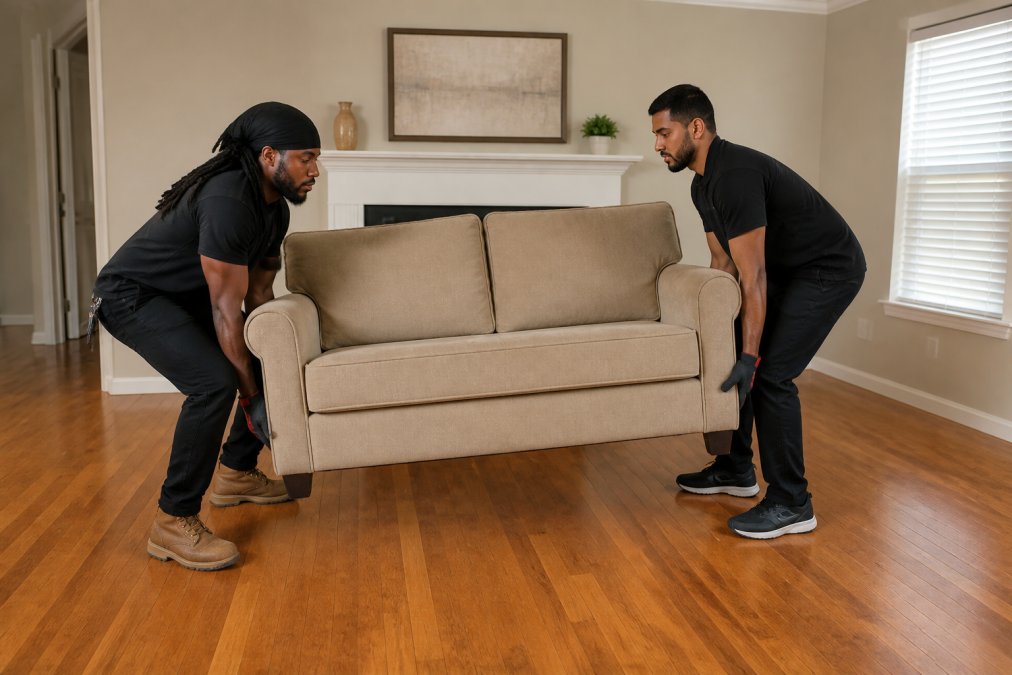
Proper lifting posture and body mechanics
Bend at your knees, not your back. Your legs have the strongest muscles in your body; your back does not. Bending at your back to lift something heavy uses weak muscles to support massive load, causing herniated discs (the NIH).
Stand with feet shoulder-width apart. Position yourself so the furniture is close to your body, not at arm's length. Get a grip on the furniture at its strongest points, corners or frames, not upholstery. Tighten your core before lifting, take a breath, brace your abdominal muscles, and hold that tension. Lift slowly and deliberately; jerking movements cause muscle strains and back injuries.
If the furniture is awkward or extremely heavy, slide it instead of lifting. Use furniture sliders on hard floors or push it on a dolly. Sliding distributes weight across a larger surface and is safer than lifting.
Two-person moving strategy
Most furniture moves require two people of roughly equal height and strength. Before lifting, communicate: decide who lifts which end and where you're going. Count down: "One, two, three, lift." Both people lift at the same time using proper form.
For a couch, one person supports the back and one the front. For a dresser or armoire, one person lifts from each side. For very long items, a third person in the middle provides stability. When moving through doorways, angle the furniture and guide it carefully. If it gets stuck, stop and reposition rather than forcing it.
Navigating stairs and tight spaces
Stairs are where most furniture moving injuries happen. The person going upstairs should be at the bottom, supporting the lower end. The person going downstairs should be at the top with a better view of the steps.
Tilt the furniture slightly toward the person going up the stairs. Move one step at a time without rushing. If the furniture is too wide, remove legs, cushions, or other removable parts first. Many couches have removable legs and cushions.
For tight hallways or corners, pivot the furniture carefully by tilting it up on one edge and rotating it. Protect corners and doorframes with blankets or cardboard.
Preventing Injury and Floor Damage
Moving heavy furniture injures thousands of people yearly. Most injuries are preventable.
Common lifting injuries and how to avoid them
Back injuries are the most common result of improper furniture moving. Herniated discs, muscle strains, and ligament tears happen when people bend at the back instead of the knees or twist while holding weight.
Shoulder injuries occur when one person bears most of the weight or when arms extend too far from the body. Keep the load close to your body and distribute weight evenly between two people.
Crushed fingers and hands happen when furniture is set down without warning. Always communicate before putting something down. Say "setting down on three" so everyone's hands are clear. Prevent injuries by using proper form, taking breaks, and asking for help when something feels too heavy.
Protecting walls, doors, and flooring
Use furniture pads under every piece. These felt or plastic pads slide under furniture legs and protect floors from scratches. On hardwood floors, use felt pads; on tile or laminate, plastic sliders work better.
Protect doorframes and corners with cardboard, blankets, or foam padding secured with tape. When moving through doorways, angle the furniture and guide it slowly. For stairs, protect edges and corners where furniture might contact walls or railings.
How to Dispose of Old Furniture Responsibly
Once you've safely removed furniture, you have several responsible options for disposal.
Donating furniture to local charities
Furniture donations are tax-deductible if you itemize deductions. Organizations like the Salvation Army, Goodwill, and local charities accept furniture donations and often offer free or low-cost pickup for large items.
Before donating, assess condition, charities accept used furniture in good condition with no stains, tears, or broken parts. Clean the furniture thoroughly. Contact the charity to arrange pickup and get a receipt for tax purposes. A used couch might be valued at $100-300 for tax deduction purposes.
Selling furniture online and on social media
Platforms like Facebook Marketplace, Craigslist, and OfferUp are free to use. Take clear photos from multiple angles and show any wear or damage honestly. Include dimensions in your listing and mention if legs are removable or if there are defects.
Meet in a public place during daylight for pickup. Use payment methods that protect you, such as cash or digital payment through the app.
Furniture recycling programs and upcycling
Some communities have furniture recycling programs that refurbish items or break them down for materials recycling. Contact your local waste management department to find options. Upcycling is another option if you're creative, old furniture can be repainted, reupholstered, or repurposed into new items.
Furniture Removal Services Cost and When to Hire Help
At some point, moving furniture yourself becomes impractical. Heavy sectional sofas, multiple pieces, or physical limitations make professional help worth the cost.
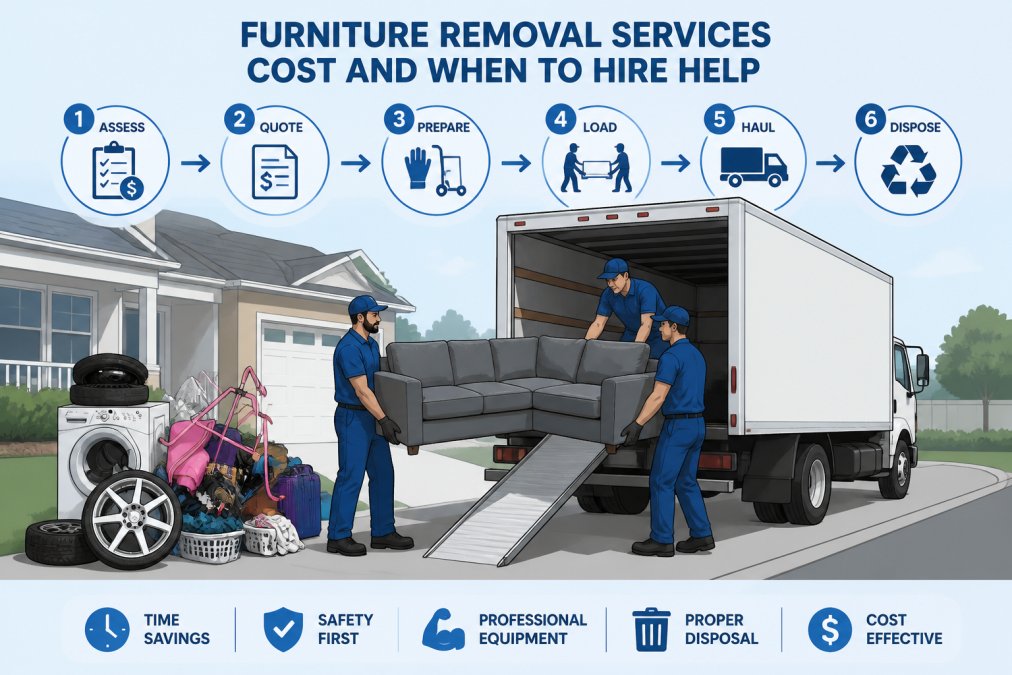
Professional junk removal versus DIY
Professional furniture removal services handle the entire process: assessment, quote, scheduling, pickup, and disposal. DIY moving costs only rental equipment totaling $30-100. Professional removal costs vary based on furniture amount, location, and service. Consider hiring professional help if you're moving multiple pieces, have mobility issues, the furniture is extremely heavy or awkward, or you're on a tight timeline. Mike's Top Junk Removal offers free estimates and upfront pricing with same-day and next-day availability.

Roll-off dumpster rental for bulk items
If removing multiple pieces as part of a larger cleanout, a roll-off dumpster rental might be more cost-effective. Dumpsters come in 10, 15, and 20-cubic-yard sizes. A 15-yard dumpster holds roughly 3-4 couches or 10-15 smaller pieces and costs $300-600 for a week.
For a single piece, dumpster rental is usually more expensive than hiring a removal service. For bulk items, it's often cheaper. Get quotes from both options and compare.
Common Mistakes to Avoid
The biggest mistake is underestimating weight. A couch typically weighs 150-300 pounds; an armoire can weigh 200-400 pounds. Underestimating leads to poor planning and rushed moves that cause injury.
Lifting with your back instead of your legs is the second biggest mistake. Bend at the knees every single time. Not measuring doorways and hallways before moving wastes time and causes damage. Attempting to move furniture alone is dangerous, most furniture designed for two people shouldn't be moved by one.
Skipping protective padding damages floors and walls. Forcing furniture into spaces where it doesn't fit causes damage. If something doesn't fit, stop and reposition it, remove legs or cushions, or try a different route. Rushing the move causes most injuries. Move slowly and deliberately, take breaks, and stay hydrated.
Removing heavy furniture safely requires planning, proper technique, and the right tools. The difference between a smooth move and an injury-causing disaster often comes down to a few minutes of preparation and using correct lifting form.
If the task feels overwhelming or you're dealing with multiple pieces, professional help is worth considering. Mike's Top Junk Removal provides free estimates and transparent, upfront pricing for furniture removal and junk hauling. With same-day and next-day availability, you can schedule removal quickly without the physical strain of moving heavy items yourself.
| Step | Key Focus | Common Mistake |
|---|---|---|
| Planning | Measure all doorways and passages | Skipping measurements |
| Assessment | Identify hazards and weight distribution | Underestimating weight |
| Equipment | Use straps, sliders, and pads | Moving without proper tools |
| Lifting | Bend knees, keep load close to body | Lifting with back instead of legs |
| Moving | Communicate with helper, move slowly | Rushing or forcing stuck furniture |
| Protection | Use blankets and pads on all surfaces | Skipping protective padding |
| Disposal | Choose donation, resale, or professional removal | Throwing everything away |
Frequently Asked Questions
What is the safest way to move heavy furniture by yourself?
If moving alone, use furniture sliders to reduce strain, and only attempt pieces you can control. Bend your knees, keep your back straight, and avoid twisting. For large items like sectional sofas or armoires, use a dolly or hand truck. Test the weight before committing, if it feels unmanageable, wait for a second person or hire professional movers. Never rush or force furniture through doorways.
How do I safely disassemble furniture before removal?
Remove detachable parts first: legs, drawers, shelves, and cushions. Keep hardware in labeled bags so you can reassemble later if needed. Use the correct tools, screwdrivers, wrenches, or Allen keys, to avoid stripping screws. Take photos of the assembly process for reference. Lay cushions and upholstery flat to prevent damage. For complex wardrobes or entertainment units, refer to the original manual or watch a video guide specific to your furniture model.
How can I prevent floor damage when moving heavy furniture?
Use furniture sliders under all legs and contact points. Lay cardboard or protective blankets along the path. For hardwood floors, avoid dragging, always lift or use a dolly. Protect doorframes and wall corners with padding or foam guards. Move slowly and deliberately, stopping to adjust the furniture's angle if needed. Check underneath occasionally to ensure sliders are in place and floors are protected throughout the move.
Is it better to hire professionals for heavy furniture removal?
Professional junk removal services are ideal if you have multiple large pieces, limited mobility, or tight spaces. They handle the heavy lifting, have proper equipment, and manage eco-friendly disposal or charitable donation. Costs vary based on volume and location, but many services like Mike's Top Junk Removal offer free estimates and same-day or next-day scheduling. For single items or lighter furniture, DIY with proper tools may work; for bulk cleanouts or high-value items, professionals save time and reduce injury risk.
This article was written using GrandRanker