

Table of Contents
- Why a Residential Cleanout Checklist Matters Before Moving
- Kitchen Cleaning and Appliance Maintenance
- Bathroom Sanitation and Deep Cleaning Tasks
- Living Spaces, Bedrooms, and Flooring Deep Clean
- Same-Day Junk Removal in Tampa for Bulky Items
- Getting a Junk Removal Cost Estimate and House Clean Out Services
- Final Walkthrough and Security Deposit Protection
- Frequently Asked Questions
Last Updated: September 20, 2026
Why a Residential Cleanout Checklist Matters Before Moving
Moving day arrives faster than expected. You've packed the boxes, scheduled the truck, but your old place still needs serious attention. A residential cleanout checklist isn't just about tidiness, it's about protecting your security deposit and leaving the property in the condition your lease requires.
Most landlords conduct a walk-through inspection after you leave. They check baseboards, appliances, light switches, and corners you might forget exist. Miss these details, and you lose money. Follow a structured checklist, and you walk away clean.
At Mike's Top Junk Removal, we've helped hundreds of people prepare homes for move-out inspections. The difference between a checklist that works and one that doesn't comes down to specificity. Generic advice like "clean thoroughly" leaves gaps. A detailed residential cleanout checklist for moving addresses every surface, every appliance, and every hiding spot that landlords actually inspect.

Here's what most people get wrong: they clean visible areas but skip the things they can't see. Dust on ceiling fan blades. Grease buildup inside the oven. Grime in window tracks. These overlooked spots cost security deposits.
Kitchen Cleaning and Appliance Maintenance
The kitchen determines whether you keep your deposit. Landlords spend extra time here because food residue and appliance damage are expensive to repair.
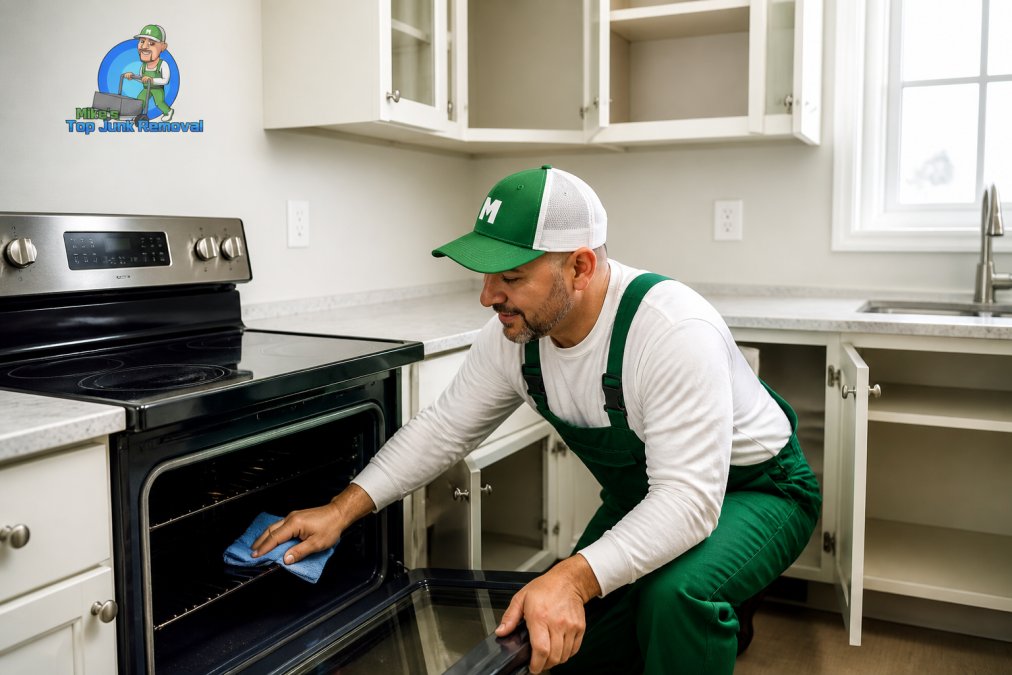
Start with the stovetop. Remove all burners and grates, then wipe down the entire surface with a degreaser. Get inside the oven, baked-on food is a major red flag. For stubborn spots, use a microfiber cloth with a commercial oven cleaner and let it sit for 15 minutes before scrubbing.
The refrigerator gets overlooked constantly. Empty it completely, remove shelves, and wash them separately. Wipe down all interior surfaces, including the seals and back wall. Check for mold or discoloration that signals a deeper problem.
Cabinets need attention too. Wipe down the inside of each cabinet, paying special attention to corners where grease accumulates. Don't forget cabinet doors, fingerprints and smudges are visible from across the room.
Your microwave should gleam. Heat a bowl of water with lemon for five minutes to loosen stuck-on food, then wipe it clean. The same applies to the dishwasher, run an empty cycle with a cleaning tablet, then wipe down the interior and seals.
Bathroom Sanitation and Deep Cleaning Tasks
Bathrooms are the second-highest inspection priority. Mold, hard water stains, and soap buildup signal poor maintenance.
Start with disinfecting. Use a bathroom disinfectant spray on all surfaces, toilet, sink, tub, and shower walls. Let it sit for the time recommended on the label. Grout between tiles needs special attention; use a grout brush or old toothbrush with a bleach-based cleaner.
The toilet bowl requires more than a quick scrub. Use a toilet brush with a strong cleaner, scrubbing under the rim where stains hide. If stains persist, let a commercial toilet bowl cleaner sit overnight, then scrub again in the morning.
Shower and tub areas often hide mold in corners and around caulk lines. Spray mold-killing cleaner and let it work for several minutes. For stubborn mold, a paste of baking soda and water works well. Replace any visibly damaged caulk if possible, new caulk is cheap compared to a landlord's repair bill.
Don't skip the exhaust fan. Dust accumulates inside, reducing efficiency. Turn off the power, then carefully vacuum or wipe the cover and interior.
Light switches, door handles, and mirrors are final touches.
Living Spaces, Bedrooms, and Flooring Deep Clean
Living rooms and bedrooms require systematic attention to floors, walls, and fixtures.
Same-Day Junk Removal in Tampa for Bulky Items
As you clean, you'll encounter items too large to haul yourself: old furniture, broken appliances, mattresses, and construction debris from wall repairs or renovations. Rather than leaving these behind or making multiple trips to disposal facilities, understanding your local removal and disposal options saves time and protects your deposit.
Local Disposal and Donation Routes
- Municipal solid waste facilities accept furniture, appliances, and construction debris, though some charge per item or by weight. Call ahead to confirm hours and what they accept; many facilities have restrictions on appliances containing refrigerants (refrigerators, air conditioners).
- Donation centers accept furniture and appliances in working condition. This is faster than selling items individually and provides documentation for tax purposes if you itemize deductions.
- Scrap metal recyclers take old appliances, metal furniture frames, and construction waste. These facilities often accept items for free or pay small amounts depending on metal content.
- Hazardous waste collection events (typically held quarterly or semi-annually) handle paint, solvents, batteries, and other materials you may have accumulated during your tenancy.
Professional Junk Removal for Move-Out Cleanouts
- Loads all bulky items in one trip (no multiple facility visits)
- Handles items landlords specifically flag: old appliances, broken furniture, renovation debris
- Routes items to appropriate facilities (recycling, donation, or disposal) rather than dumping
- Provides documentation of removal, which protects you if a landlord later claims items were left behind
The service covers:
- Furniture removal (sofas, chairs, tables, dressers)
- Appliance pickup (refrigerators, stoves, washers, dryers)
- Mattress and box spring removal
- Construction debris and renovation waste
- Yard waste and bulk items
Getting a Junk Removal Cost Estimate and House Clean Out Services
Before scheduling removal or professional cleaning, you need a clear plan tied directly to your lease agreement and what landlords actually inspect. The goal isn't just cleanliness, it's deposit recovery.
The Landlord-Approved Security Deposit Checklist
- Cleaning and trash removal (typically $200-$500 if professional cleaning is required)
- Carpet cleaning or replacement (stains, odors, or damage)
- Paint touch-ups or repainting (scuffs, holes, or discoloration)
- Appliance repair or replacement (damage beyond normal wear)
- Flooring damage (scratches, dents, or stains on hardwood or tile)
Your move-out checklist should directly address each category:
-
Trash and junk removal: All personal items, furniture, and debris must be gone. Leave nothing in closets, cabinets, basements, or yards. Landlords photograph empty spaces; any item left behind justifies a removal charge.
-
Deep cleaning: Kitchens and bathrooms are the primary inspection focus. Grease, mold, soap scum, and hard water stains are cited in 60%+ of deposit deductions. Document your cleaning with photos taken in good lighting.
-
Wall and paint condition: Fill all nail holes with spackling compound, sand smooth, and paint over if visible. Touch-up paint from the original landlord or a hardware store costs $5-$15 and prevents a $100+ repainting charge.
-
Flooring: Vacuum all carpet thoroughly, including edges and under furniture. Mop hard floors with appropriate cleaners. Stains or odors trigger professional carpet cleaning charges ($150-$400).
-
Appliance functionality: Test all appliances (oven, refrigerator, dishwasher, microwave, stove). Clean interiors and exteriors. Broken appliances are landlord repair costs, often $300+.
-
HVAC and air quality: Replace furnace filters, clean exhaust fans, and ensure no odors remain. Smoke, pet, or mold odors are cited as reasons to retain deposits.
Professional House Clean Out Services vs. DIY
Professional teams:
- Handle junk removal as part of the service, eliminating multiple trips
Getting a Removal and Cleaning Estimate
When you contact a removal or cleaning service, provide:
- Square footage of the property
- Types and quantities of items to be removed
- Photos of areas requiring deep cleaning
- Your move-out deadline
Final Walkthrough and Security Deposit Protection
Your final walkthrough happens after you've cleaned and removed junk. This is your chance to catch anything you missed before the landlord inspects.
Look at your move-out checklist one more time:
- Kitchen appliances clean and functional
- Bathroom free of mold and stains
- Floors vacuumed and mopped
- Walls clean with no marks or holes
- All junk and bulky items removed
- Light switches and door handles wiped clean
- Baseboards dusted
Frequently Asked Questions
How do I prepare for a whole house cleanout before moving?
Start by decluttering room-by-room and separating items you'll keep, donate, or discard. Create a timeline that gives you at least two weeks before your move date. Deep clean as you go, tackling one room at a time. For large furniture, appliances, or construction debris, arrange same-day junk removal in Tampa to handle bulky items efficiently. Use a residential cleanout checklist to ensure you don't miss baseboards, light switches, window tracks, or ceiling fans. Take photos of the empty property for your records before final walkthrough.
What should I prioritize in a residential cleanout checklist?
Prioritize high-traffic areas and spaces landlords inspect closely: kitchens, bathrooms, and flooring. Disinfect and sanitize all surfaces, especially light switches, door frames, and grout lines. Remove junk and bulky items first so you have clear space to deep clean. Address appliance maintenance by cleaning inside the refrigerator, oven, and dishwasher. Vacuum hardwood floors and baseboards thoroughly. These tasks directly affect your security deposit recovery and move-in ready status for the next occupant.
Can I get same-day junk removal for my move in the area?
Yes. Mike's Top Junk Removal offers same-day and next-day appointments for residential cleanouts. Whether you're clearing furniture, appliances, yard waste, or construction debris, full-service removal means the team handles all heavy lifting. Call for a free estimate and upfront pricing so you know exactly what to expect. This service pairs well with your deep cleaning efforts, allowing you to tackle sanitation while professionals remove bulky waste.
How much does a junk removal cost estimate typically include?
A junk removal cost estimate should cover the volume and type of items being removed, from furniture and appliances to construction debris and yard waste. Mike's Top Junk Removal provides free estimates with upfront pricing, no hidden fees. The estimate accounts for the labor, hauling, and responsible eco-friendly disposal. Request your estimate online or by phone to see transparent pricing for your specific house clean out services before committing.