

Table of Contents
- What Florida Landlord Tenant Law Says About Abandoned Property
- Your Eviction Cleanout Checklist: Steps Before You Remove Anything
- How Long Must a Landlord Store Tenant Belongings After an Eviction?
- Hazardous Materials and Special Handling Requirements for Eviction Cleanouts
- Why Property Cleanout Services Reduce Legal Risk for Tampa Landlords
- Insurance and Liability Protection During an Eviction Cleanout
- Common Mistakes Landlords Make During Eviction Cleanouts
- Frequently Asked Questions
Last Updated: September 22, 2026
What Florida Landlord Tenant Law Says About Abandoned Property
Florida landlord tenant law treats abandoned property as a legal problem before it becomes a physical one. Under Florida Statutes Chapter 83, a landlord cannot simply haul a tenant's belongings to the curb after an eviction, even when the lease has clearly ended. The statute separates two situations: property left after a lawful eviction, and property left when a tenant abandons the unit mid-lease. Each path has its own notice requirements, and skipping a step exposes the landlord to a wrongful disposal claim that can cost more than the cleanout itself.
This guide from Mike's Top Junk Removal walks through the legal requirements for eviction cleanouts in Tampa, from the writ of possession to the final haul-away. Below, we break down the notice rules, the storage timeline, and the documentation that protects you if a former tenant disputes what happened to their belongings.
The Writ of Possession and Sheriff Enforcement
The writ of possession is the court order that actually transfers possession back to the landlord, and it is the only document that authorizes a lockout. A final judgment alone does not give you the right to change the locks. In Hillsborough County, the clerk issues the writ after the judgment, and the sheriff's office serves it and supervises the physical removal of the tenant. Landlords cannot self-execute the writ, and doing so can convert a clean eviction into a wrongful eviction claim.
Once the sheriff completes the lockout, the unit is legally yours to secure. That is also the moment the clock on abandoned property handling starts. Keep a copy of the writ, the sheriff's return, and the date of the lockout together in one file, because those three items establish that your possession was lawful.
Notice of Intent to Dispose of Personal Property
A notice of intent to dispose of personal property is the written warning Florida law requires before a landlord discards what a former tenant left behind. The notice must describe the property, state where it is being held, and give the tenant a deadline to claim it. Under Florida Statutes Section 83.67, a landlord who follows the statutory notice process can dispose of the property after the deadline passes without further liability.
Send the notice by certified mail to the tenant's last known address and keep the receipt. If the tenant's whereabouts are unknown, the statute allows publication in a newspaper of general circulation in the county where the unit is located. Document which method you used and when.
Your Eviction Cleanout Checklist: Steps Before You Remove Anything
Eviction cleanouts in Tampa move quickly, but the paperwork has to come first. The checklist below covers what to complete before a single item leaves the unit.
- Confirm the writ of possession has been served and the sheriff has completed the lockout.
- Change the locks and photograph the new hardware.
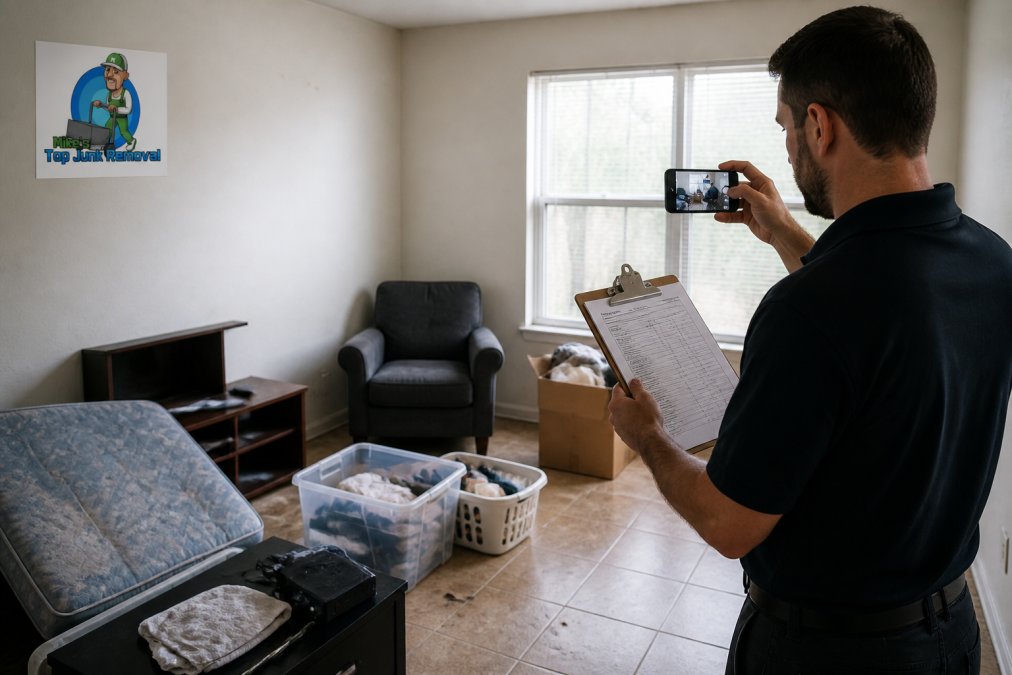
- Walk the unit and photograph every room before touching anything.
- Separate clearly abandoned items from anything that looks recently used or valuable.
- Create an inventory list of all personal property, room by room.
- Send the notice of intent to dispose of personal property by certified mail.
- Wait out the statutory claim period before removing anything.
- Schedule removal and keep the disposal or donation receipts.
Documenting the Unit and Creating an Inventory List
An inventory list is your best defense if a former tenant later claims a valuable item went missing. Photograph each room from the doorway, then photograph individual items of apparent value. Note the condition of the unit, including any damage beyond normal wear.
How Long Must a Landlord Store Tenant Belongings After an Eviction?
The practical timeline. Most practitioners follow this sequence:
- Lockout completed by the sheriff, day zero.
- Inventory and photograph the unit, within 24 to 48 hours.
- Send the notice of intent to dispose of personal property by certified mail, within the first week.
- Wait out the claim period stated in your notice before removing anything.
- Dispose of or remove the property only after the claim period expires.
For landlords managing multiple turnovers, a property cleanout service can handle the storage, notice coordination, and disposal chain so the timeline is documented at every step.
Hazardous Materials and Special Handling Requirements for Eviction Cleanouts
Categories to flag before your crew touches anything:
- Chemical and flammable: paint, paint thinner, solvents, adhesives, automotive fluids, pesticides, pool chemicals.
- Pressurized containers: propane tanks, aerosol cans, fire extinguishers.
- Batteries and electronics: car batteries, lithium-ion batteries, televisions, monitors, computers.
- Biohazards: needles, medical waste, heavily soiled furniture, animal waste.
- Contamination indicators: suspected methamphetamine residue, excessive hoarding conditions, mold growth.
Handling protocols that protect your crew and your liability:
- Photograph hazardous items in place before moving them. If a former tenant later disputes disposal, the photo proves the item was hazardous and that standard removal was not an option.
- Never mix hazardous waste into general debris. Separate it at the point of discovery and route it to the appropriate collection facility.
- Use puncture-resistant gloves and sharps containers for needles and medical waste.
- For suspected methamphetamine contamination or excessive hoarding, bring in a specialist before removal begins. Standard crews are not equipped for those conditions.
- Keep disposal receipts for every hazardous item. The receipt is your proof that the material was routed correctly.
For landlords handling a hoarder cleanout or a property with suspected contamination, a professional crew with hazardous material experience is the safer path. The cost of proper handling is a fraction of the cost of a fine or a health claim.
Why Property Cleanout Services Reduce Legal Risk for Tampa Landlords
Property cleanout services reduce risk by handling the disposal chain correctly and documenting it. A professional crew photographs the unit, inventories belongings, separates hazardous material, and provides receipts showing where everything went. That paper trail is what a landlord needs if a dispute arises months later.
Insurance and Liability Protection During an Eviction Cleanout
Insurance and liability protection start with verifying coverage before anyone enters the unit. Confirm your general liability policy covers property removal, and ask any contractor for a certificate of insurance showing both general liability and workers' compensation. If a worker is injured moving a refrigerator down a stairwell, the claim lands on whoever holds the policy.
Common Mistakes Landlords Make During Eviction Cleanouts
The most common mistakes in eviction cleanouts are procedural, not physical. They happen before the truck arrives.
- Disposing of property before the notice period expires.
- Failing to send the notice of intent by a trackable method.
- Skipping the inventory list and relying on memory.
- Mixing hazardous waste into general debris.
- Letting an uninsured crew handle heavy removal.
- Throwing away items that still carry a tenant's legal claim.
| Mistake | Legal Risk | The Fix |
|---|---|---|
| Early disposal | Wrongful disposal claim | Wait out the notice period |
| Untracked notice | No proof of delivery | Certified mail, keep receipt |
| No inventory | Tenant dispute you lose | Photo and list every room |
| Mixed hazardous waste | County fines | Separate and route to collection |
| Uninsured crew | Injury and damage liability | Verify COI before work starts |
Frequently Asked Questions
What are the legal steps for handling abandoned property after an eviction in Tampa?
After the sheriff executes the Writ of Possession, you must send a written notice of intent to dispose of personal property to the tenant's last known address. Florida law requires this notice to specify the items, their location, and a deadline for retrieval. If the tenant does not respond within the statutory period, you may dispose of the property. Documenting everything with photos and an inventory list protects you from later disputes.
How long must a landlord store tenant belongings after an eviction in Florida?
Florida law does not mandate a fixed storage period in all cases, but the notice of intent typically gives the tenant a specific window to reclaim their property. Many landlords allow 15 to 30 days after the notice is sent. If the lease or local ordinance specifies a longer period, you must follow it. Keeping items beyond that window without a legal obligation increases your liability and storage costs.
Can a landlord immediately throw away items left behind after an eviction?
No. Florida law requires landlords to follow proper notice procedures before disposing of tenant belongings, even after the eviction is complete. Throwing items away immediately can expose you to claims for wrongful disposal and financial liability. You must send a notice of intent, allow the tenant a reasonable retrieval period, and document the process. Only after that period expires can you legally dispose of the property.
Are landlords responsible for the cost of removing abandoned items after an eviction?
In most cases, yes. The landlord bears the initial cost of removing and disposing of abandoned property. However, you may be able to deduct those costs from the tenant's security deposit or pursue the former tenant in small claims court. Florida law allows landlords to recover reasonable expenses for removal, storage, and disposal if the lease or state statute permits it. Keep all receipts and documentation.
Eviction cleanouts in Tampa punish landlords who rush the paperwork and reward those who document every step. If you would rather hand the physical work to a crew that understands the legal side, Mike's Top Junk Removal provides free estimates, upfront pricing, and same-day or next-day availability for property cleanouts across the area. Get started with Mike's Top Junk Removal and turn a vacant unit back into rent-ready space without the legal exposure.