

Table of Contents
- What Determines How Long a Full House Cleanout Takes
- Average Timelines for a Whole House Cleanout
- How Estate Cleanout Services Handle Larger Projects
- Property Cleanout Services vs. DIY: Time and Labor Compared
- How Junk Removal Services Speed Up the Process
- Waste Disposal Logistics, Hazardous Materials, and Hoarding Situations
- How to Prepare and Speed Up Your Full House Cleanout
- Frequently Asked Questions
Last Updated: September 14, 2026
What Determines How Long a Full House Cleanout Takes
A full house cleanout typically takes one to three days, though larger properties with heavy clutter can stretch to a week or more.
A full house cleanout is the complete removal of furniture, appliances, personal belongings, and debris to prepare a property for sale, rental, renovation, or occupancy. The timeline depends on how much is inside, how hard it is to reach, and who's doing the hauling.
Three factors drive almost every estimate: property size, clutter volume, and access logistics.
Property Size and Square Footage
Square footage sets the baseline. Under 1,500 square feet means fewer rooms and shorter carries; past 2,500 square feet, expect multiple truckloads regardless of how sparse the rooms look.
Volume of Clutter and Bulk Items
Clutter volume matters more than floor plan: a sparse 2,000-square-foot home can clear faster than a packed 1,200-square-foot one. Bulk items like sofas, mattresses, and refrigerators eat truck space and add labor hours.
Access, Stairs, and Parking Logistics
Access is the most underestimated factor. A ground-floor home with a driveway clears in half the time of a third-floor walk-up with street parking; every flight of stairs and long carry adds man-hours.
Average Timelines for a Whole House Cleanout
Most whole house cleanout projects fall into predictable windows once you account for size and density.
| Property Type | Typical Timeline | Crew Size | Main Constraint |
|---|---|---|---|
| Apartment under 1,000 sq ft | 2-4 hours | 2 people | Elevator or stair access |
| Small home under 1,500 sq ft | 4-8 hours | 2-3 people | Clutter density |
| Mid-size home 1,500-2,500 sq ft | 1-2 days | 3 people | Truckload count |
| Large home 3,000+ sq ft | 2-4 days | 3-4 people | Bulk items, multiple loads |
| Hoarding situation | 3-7+ days | 4+ people | Sorting, hazardous materials |
Small Homes and Apartments (Under 1,500 Sq Ft)
Small properties usually clear in a single visit. A standard apartment or small home with normal furniture takes a two-person crew a few hours, provided parking and access are straightforward.
Mid-Size and Large Homes (1,500 to 3,000+ Sq Ft)
Larger homes almost always need more than one day, limited by truck capacity rather than crew speed. A 3,000-square-foot home with a full basement and garage can generate several truckloads, each requiring a trip to a disposal or recycling facility.
How Estate Cleanout Services Handle Larger Projects
Estate cleanout services are built for this volume. When a family is settling an estate, the priority is careful handling of personal belongings alongside fast removal of everything else, staged in phases: sort, remove, clear.
On larger estates, crews divide the property into zones, one team on the garage and basement, another on the main living areas, cutting total labor hours versus working room by room.
Sorting is where estate work differs from a standard haul. Families often want to review paperwork, jewelry, and photographs first, so reputable crews build in a hold area and only haul away what's been cleared.
Property Cleanout Services vs. DIY: Time and Labor Compared
Property cleanout services finish in a fraction of the time a do-it-yourself effort takes, because they bring the truck, labor, and disposal logistics in one package. Doing it yourself means sourcing all three separately, the time most estimates miss.
What Full-Service Removal Includes
A full-service removal covers the entire chain: loading, hauling, sorting for recycling, and disposal. You point at what goes, and the crew carries it out, disconnecting appliances, disassembling bed frames, navigating stairwells, and handling disposal routing.
Mike's Top Junk Removal handles residential junk removal this way, with same-day and next-day appointments and upfront pricing quoted before the truck rolls. The crew already knows which facility takes what and has the route planned.
The Hidden Time Costs of Doing It Yourself
The hidden cost of DIY is the time you don't see coming:
- Truck rental and pickup, 1 to 2 hours, plus a return deadline that dictates your day.
- Loading, a 1,500-square-foot home with normal furnishings fills two to three pickup-truck loads.
- Disposal trips, each round trip to a transfer station or recycling facility runs 45 minutes to 2 hours.
- Recruiting help, the friend-with-a-truck favor costs a full day and rarely survives the first flight of stairs.
Stack those up and a job a crew finishes in a day can consume an entire weekend or more, and that's the best case.
Where DIY Genuinely Makes Sense
DIY can work when the cleanout is a single room or partial load, all items are light and easy to carry, you have a suitable vehicle and a nearby disposal site, and there's no deadline or stairs. Outside those conditions, the math tilts fast: once appliances, mattresses, a second floor, or more than one truckload are involved, the DIY time cost usually exceeds the labor you're saving.
The Real Trade-Off
The trade-off isn't speed versus savings, it's control versus coordination. DIY gives you control over what leaves and when. A professional cleanout gives back the hours you'd spend coordinating trucks, routes, and helpers, and shifts liability for damage and improper disposal onto the provider.
For a single-item haul, DIY is reasonable. For a whole house cleanout, the coordination overhead is the job, exactly what a full-service crew is built to absorb.
How Junk Removal Services Speed Up the Process
Junk removal services compress the timeline by removing bottlenecks: the right truck, the right crew size, and a disposal plan. That turns a multi-day project into a single scheduled visit for most homes.
Crew size scales to the job: two workers for a small cleanout, three or four for a large property. Efficient routing to recycling and disposal facilities means less downtime between loads, for property managers juggling turnovers, the difference between a unit sitting empty and one back on the market.
The other speed advantage is experience with awkward items. Hot tubs, pianos, and oversized appliances slow an untrained crew; a professional team has the equipment and technique to move them without damaging walls or doorframes.
Waste Disposal Logistics, Hazardous Materials, and Hoarding Situations
Waste disposal logistics decide how fast a cleanout moves, because every load has to go somewhere legal, and the destination dictates the pace. Loading the truck is the visible work; what happens between the driveway and the final drop-off is where timelines quietly stretch.
How a Load Actually Gets Sorted
Responsible disposal means separating the waste stream at loading, not at the facility. A typical full house cleanout generates four streams:
- General debris, broken furniture, carpet, drywall scraps, bagged trash. Goes to a permitted solid waste facility.
- Recyclable metal, appliances, bed frames, water heaters, exercise equipment. Diverted to a scrap metal recycler.
- Electronics, televisions, monitors, computers, printers. Many states restrict these from standard disposal, so they route to a dedicated e-waste handler.
- Household hazardous waste, paint, solvents, pesticides, motor oil, propane, batteries, fluorescent bulbs. Requires a separate appointment or drop-off at a municipal household hazardous waste facility.
A crew that sorts as it loads saves hours later; one that dumps everything together pays at the scale or in rejected loads.
Why Disposal Routing Adds Hours, Not Minutes
Each destination has its own gate, scale, and queue. On a busy Saturday, a transfer station line can run 30 to 60 minutes; a scrap yard may weigh the load twice; an e-waste drop-off may only accept certain items on certain days. Multiply that across three truckloads and you've added half a day of driving and waiting that never shows up in a labor estimate, the biggest reason a job quoted as "one day" slips into two.
Handling Hazardous Waste and Special Items
Hazardous material handling adds time and requires care, where untrained crews get into trouble. Paint, solvents, propane tanks, motor oil, antifreeze, pool chemicals, and old batteries can't be tossed in with regular debris; they need separate handling and often a dedicated drop-off.
A few categories that consistently slow a job:
- Latex and oil-based paint, cans must be separated, and many municipalities require them dried out or consolidated before acceptance.
- Propane tanks, including camping cylinders and grill tanks, are almost universally rejected from standard loads.
- Lithium-ion batteries, found in power tools, e-bikes, and vacuums, are a fire risk in a mixed load.
- Medical waste, syringes, unused prescriptions, and sharps, needs a pharmacy take-back or medical waste handler.
- Ammunition and firearms, must be handled through law enforcement, not a hauling crew.
If unsure, treat anything with a warning label as hazardous until confirmed otherwise. A crew that knows the rules flags these items during the initial walkthrough, not after the truck is loaded.
When Hoarding Cleanup Adds Days to the Timeline
Hoarding cleanup is the single biggest timeline multiplier, and where a standard estimate breaks down fastest. When pathways are blocked and rooms are filled floor to ceiling, crews can't work at normal speed, safety, air quality, and structural concerns slow the pace.
A hoarding situation can turn a one-day job into a week-long project. The reason is sequencing: crews clear access routes first, then work outward in layers, because back rooms are often unreachable until the front is cleared.
Three factors push hoarding jobs past the one-week mark:
- Structural and safety hazards, compromised floors, blocked egress, and unstable stacks requiring shoring or careful manual removal.
- Biohazards and pest issues, animal waste, mold, and infestations requiring protective equipment and sometimes a remediation specialist.
- Volume per square foot, a hoarded 1,200-square-foot home can generate more truckloads than a normally furnished 3,000-square-foot one.
Timeline estimation has to stay flexible here. A reputable provider walks the property, flags hazards, and quotes a range rather than a fixed day count.
What This Means for Your Schedule
If your property has any of the following, add a buffer to your estimate:
- More than one truckload of debris
- Any paint, chemicals, propane, or batteries on site
- A garage, basement, or attic that hasn't been cleared in years
- Signs of hoarding, pest activity, or water damage
Flagging these before the crew arrives lets the provider route the job correctly, schedule the right number of trucks, and set a realistic window.
How to Prepare and Speed Up Your Full House Cleanout
Preparation is the cheapest speed boost available. The more you sort and stage before the crew arrives, the fewer labor hours the job requires.
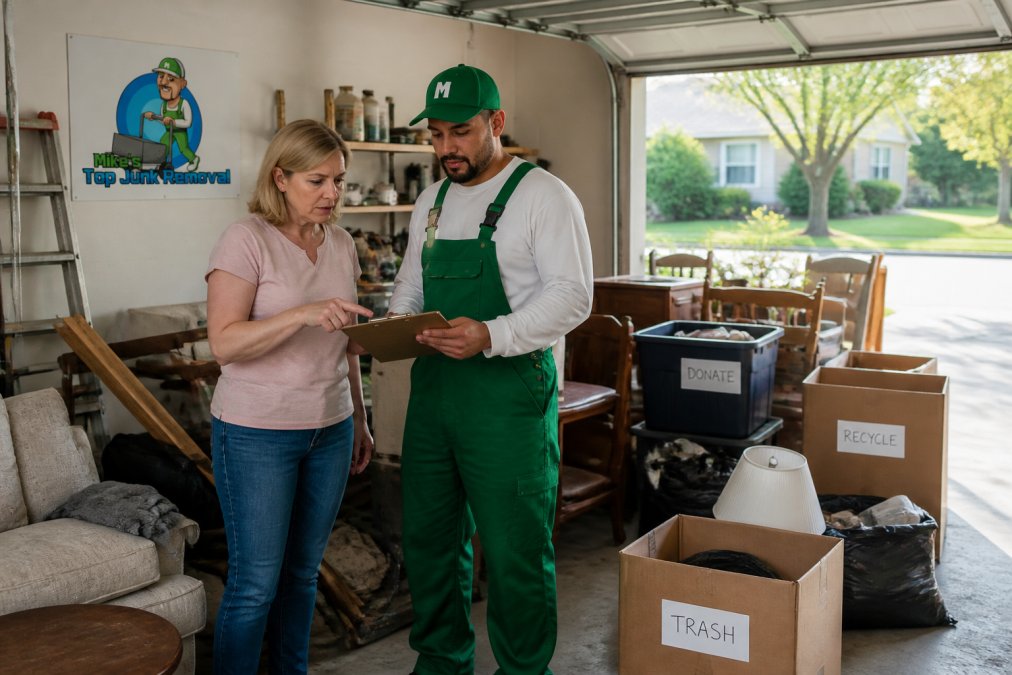
Start with a walkthrough and a written plan. Then handle the two tasks that save the most time: an inventory of what's staying and going, and pre-sorting of personal belongings.
Pre-Cleanout Inventory Checklist
Use this checklist before booking your cleanout:
- Walk every room and note large items (appliances, furniture, mattresses)
- Mark items to keep, sell, or haul
- Identify hazardous materials (paint, chemicals, batteries, propane)
- Confirm parking and truck access for the crew
- Clear pathways to the main removal areas
- Remove valuables, documents, and medications yourself
- Note any items too heavy or awkward for standard handling
- Set a target date and confirm crew arrival window
Sorting Personal Belongings Before the Crew Arrives
Sorting personal belongings ahead of time protects what matters and speeds the haul. Pull keepsakes, paperwork, and valuables into a single locked room or off-site location, and stage everything else in one area so the crew works from a central point.
A pre-cleanout inventory also helps you spot items worth selling before they hit the truck.
Frequently Asked Questions
How long does a full house cleanout take on average?
Most full house cleanouts take between one and three days, depending on property size and clutter volume. A small apartment with light clutter can be cleared in a few hours, while a 3,000-square-foot home packed with furniture, appliances, and debris may take two to three days with a professional crew. Estate cleanout services and hoarding cleanup projects often fall at the longer end of that range because of sorting and disposal requirements.
What factors increase the time required for a home cleanout?
The biggest time drivers are property size, volume of clutter, and access logistics. Stairs, narrow hallways, and limited parking slow down every haul. Heavy furniture, appliances, and bulk items require extra labor hours. Hazardous waste must be separated and routed to proper facilities. Hoarding situations add sorting time because crews need to identify valuables and personal belongings before disposal. Each of these factors compounds the total man-hours needed.
Should I expect a whole house cleanout to take more than one day?
For homes over 1,500 square feet with moderate to heavy clutter, yes. A professional crew with the right truck capacity and crew size can often finish a mid-size home in one long day, but larger properties or those with hoarding conditions typically need two or more days. Scheduling a walkthrough estimate before the job helps set a realistic timeline and avoids surprises on removal day.
How can I speed up the process of a full house cleanout?
Start by sorting personal belongings and setting aside items you want to keep before the crew arrives. Clear a path to entry points and move vehicles from the driveway so trucks can park close. Bag small debris and stack bulk items near exits. If you have hazardous materials like paint or chemicals, flag them separately. A pre-cleanout inventory checklist keeps the crew moving and cuts hours off the job.