

Table of Contents
- Step 1: Assess Your Old Exercise Equipment Before You Move It
- Step 2: Sell Equipment That Still Has Resale Value
- Step 3: Donate Gently Used Gear and Document It for Taxes
- Step 4: Recycle Metal, Electronics, and Manufacturer Take-Back Options
- Step 5: How to Dismantle Heavy Equipment Safely
- Step 6: Call Junk Removal Services for Heavy or Broken Machines
- Step 7: Schedule Same Day Junk Removal When You Need It Gone Fast
- Common Mistakes to Avoid When Clearing Out Old Exercise Equipment
- Frequently Asked Questions
Last Updated: September 11, 2026
Step 1: Assess Your Old Exercise Equipment Before You Move It
What to do with old exercise equipment starts with one question: does it still work? That decides whether you sell it, donate it, recycle it, or call in a hauler. Treadmills, ellipticals, and stationary bikes that power on and run smoothly still have buyers. Machines with dead motors, cracked decks, or snapped cables are scrap.
Run this checklist before you touch anything:
- Power it on. Does the console light up? Does the belt or flywheel move?
- Check the frame. Rust, stress cracks, or a bent frame usually means the end.
- Test the moving parts. Listen for grinding, squealing, or uneven resistance.
- Look at the electronics. Dead displays on an otherwise solid machine are often fixable.
- Weigh the hassle. A working machine you can't move is still a problem.
Functional vs. Non-Functional: Which Path Fits Your Machine
Functional equipment goes to resale or donation; non-functional equipment goes to recycling or hauling. A working elliptical might sell online within a week, while a rusted weight bench with a torn pad won't sell and no charity will take it.
Step 2: Sell Equipment That Still Has Resale Value
Selling is the highest-return option for functional gear, but resale value drops fast. Home fitness equipment depreciates like a used car, steepest in the first two years.
What sells best:
| Equipment Type | Resale Demand | What Buyers Check |
|---|---|---|
| Dumbbells and free weights | High | Weight markings, rust |
| Weight benches | Moderate | Pad condition, frame welds |
| Stationary bikes | Moderate | Resistance mechanism, seat adjusters |
| Ellipticals | Lower | Stride mechanism, console |
| Treadmills | Lower | Motor hours, belt wear, deck |
List on an online marketplace with clear photos, the model number, and an honest description of condition. Price it to move; holding out rarely pays off.
Liability and Safety Warnings for Private Sales
A private sale transfers the machine, but not every risk. If a buyer gets hurt, you could face a claim that you misrepresented its condition.
Protect yourself with three habits:
- Disclose every defect in writing. Put it in the listing message, not just verbally.
- Sell as-is, stated clearly. Write "sold as-is, no warranty" in the listing and the receipt.
- Keep a dated receipt. Both parties sign. Note the model, condition, and that the buyer inspected it.
Never sell a machine with a known structural failure, a frayed cable, or a compromised frame. The money isn't worth the risk.
Step 3: Donate Gently Used Gear and Document It for Taxes
Giving away a working machine feels good, but the paperwork is what turns a good deed into a deduction. The IRS rules for noncash contributions are specific.
Who Actually Accepts Exercise Equipment
Confirm the recipient is a qualified organization, a 501(c)(3) or a unit of government. Community centers, school athletic programs, senior centers, and municipal recreation departments are the most common takers for working stationary bikes, ellipticals, rowers, and free weights. Call ahead with the machine's condition and dimensions; most have limited storage and turn away anything broken, rusted, or missing parts.
A few practical filters before you load anything:
- Does it power on and move smoothly? If not, it is not a donation, it is a disposal problem you would be handing off.
- Is it clean? Wipe down pads, consoles, and handles. Programs that serve seniors or youth will reject visibly soiled equipment.
- Can two people move it? If the answer is no, ask whether the organization can send a truck or whether you need to arrange transport yourself.
- Is it complete? Missing power cords, keys, or hardware usually means rejection.
The Documentation Thresholds That Matter
The IRS treats noncash contributions differently depending on claimed value:
- Under $250: A bank record or written receipt is generally sufficient, showing the organization's name, the date, and a description of what you gave.
- $250 to $500: You need a written acknowledgment stating whether any goods or services were provided in exchange. Without that language, the deduction can be disallowed.
- Over $500: Complete Form 8283, Section A, and attach it to your return.
- Over $5,000: You generally need a qualified appraisal and Section B of Form 8283.
The IRS publishes the substantiation rules and Form 8283 instructions at IRS guidance on charitable contributions. Read the current-year instructions before you file, because thresholds and form layouts change.
Establishing Fair Market Value for Heavy Equipment
Fair market value is what the item would sell for in its condition on the date of donation, not what you paid. For exercise equipment, that number is usually far lower than owners expect.
A defensible valuation method:
- Pull three to five comparable sold listings on online marketplaces for the same model or a close equivalent in similar condition.
- Average them and adjust down for any defects you disclosed.
- Print or screenshot the comps and keep them with your receipt. If the deduction is questioned, this is your evidence.
- Photograph the machine before it leaves your property, including the serial number plate and any wear.
What to Ask For at Drop-Off
When you hand the equipment over, ask for a dated written acknowledgment on the organization's letterhead: organization name and address, date of contribution, a description of the property ("one used treadmill, model XYZ, working condition"), a statement that no goods or services were provided in exchange if the value is $250 or more, and a signature or authorized stamp. If they can't provide that language, ask for a simpler receipt and supplement it with your own records.
Step 4: Recycle Metal, Electronics, and Manufacturer Take-Back Options
Recycling is the right call for equipment beyond repair, but "recycle it" is not a plan. Exercise machines are mostly steel plus a console full of electronic waste that should never hit a landfill. The two streams need separate handling, and the manufacturer route is the one most owners never check.
What Is Actually Inside the Machine
Before you decide where it goes, know what you are dealing with:
- Steel frame and base: The heaviest component and the easiest to recycle. Scrap metal buyers and municipal recycling centers accept it.
- Console and display: Circuit boards, lithium or coin-cell batteries, and sometimes a small LCD. This is e-waste and needs a dedicated drop-off.
- Motor and drive assembly (treadmills, ellipticals): Copper windings and steel housing. Valuable to scrap buyers but heavy to separate.
- Belts, pads, and plastic shrouds: Generally not recyclable curbside. Check whether your municipal program accepts rigid plastics.
- Hydraulic or pneumatic components (some rowers, strength machines): May contain oil or gas cylinders that require special handling.
How Manufacturer Take-Back Programs Actually Work
Several major fitness brands run trade-in or recycling programs, but the mechanics vary:
- Trade-in credit toward a new purchase. Buy a new machine from the same brand, and the company arranges pickup of the old one. The credit applies to the order, not cash.
- Recycling-only pickup. Some brands collect their own equipment for recycling regardless of purchase. Availability is usually limited to certain metro areas.
- Retailer haul-away at delivery. If you're buying a replacement from a retailer offering delivery, ask whether the crew will haul the old unit away. Often the simplest path.
Check the manufacturer's website for a "trade-in," "recycling," or "sustainability" page, or call customer service. Have your model and serial numbers ready.
Scrap Metal and E-Waste Drop-Off
For equipment with no take-back option, use the two-stream approach:
- Separate the console and any batteries first. These go to an e-waste drop-off, many municipalities and electronics retailers host collection events or permanent sites.
- Take the steel frame to a scrap metal buyer or municipal recycling center. Call ahead to confirm they accept large items and whether the machine must be broken down.
- Check municipal bulky-item rules for anything that can't be separated, such as a molded plastic shroud bonded to the frame.
The Disposal Hierarchy, Applied
Not every machine follows the same path. Use this decision order:
- Reuse, working equipment goes to resale or donation first. This is always the highest-value option.
- Manufacturer take-back, check before you scrap anything, especially if you are buying a replacement.
- Recycle, separate the steel frame from the console and route each to the correct stream.
- Professional hauling, for machines you cannot safely move or break down, a hauler handles the transport and responsible disposal.
- Landfill, the last resort, and rare for equipment with steel and e-waste components.
When Recycling Is Not Worth the Effort
A rusted-out machine with a seized motor and a cracked frame is not a recycling project, it's a hauling job. The steel value in a single home treadmill is modest, and the labor to break it down, transport the pieces, and find separate drop-offs for the console often exceeds what a hauler would charge to take the whole thing. If the machine is non-functional and you don't have a truck, professional hauling is usually the more practical route, and a good hauler will still route the metal and electronics to recycling.
Step 5: How to Dismantle Heavy Equipment Safely
Disassembly makes transport possible, but it's also where injuries happen. Treadmills and ellipticals carry serious weight, and a machine that tips can break bones. If you're not confident, let a hauler handle it.
If you're proceeding, work in this order:
- Unplug everything and let any motorized components sit for a few minutes.
- Remove the console first. It's the lightest part and often the most valuable to resell separately.
- Detach the handrails and uprights. Two people minimum, no exceptions.
- Fold or remove the deck on a treadmill per the owner's manual.
- Separate the base frame last. This is the heaviest piece and the one that causes back injuries.
Keep the hardware in a labeled bag. Anyone reassembling the machine will need it, and loose bolts kill resale value.
Step 6: Call Junk Removal Services for Heavy or Broken Machines
Professional junk removal services exist for exactly this scenario: heavy, broken, or awkward equipment you can't safely move or legally dispose of. A treadmill weighs well over two hundred pounds, and getting it down a staircase without damaging walls or your back is a genuine risk.

A good hauler:
- Carries the machine out of the basement, garage, or upstairs room
- Handles disassembly if needed
- Loads and transports it
- Disposes of it responsibly, recycling metal and e-waste where possible
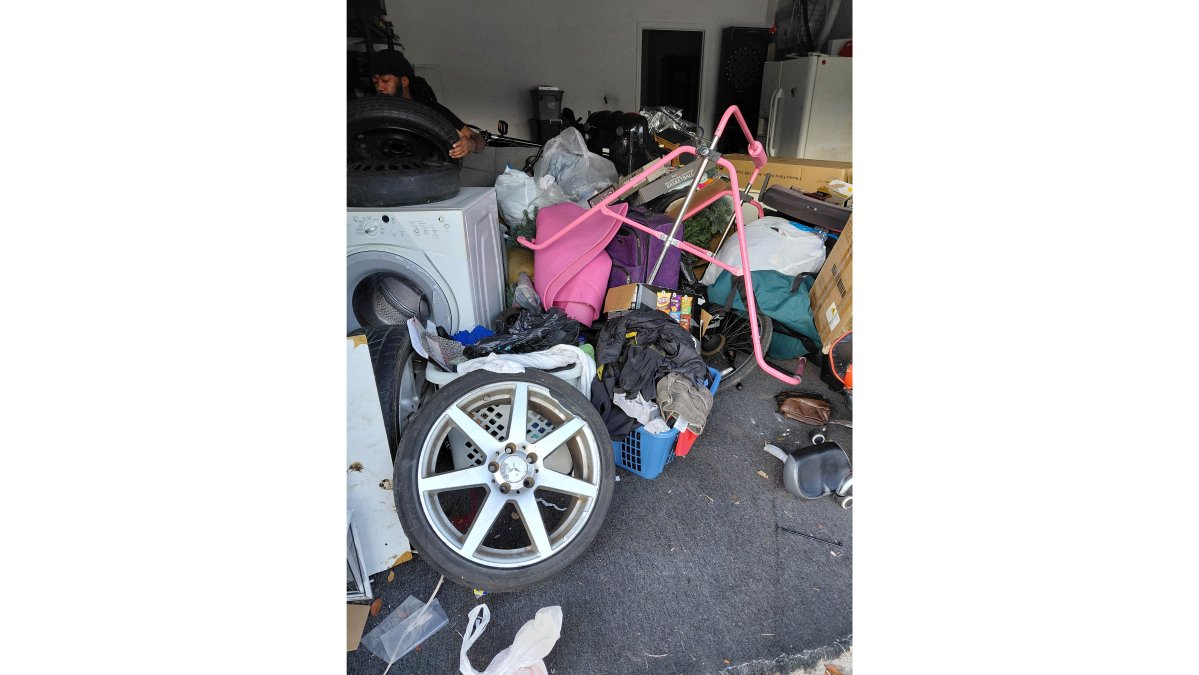
Mike's Top Junk Removal offers residential junk removal with full-service handling, so you point at the machine and the crew does the lifting. Free estimates and upfront pricing mean you know the number before anyone touches the equipment. The company is family-owned and operates with same-day and next-day availability.
Step 7: Schedule Same Day Junk Removal When You Need It Gone Fast
Same day junk removal solves the deadline problem. Estate sales, closings, rental turnovers, and renovation schedules don't wait for a pickup slot next week, and a machine sitting in the garage can block an entire project.
When you need it gone today, have three things ready: a clear description of the equipment, access details like stairs or a narrow doorway, and a decision on whether you want it recycled. That lets the crew quote accurately and arrive with the right equipment.
Common Mistakes to Avoid When Clearing Out Old Exercise Equipment
The biggest mistake is treating every machine the same. A working stationary bike and a dead treadmill have nothing in common when it comes to disposal, and running them through the same process wastes money or creates a problem.
Watch for these:
- Assuming it's worth what you paid. Depreciation on fitness equipment is steep. Price realistically.
- Donating broken equipment. Charities refuse it, and you've just moved the problem.
- Selling without a written disclosure. This is the liability trap covered earlier.
- Trying to move a treadmill alone. The most common injury in this whole process.
- Throwing electronics in the trash. E-waste doesn't belong in a landfill.
- Letting it sit for another year. Every month in the garage is a month you can't use the space.
Old exercise equipment is easy to ignore until it's blocking the space you actually need. Whether you're selling a working machine, documenting a donation, or getting a broken treadmill out of a basement, the fastest path is usually a crew that handles the lifting and the disposal. Mike's Top Junk Removal offers free estimates, upfront pricing, same-day and next-day availability, and full-service residential junk removal that includes the heavy lifting and responsible disposal. Get My Free Estimate and reclaim your space.
Frequently Asked Questions
Can professional junk removal services handle heavy exercise machines?
Yes. Trained crews use dollies, straps, and lifting techniques to move treadmills, ellipticals, and multi-station home gyms without damaging floors or doorways. They handle the entire process from disassembly to loading and disposal. Look for a company with upfront pricing and same-day availability so you are not stuck waiting weeks for a pickup. Most residential junk removal services can clear an entire home gym in a single visit.
How do I prepare old exercise equipment for removal?
Unplug any powered equipment and remove loose accessories like water bottles, towels, and media remotes. If you can safely detach the console or folding arms, doing so makes transport easier through tight hallways. Clear a path to the door and take photos of the machine in its current condition. For treadmills and ellipticals, check the owner's manual for the recommended folding or lock position before movers arrive.
Is it better to sell or recycle old fitness gear?
It depends on condition. Equipment in working order with visible brand names often sells on online marketplaces within a few weeks. Non-functional machines, rusted weight plates, and broken electronics are better routed to scrap metal recyclers or e-waste drop-off sites. If the item has been sitting unused for more than a year and shows wear, recycling or hauling it away is usually faster and less stressful than listing it.
How much is a treadmill worth in scrap?
Scrap value depends on the metal content. A typical treadmill contains steel framing, a small motor, and wiring, which adds up to modest scrap weight once stripped. The plastic deck, belt, and console are not recyclable as metal. Because disassembly takes time and the payout is small, most people find that selling a working treadmill or scheduling a haul-away is more practical than stripping it for scrap.