

Table of Contents
- Why Property Damage Happens During Junk Removal
- Preparing Your Home for Debris Removal
- How to Protect Floors During Furniture Removal
- Protecting Walls and Doorways During Item Transport
- Junk Removal Company Insurance Requirements
- Identifying Hazardous Materials Before Removal
- Post-Removal Cleanup and Damage Assessment
- DIY vs. Professional Removal: Liability Considerations
Last Updated: August 11, 2026
Why Property Damage Happens During Junk Removal
Property damage during junk removal occurs when teams rush through without proper planning or protection. Heavy furniture, appliances, and debris create real risks to your home's structure, flooring, and walls. The most common damage happens in doorways, hallways, and on stairs where tight spaces force awkward angles and sudden impacts.
Many homeowners underestimate how much space large items need. A sofa that fits through a door in one direction may not fit when angled differently. Without advance preparation, crews improvise solutions that damage walls, drywall, flooring, and door frames in seconds. The good news: most damage is avoidable with straightforward preparation and the right protective materials.
Preparing Your Home for Debris Removal
Before any crew arrives, your home needs a clear pathway and documented measurements. Start by walking the route from your storage area to the exit point. Identify every doorway, corner, staircase, and transition the items must pass through. Measure ceiling heights, doorway widths, and hallway dimensions, then provide these measurements to your junk removal company ahead of time.
Remove any decorative items, wall hangings, and furniture from the pathway. Clear baseboards of stored items. Check for low-hanging light fixtures, ceiling fans, or sprinkler heads in the way and inform the crew about their location.
Clear Pathways and Doorways
A clear pathway is non-negotiable for avoiding property damage. Remove throw rugs, electrical cords, and any obstacles from corners where furniture will turn. Tight corners are where most wall damage occurs because crews must angle items at sharp degrees.
For doorways, remove the door itself if it swings into the pathway. This gives crews extra clearance and eliminates the door frame as a collision point. Check for protruding hinges, locks, or hardware that could catch on moving items and tape over any sharp edges temporarily.
Measure Doorways and Hallways
Accurate measurements prevent the "will it fit?" problem that leads to forced angles and wall damage. Measure doorway width at the widest point and height from floor to top of frame. Do the same for hallway widths and ceiling heights. For stairwells, measure the width at the narrowest point and note any landings, turns, or low ceilings.
Communicate these measurements to your junk removal company before they arrive. Reputable services use this information to plan the removal route and identify items that may need special handling or disassembly before damage happens.
How to Protect Floors During Furniture Removal
Floor protection is one of the most overlooked aspects of avoiding property damage during junk removal. Hardwood, tile, and laminate floors scratch, dent, and gouge easily under the weight and friction of moving furniture.
Selecting the Right Floor Covering
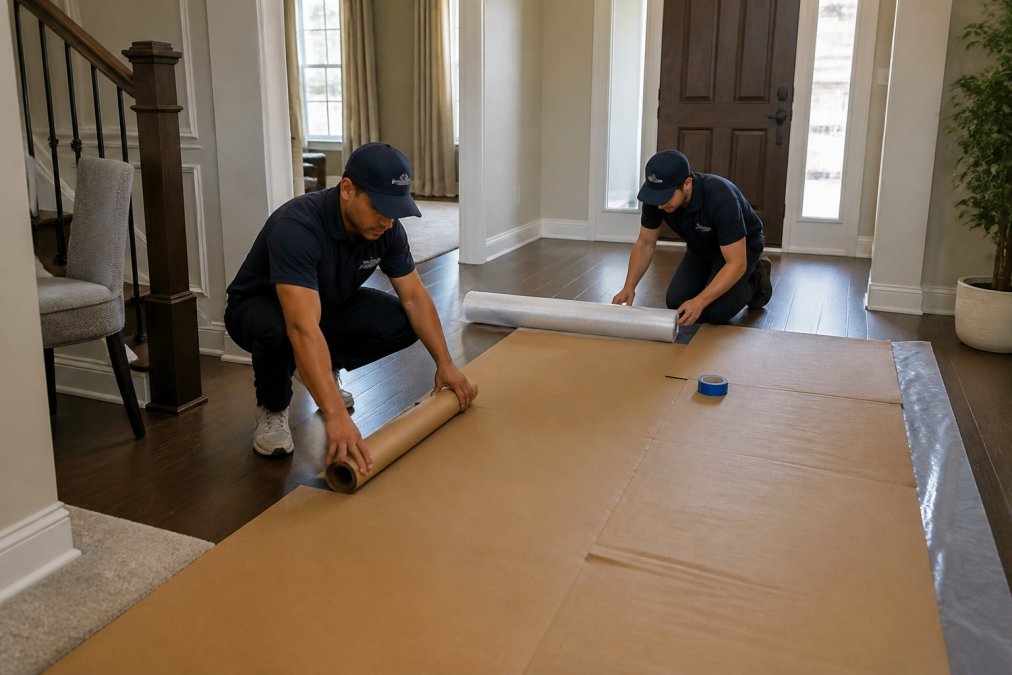
Start with cardboard as your base layer. Lay down heavy-duty moving boxes flattened and taped together to cover the entire pathway. Over the cardboard, add plastic sheeting or kraft paper to create a slippery surface that allows crews to slide heavy items rather than drag them. Tape the plastic down at edges so it doesn't bunch up or create trip hazards.
For high-traffic areas like the main hallway or around doorways, add a second layer of plywood over the plastic to distribute weight more evenly and prevent puncturing. Never use newspaper or thin plastic sheeting alone, newspaper tears immediately under weight and thin plastic (under 3 mil thickness) punctures and bunches. Invest in proper floor protection materials; they cost far less than refinishing hardwood or replacing damaged laminate.
Protecting Stairs and Transitions
Stairs present unique challenges because items must be tilted at angles that put pressure on edges and corners. Cover each stair tread with cardboard and plastic, securing it with painter's tape. Pay special attention to the outer edges where furniture corners will contact.
For the walls alongside stairs, use corner guards or foam pipe insulation to create a cushioned barrier. At the bottom of stairs, create a transition zone with extra padding where items often shift and crews adjust their grip.
Protecting Walls and Doorways During Item Transport
Walls and doorways take the most visible damage during junk removal because they're the fixed points that furniture must navigate around. Drywall dents easily and door frames splinter.
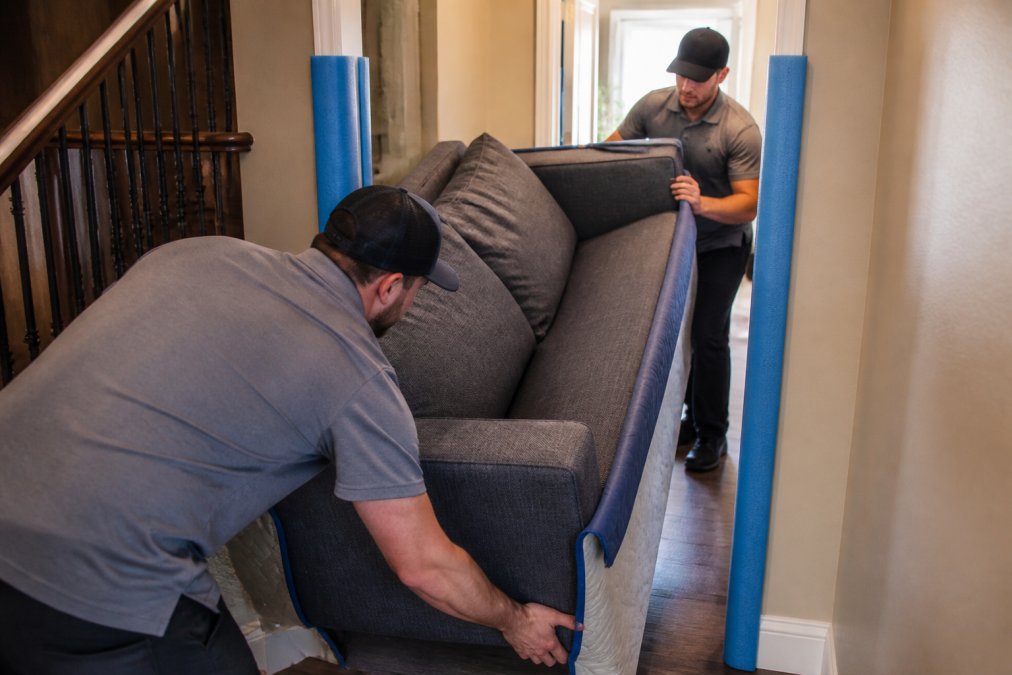
Install corner guards at every corner along the pathway. These foam or plastic protectors absorb impacts and distribute force so drywall doesn't dent. For doorways, wrap door frames with moving blankets or foam padding and secure it with painter's tape. Protect baseboards with painter's tape to reduce scratches and scuffs.
For large items like refrigerators or entertainment centers, communicate with your junk removal company about the removal approach. They may recommend removing doors, disassembling components, or using specific techniques to minimize wall contact. Professional services assess these situations and plan accordingly.
Junk Removal Company Insurance Requirements
When you hire a junk removal company, insurance protects you if damage occurs despite everyone's best efforts. Most legitimate junk removal companies carry general liability insurance that covers accidental damage to your property during the removal process. Ask for proof of insurance before hiring and verify that the coverage amount is adequate for your home's value.
General liability typically covers collision damage like a sofa scraping a wall or a refrigerator denting a doorframe. It usually does NOT cover pre-existing damage, damage from negligence, or damage from items the crew wasn't hired to remove.
Before removal day, document your home's condition with photos of walls, floors, doorways, and any items that could be affected. This creates a baseline. Discuss liability with your junk removal company in writing: What happens if the crew damages your wall? Who pays for repairs? Is there a deductible? What's the process for filing a claim?
Reputable companies provide transparent answers to these questions. Companies that avoid these conversations are red flags.
Identifying Hazardous Materials Before Removal
Some items contain hazardous materials that require special handling and disposal. Common hazardous items include old refrigerators and freezers (refrigerant), air conditioning units (refrigerant and oil), fluorescent light bulbs (mercury), batteries (lead and acid), paint and solvents, asbestos-containing materials, and certain electronics (lead, cadmium, mercury).
Before removal day, identify any items on this list and inform your junk removal company. Refrigerators and freezers must be professionally drained of refrigerant before disposal, this is federal law under the Clean Air Act. Fluorescent bulbs should be placed in a separate box and labeled. For electronics like old computers or televisions, ask about recycling options.
When you contact junk removal companies for estimates, mention hazardous materials explicitly. This allows them to assess whether they can handle the job safely. If they hesitate or seem uncertain, find a company with the proper certifications and experience.
Post-Removal Cleanup and Damage Assessment
After the crew leaves, inspect your home thoroughly. Walk the entire removal pathway and check for scratches on walls, dents in drywall, gouges in flooring, and damage to door frames or trim. Take photos of any damage and contact your junk removal company immediately with photos and a description of what happened.
Clean up debris and dust left behind. Removal often generates dust from old boxes and dirt from furniture feet. Vacuum thoroughly and wipe down surfaces.
For minor scratches and scuffs, you may repair them yourself. For significant damage like drywall dents or deep floor gouges, get repair quotes. Keep all documentation, photos, repair quotes, and communication for your records.
DIY vs. Professional Removal: Liability Considerations
Removing junk yourself eliminates the need for a third-party company but introduces different liability and safety concerns. When you do the work yourself, you're responsible for all damage. DIY removal also carries physical risks, lifting heavy appliances can cause back injuries, and falls on stairs while carrying items are common.
The time investment is significant. Removing a full basement or garage of junk can take days or weeks if you're doing it alone. Professional crews complete the same job in hours.
For large items like appliances, DIY removal is particularly risky. Refrigerators are heavy and awkward, and air conditioning units require special handling. Professional junk removal companies have the equipment, training, and insurance to handle jobs safely and legally. They understand hazardous materials requirements and know how to protect your home.
The cost difference between DIY and professional removal is often smaller than homeowners expect. When you factor in your time, the risk of injury, the cost of protective materials, and potential damage repairs, professional service frequently offers better value.

Mike's Top Junk Removal offers free estimates so you can compare costs without obligation. Our team assesses your situation, provides upfront pricing with no hidden fees, and schedules same-day or next-day service. We carry full liability insurance and handle all types of junk removal with the care your home deserves.
Protecting your property during junk removal comes down to planning, proper materials, and professional expertise. The cost of prevention, floor coverings, corner guards, and careful route planning, is minimal compared to drywall repair, floor refinishing, or frame replacement. When you're ready to remove junk safely and responsibly, contact Mike's Top Junk Removal for a free estimate. We'll assess your space, identify potential risks, and handle the job with the professionalism and transparency you deserve. Get your free estimate today and reclaim your space without the worry.
Frequently Asked Questions
What's the best way to protect hardwood floors during furniture removal?
Use a multi-layer approach: lay down cardboard first, then add plastic sheeting or plywood on top. Tape seams securely with painter's tape to prevent shifting. For high-traffic routes, double up your protection. This prevents scratches, dents, and moisture damage that can cost thousands to repair. Remove coverings carefully to avoid dragging debris across exposed flooring.
What should I look for in a junk removal company's insurance policy?
Verify the company carries general liability insurance with at least $1 million in coverage. Ask for proof of workers' compensation insurance, this protects you if someone is injured on your property. Request a certificate of insurance before work begins. A reputable company like Mike's Top Junk Removal will provide this documentation upfront and explain exactly what their coverage includes and excludes.
How do I prepare my home for a debris removal crew?
Clear pathways to all items being removed, measure doorways to ensure large pieces fit through. Move valuables and breakables away from work areas. Protect floors with cardboard or plastic sheeting. Remove obstacles like throw rugs, pet gates, or decorative items that could cause trips or collisions. Inform the crew about any structural concerns, tight corners, or fragile surfaces. A well-prepared home reduces removal time and damage risk significantly.
What's the main difference between DIY removal and hiring professionals regarding liability?
DIY removal puts all liability on you, if you damage your home, injure yourself, or improperly dispose of hazardous materials, you're responsible for costs and legal consequences. Professional removal companies carry insurance and follow disposal regulations, transferring liability to them. They're trained in safe lifting techniques and have equipment designed to prevent damage. For large jobs with heavy items, professional removal protects your property and your wallet.
This article was written using GrandRanker