

Table of Contents
- Can Junk Removal Companies Handle Heavy Appliances?
- Types of Appliances Junk Removal Services Accept
- How to Prepare Appliances for Junk Removal
- Understanding the Cost of Appliance Removal
- EPA Regulations for Appliance Disposal and Hazardous Materials
- Disposal vs. Recycling vs. Donation: What Happens to Your Appliances
- Safety Protocols and Injury Prevention During Removal
- Conclusion
Last Updated: August 8, 2026
Can Junk Removal Companies Handle Heavy Appliances?
Yes, professional junk removal companies can handle heavy appliances, and they're often the most practical solution for homeowners, landlords, and contractors who need reliable removal. At Mike's Top Junk Removal, we understand that can junk removal companies handle heavy appliances is a question many property owners in the Tampa area ask before committing to a service, and the answer depends on understanding what "handle" really means in this context.
When you hire a junk removal service for heavy appliances, you're not just paying for transportation. You're getting trained crews who understand the weight distribution, safety protocols, and technical requirements that come with moving refrigerators, washers, dryers, ovens, and other bulk items. The difference between DIY removal and professional handling becomes immediately apparent once you try moving a 300-pound refrigerator down a narrow staircase.
The real question isn't whether junk removal companies can handle heavy appliances, it's whether they handle them safely, responsibly, and in compliance with environmental regulations. This guide covers exactly what you need to know before scheduling a removal service.
Types of Appliances Junk Removal Services Accept
Professional junk removal companies accept many heavy appliances, though acceptance depends on the appliance's condition, size, and whether it contains hazardous materials. Most services handle the common bulky items that accumulate in homes and commercial properties.
Refrigerators and freezers are among the most frequently removed appliances. These units require special attention because they contain refrigerant (often called Freon), a hazardous substance that must be recovered before disposal. Washing machines and dryers are standard removals, as are dishwashers, ovens, and stoves. Air conditioning units, water heaters, and furnaces fall into the heavy-appliance category as well. Microwave ovens, though lighter, are often removed alongside larger items.
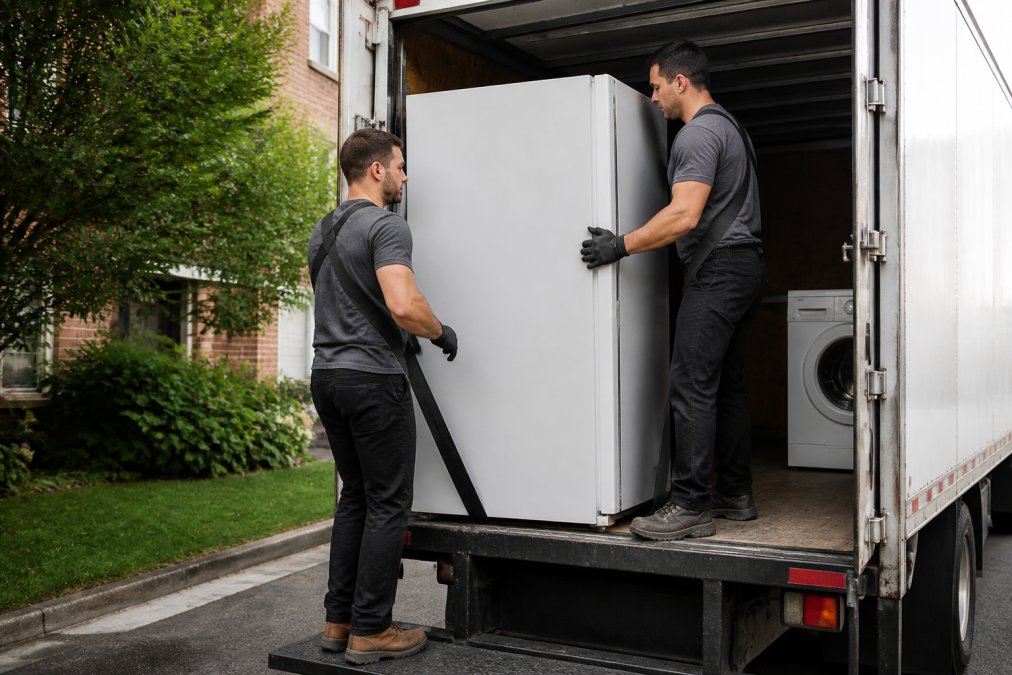
Most junk removal services also accept construction debris that includes appliances or metal components. If you're renovating a kitchen or bathroom, a professional crew can clear out the old fixtures in a single trip, which is far more efficient than multiple trips to a landfill or recycling facility.
The key limitation is size and accessibility. If an appliance is too large to fit through doorways or down stairs without damaging walls or the appliance itself, some services may decline or charge additional fees. Services also won't accept appliances that are actively leaking refrigerant or other hazardous fluids, as this creates liability and environmental compliance issues.
How to Prepare Appliances for Junk Removal
Preparing your appliances for removal takes minimal effort but makes the process faster and safer for the removal crew. Start by clearing the area around each appliance, remove stored items, boxes, or furniture that blocks access. If an appliance is in a basement or upper floor, ensure the pathway to the exit is clear of obstacles.
For refrigerators and freezers, defrost them completely if possible, or at minimum allow them to sit unplugged for 24 hours before removal. This allows any remaining refrigerant to settle and reduces the risk of leaks during transport. Empty all contents and remove any loose shelving or drawers that might fall during movement.
Disconnect appliances safely. Turn off the power supply and, if applicable, shut off water lines. For washers and dryers, disconnect hoses and ensure they're drained. Don't attempt to disconnect gas lines yourself, if an appliance runs on natural gas, let the professional crew handle disconnection or advise you to call a licensed technician first.
Document the appliance condition. If an appliance is still functional, note this for the crew, it affects whether the item goes to recycling, donation, or scrap. Functional appliances have value and may be donated rather than scrapped, which is better for the environment and may provide you with a tax deduction.
Close and secure any doors or lids on the appliance to prevent them from swinging open during transport. If drawers are removable, take them out beforehand, this reduces weight and prevents damage.
Understanding the Cost of Appliance Removal
The cost of appliance removal depends on several factors that vary by location and service provider. Pricing generally depends on the quantity of items, the difficulty of access, the distance to disposal facilities, and whether items require special handling for hazardous materials.
Mike's Top Junk Removal offers free estimates and upfront pricing so you know exactly what to expect before committing. This transparency is critical because hidden fees are a common complaint with national chains. The estimate takes into account the number and type of appliances, whether they're on multiple floors, stairwell access, and whether specialized equipment is needed.
Labor costs reflect the physical demands of moving heavy appliances. A single refrigerator removal from a ground-floor kitchen is straightforward. The same refrigerator on a third-floor apartment with narrow stairwells requires more time, more crew members, and greater risk, so pricing adjusts accordingly. Load size matters too: removing one washer costs less than clearing out an entire basement full of old appliances.
Disposal fees vary based on what happens to the items. Appliances containing refrigerant incur recovery fees because the refrigerant must be extracted by certified technicians before the unit can be recycled. Scrap metal has some value, so heavily metal appliances may offset costs. Functional appliances destined for donation or resale may actually reduce your removal cost.
| Factor | Impact on Cost |
|---|---|
| Number of appliances | More items = higher total cost |
| Accessibility (stairs, narrow doors) | Difficult access increases labor time |
| Refrigerant recovery needed | Adds specialized handling fee |
| Distance to disposal facility | Longer hauls increase transportation cost |
| Same-day vs. scheduled removal | Same-day service may include premium |
Get multiple estimates before deciding. Mike's Top Junk Removal provides same-day and next-day availability, which matters if you're under time pressure, but pricing reflects the urgency of the appointment.
EPA Regulations for Appliance Disposal and Hazardous Materials
The Environmental Protection Agency (EPA) regulates the disposal of refrigerators, freezers, air conditioners, and other appliances containing refrigerant under the Clean Air Act. Specifically, Section 608 of the Clean Air Act requires that refrigerant be recovered by certified technicians before an appliance is scrapped or recycled. This isn't optional, it's federal law.
Refrigerants like R-22 and R-410A are ozone-depleting substances or potent greenhouse gases. When released into the atmosphere, they cause significant environmental damage. The EPA mandates that technicians holding EPA Section 608 certification must recover these refrigerants before an appliance reaches a scrap yard or landfill.
Professional junk removal companies handle this compliance requirement on your behalf. When you hire a service to remove a refrigerator, the crew either performs refrigerant recovery themselves (if certified) or transports the appliance to a facility where certified technicians extract the refrigerant. You're not personally liable for this step, but you are responsible for ensuring it happens, which is why using a legitimate junk removal service matters.
The EPA also regulates hazardous waste disposal. Appliances may contain PCBs in capacitors, mercury in switches, or lead in paint. These materials require proper handling and cannot simply be dumped in a landfill. Reputable junk removal services know these regulations and route appliances to appropriate recycling facilities, not illegal dumping sites.
EPA's appliance recycling guidelines and refrigerant recovery requirements
Some states and municipalities impose additional regulations. Florida, where Mike's Top Junk Removal operates, follows EPA standards and may have stricter local rules about bulky waste disposal. Always verify that your junk removal service complies with both federal EPA standards and your state's environmental regulations.
Disposal vs. Recycling vs. Donation: What Happens to Your Appliances
When you remove an appliance, it doesn't automatically go to a landfill. The destination depends on the appliance's condition, the materials it contains, and local recycling infrastructure. Understanding these options helps you make environmentally responsible choices and potentially qualify for tax deductions.
Recycling is the most common path for non-functional appliances. Scrap yards and recycling facilities dismantle appliances to recover materials: copper wiring, aluminum frames, steel components, and other metals. After refrigerant is recovered from cooling appliances, the remaining shell is shredded and sorted by material type. This recovered material feeds back into manufacturing, a steel appliance becomes steel for new products, reducing the need for virgin ore extraction.
Donation applies to appliances in working condition. Functional refrigerators, stoves, washers, and dryers have value to charities, resale shops, and individuals who need affordable appliances. Habitat for Humanity ReStore, Goodwill, and local nonprofits accept working appliances. Donation keeps items out of the waste stream and provides community benefit. You may also qualify for a charitable tax deduction for donated items, keep documentation of the donation for tax purposes.
Landfill disposal is the least desirable option and is typically a last resort for appliances that cannot be recycled or donated due to damage, contamination, or local restrictions. Landfill space is limited and costly, so most professional services avoid this unless no other option exists.
The choice often depends on the appliance's condition. A 15-year-old refrigerator that no longer keeps food cold goes to recycling. A 5-year-old refrigerator with minor cosmetic damage might be donated. A refrigerator actively leaking refrigerant must go to a certified recycler for safe refrigerant recovery before any other processing.
Mike's Top Junk Removal prioritizes environmentally responsible disposal. When we remove appliances, we route them to appropriate recycling facilities or donation centers based on condition. This approach aligns with your responsibility to dispose of items properly and maximizes the environmental benefit of removal.
Habitat for Humanity ReStore appliance donation guidelines
Safety Protocols and Injury Prevention During Removal
Heavy appliance removal carries real injury risk. Refrigerators weigh 300-400 pounds, washers weigh 200-300 pounds, and moving these items without proper technique causes back injuries, crushed fingers, and muscle strains. Professional junk removal companies use safety protocols that homeowners typically lack.
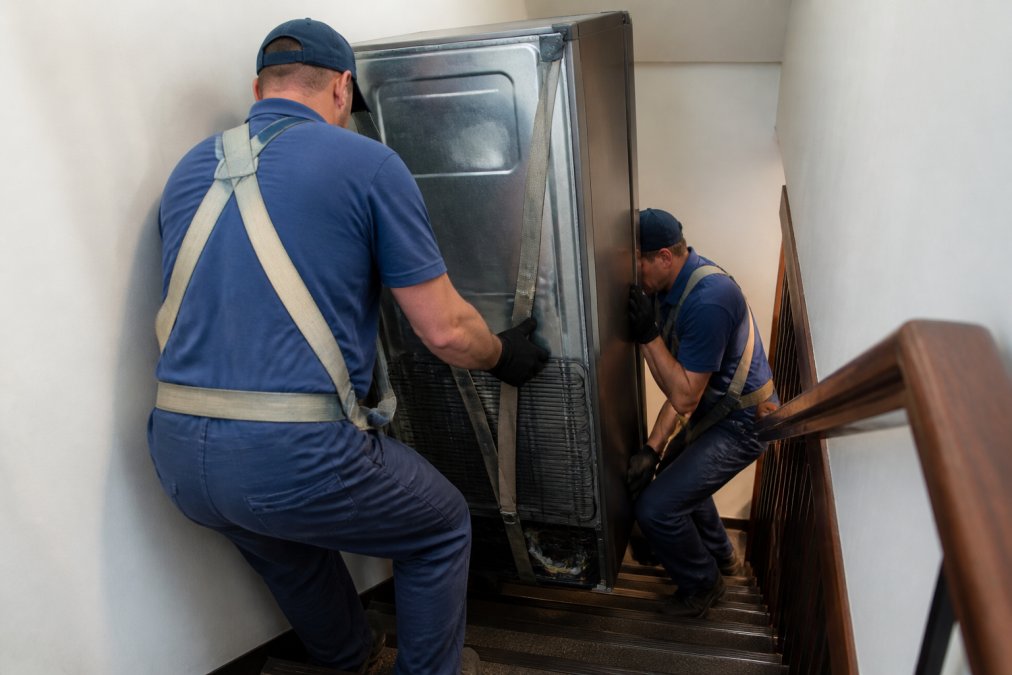
Equipment and tools are the first line of defense. Professional crews use appliance dollies, furniture sliders, lifting straps, and equipment specifically designed for moving heavy items. A refrigerator dolly has a specialized frame that distributes weight and prevents tipping. Furniture sliders reduce friction and protect flooring while reducing the force needed to move items. These tools aren't luxuries, they're injury-prevention essentials.
Team coordination matters more than raw strength. Two people moving an appliance with proper technique outperform one person attempting to muscle it alone. Professional crews communicate constantly: "Lift on three," "Pivot left," "Watch the corner." This coordination prevents sudden movements that cause injury.
Proper body mechanics are non-negotiable. Lifting from the legs, not the back; keeping the load close to the body; and avoiding twisting motions while holding weight all reduce injury risk. Crews are trained in these techniques and follow them consistently, even when fatigue sets in during multi-item removals.
Pathway assessment happens before any item moves. Crews identify tight corners, narrow doorways, and stairwell obstacles. If a refrigerator won't fit through a doorway, crews determine whether it can be tilted, rotated, or disassembled. This planning prevents damage to the appliance and the home, and prevents the injury that results from forcing an item through an impossible space.
Protective gear includes gloves, steel-toed boots, and sometimes back support. This gear protects against cuts from sharp metal edges, crushed toes, and strain injuries.
DIY removal skips all of this. The average homeowner lacks equipment, training, and the physical conditioning that comes from moving heavy items daily. The injury statistics are stark: back injuries from lifting are among the most common reasons people seek emergency care. Professional removal eliminates this risk entirely.
Conclusion
Can junk removal companies handle heavy appliances? Absolutely, and they do it far more safely and responsibly than DIY removal. Professional crews understand the technical requirements of appliance disposal, from refrigerant recovery to environmental compliance. They have the equipment, training, and experience to move heavy items without damaging your home or injuring themselves.
When you need appliances removed, Mike's Top Junk Removal delivers same-day and next-day availability with upfront, transparent pricing and free estimates. Our family-owned approach means you work with a team that takes responsibility for proper disposal, whether items are recycled, donated, or scrapped. Get your free estimate today and reclaim your space with confidence.
Frequently Asked Questions
What items will junk removal services not take?
Most junk removal companies decline hazardous materials like paint, chemicals, batteries, and electronics with intact refrigerants (without proper EPA-certified recovery). Some avoid items requiring special disposal permits or those too large for their trucks. Always confirm restrictions before scheduling. Mike's Top Junk Removal can advise on what we handle during your free estimate call.
How much does appliance removal typically cost?
The cost of appliance removal depends on the appliance type, quantity, accessibility, and your location. Refrigerators and freezers (which require refrigerant recovery) may cost more due to EPA compliance. For accurate pricing tailored to your situation, contact Mike's Top Junk Removal for a free estimate, we provide upfront pricing with no hidden fees.
Do junk removal companies recycle appliances?
Yes, many junk removal services partner with recycling facilities to divert white goods from landfills. Appliances contain valuable scrap metal and materials that recyclers recover. When you hire a professional service, ask about their recycling practices. This keeps your items out of landfills and supports environmental compliance with EPA standards.
What are the safety regulations for disposing of appliances with refrigerants?
The EPA requires certified technicians to recover refrigerants from air conditioners and refrigeration units before disposal. This prevents ozone-layer damage and environmental harm. Professional junk removal companies follow these EPA regulations for appliance disposal and have trained crews to handle refrigerant recovery safely, ensuring legal and responsible removal.
This article was written using GrandRanker