

Table of Contents
- Why Hidden Fees Matter in Junk Removal
- What Factors Affect Junk Removal Pricing
- Common Hidden Fees to Watch For
- Questions to Ask Junk Removal Companies Before Booking
- Red Flags in Junk Removal Service Contracts
- How to Get an Accurate, Transparent Quote
- Full-Service Removal vs. Self-Haul: Cost Comparison
- Conclusion
Last Updated: August 15, 2026
Why Hidden Fees Matter in Junk Removal
A homeowner calls for a garage cleanout estimate at $300 and ends up paying $450 after fuel surcharges, disposal fees, and labor charges for the refrigerator. This happens regularly because the junk removal industry operates with pricing opacity that catches customers off guard.
Avoiding hidden fees in junk removal protects both customer and business. When you book a service, you deserve to know exactly what you're paying. At Mike's Top Junk Removal, we believe transparent pricing builds trust and prevents disputes. Hidden fees generate negative reviews that hurt local companies more than national chains.

What Factors Affect Junk Removal Pricing
Junk removal pricing depends on multiple variables. The most common pricing models are volume-based pricing and weight-based pricing.
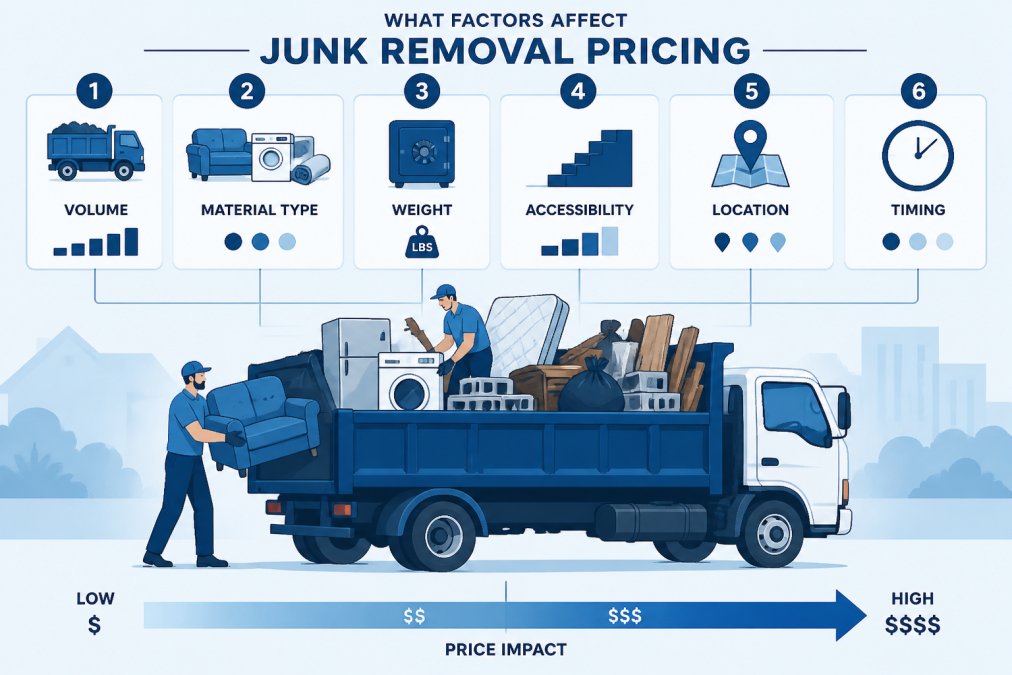
Volume-Based vs. Weight-Based Pricing
Volume-based pricing charges according to space occupied in the truck (quarter load, half load, full load). This model is common in residential settings because it's simpler to estimate visually. Weight-based pricing charges according to item weight and requires weighing at a transfer station. It protects the junk removal company from absorbing losses on heavy, low-volume items like appliances or construction materials. Understanding which model applies prevents post-service disputes.
Labor-Intensive Items and Special Handling
Some items require extra labor, equipment, or disposal procedures. These include appliances, electronics, mattresses, and hazardous materials. Appliance recycling carries regulatory requirements, refrigerators and air conditioning units contain refrigerants that must be recovered by certified technicians before disposal. Electronics recycling requires proper handling to recover valuable materials and prevent environmental contamination. Mattress disposal often incurs extra charges because landfills charge premium fees for the disproportionate space they consume.
Disposal Fees and Environmental Surcharges
Once items reach the transfer station, disposal fees apply. These vary by location and material type. Environmental surcharges are increasingly common as regulations tighten. Hazardous waste, paint, chemicals, batteries, and electronics incur premium disposal fees. Fuel surcharges have become standard industry practice as transportation costs fluctuate. A transparent company itemizes each charge so you see exactly where your money goes.
Common Hidden Fees to Watch For
Hidden fees are charges not disclosed upfront or appearing on your final invoice without prior warning.
Fuel Surcharges and Distance Fees
Fuel surcharges are legitimate business expenses, but they're often vague or applied inconsistently. A company might quote $300 for a full-truck load, then add a 15% fuel surcharge at the end. Distance fees apply if you're outside the primary service area or far from the transfer station. When getting a quote, ask: "Does the price include fuel surcharges, or will those be added?" and "Are there distance fees if I'm at the edge of your service area?" Write the answers down and confirm them in your written quote.
Minimum Load Charges and Binding Quotes
A minimum load charge ensures the company covers overhead even for small jobs. A binding quote is a price the company commits to in writing, regardless of what they find on-site. A non-binding quote can change if the crew discovers more items or complex removal conditions. Always ask: "Is this quote binding, or can it change?" Request the answer in writing.
Post-Service Billing Disputes
Post-service billing disputes occur when a company bills for charges not discussed before the job. Protect yourself by photographing the job site before the crew arrives. If the crew encounters unexpected obstacles, discuss additional charges immediately, not after work is complete. Get any changes to the original quote in writing before the crew leaves.
Questions to Ask Junk Removal Companies Before Booking
1. Is your quote binding, or can it change after you arrive? A binding quote protects you. If not binding, ask what specific conditions might change the price and get them in writing.
2. What's included in your base price, and what costs extra? Force specificity. Ask: "Do you charge per ton, per item, or per trip to the transfer station? How much?"
3. Are fuel surcharges, distance fees, and environmental surcharges included in the quote or added later? Write down the answer.
4. What happens if you find items you didn't expect or conditions that are more difficult than anticipated? Get a clear protocol. Do they call for approval before charging extra?
5. Do you charge for appliance recycling, e-waste disposal, or hazardous material handling? Ask for specific fees upfront.
6. What's your cancellation policy, and are there fees if I need to reschedule? Understand your flexibility.
7. Can you provide a written quote before I commit? Never book based on a phone estimate alone.
8. What's your process if I dispute a charge after the job? Reputable companies have clear dispute resolution procedures.
9. Do you handle all types of items, or are there materials you won't take? Some companies refuse certain items and may refer you elsewhere at additional cost.
10. Are you licensed, insured, and bonded? Verify credentials. Licensed and insured companies are more accountable.
Red Flags in Junk Removal Service Contracts
A service contract protects you against disputes and hidden fees. Learning to spot red flags protects you before you sign.
Contractual Red Flags to Identify
Vague pricing language like "pricing based on items found on-site" gives the company unlimited flexibility to increase charges. Demand specific pricing or a clear formula. No cancellation deadline means the company can cancel with no notice and no penalty. Unlimited liability waivers expose you to damage without recourse. Automatic price increases based on "market conditions" allow the company to raise prices after you've committed. No itemization requirement means the company can charge without explaining each charge.
Understanding a Junk Removal Service Contract Template
A fair contract includes: Clear scope of work listing items to be removed and service date; Fixed pricing stating total cost upfront; Itemized charges breaking down base removal fee, disposal fees, labor surcharges, and fuel charges; Cancellation policy specifying advance cancellation without penalty; Liability and insurance stating company responsibility if damage occurs; Payment terms specifying when payment is due; and Dispute resolution outlining the process if you disagree with charges.
Before signing, read carefully. If language is unclear, ask for clarification in writing.
How to Get an Accurate, Transparent Quote
Getting an accurate quote requires the right approach. A phone estimate is a starting point, but an on-site estimate is the only way to get a truly accurate price for avoiding hidden fees in junk removal.
On-Site Estimates vs. Phone Quotes
A phone quote is fast but imprecise. An on-site estimate is more accurate because the crew physically assesses items, measures doorways and stairwells, and evaluates accessibility. They identify labor-intensive items requiring special handling and see whether items are fragile, hazardous, or require certification. This translates into a more precise quote.
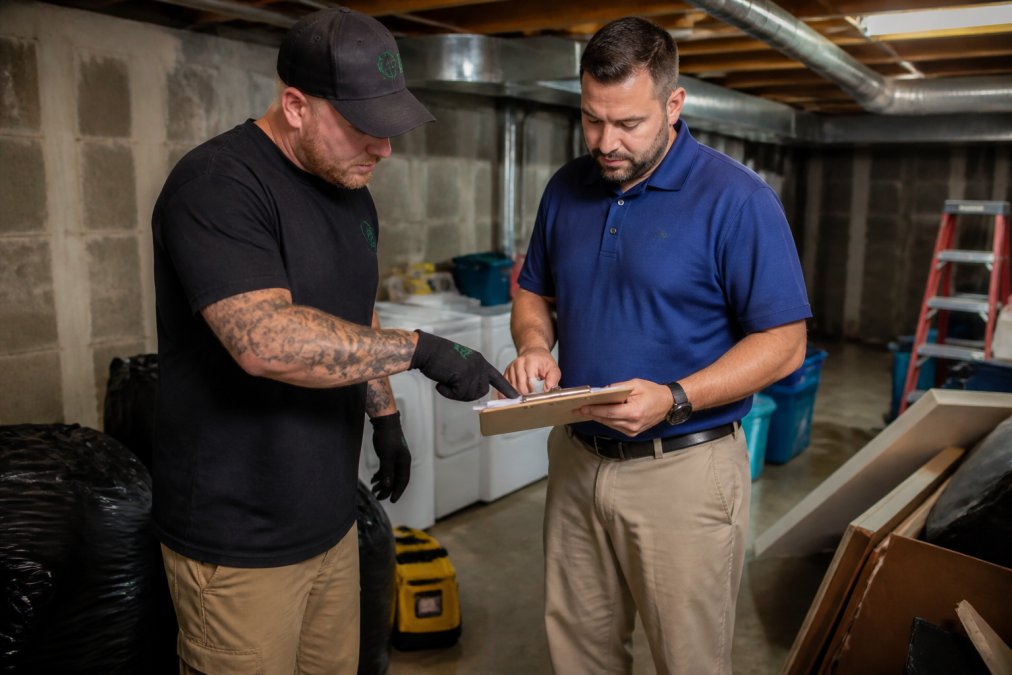
For jobs over $300, the accuracy is worth the inconvenience. Mike's Top Junk Removal provides free on-site estimates specifically because accurate pricing prevents disputes and builds trust. When scheduling an estimate, be specific about what you need removed.
Requesting Itemized Breakdowns
An itemized breakdown shows exactly what you're paying for: base removal fee, volume or weight, disposal fees, special handling charges, fuel surcharge, distance fee (if applicable), and taxes. When you receive a quote, check that every charge is itemized. If it just says "Total: $450," ask for a breakdown. A company that won't provide itemization is hiding something.
Full-Service Removal vs. Self-Haul: Cost Comparison
Full-service removal means the company picks up items from your home, loads them, transports them, and disposes of them. You don't lift anything or drive anywhere. Full-service removal typically costs $200-600 depending on volume and location.
Self-haul means you load items into your vehicle, drive to a transfer station, unload them, and pay disposal fees. Disposal fees typically range from $20-100 per trip. Self-haul is cheaper upfront but demands your time, physical effort, and vehicle space.
For most homeowners, full-service removal is worth the cost. You're paying for convenience, safety, and compliance. You don't risk injury moving heavy appliances. You avoid multiple transfer station trips. Mike's Top Junk Removal's residential junk removal service handles the entire process so you avoid the hassle and hidden transfer station fees that catch self-haulers off guard.
Conclusion
Hidden fees in junk removal erode trust and create financial uncertainty. By understanding pricing factors, asking the right questions, and demanding itemized quotes, you protect yourself and ensure fair pricing. The most transparent companies, those providing free estimates, itemizing charges, and committing to binding quotes, are worth booking. When you're ready to clear out your space without worrying about surprise bills, Mike's Top Junk Removal delivers upfront pricing, same-day and next-day availability, and the reliability of a family-owned business. Get your free estimate today and see how transparent junk removal pricing actually works. Visit Mike's Top Junk Removal for residential junk removal services
| Pricing Model | Best For | Accuracy | Hidden Fee Risk |
|---|---|---|---|
| Volume-based (per truck load) | Residential cleanouts, mixed items | Moderate | Moderate |
| Weight-based (per ton) | Heavy items, appliances, construction debris | High | Low |
| Hourly labor | Small jobs, flexible scope | Low | High |
| Flat rate with itemization | All job types | High | Low |
Frequently Asked Questions
What is a hidden junk removal fee?
Hidden fees are charges not disclosed upfront in your initial quote. Common examples include fuel surcharges, minimum load charges, disposal fees for hazardous items like refrigerators or electronics, and labor surcharges for stairs or difficult access. A transparent junk removal company will itemize all costs, including tipping fees, recycling fees, and appliance recycling charges, before you sign any service agreement.
Are junk removal quotes usually binding?
It depends on the company and the terms of your service agreement. A binding quote means the price won't change unless the scope of work changes significantly. Many reputable junk removal services offer binding quotes based on an on-site estimate. Always ask whether your quote is binding and request written confirmation. Be cautious of companies that only provide phone quotes without seeing the actual load, these are more likely to result in post-service billing disputes.
What factors affect junk removal pricing the most?
The primary factors are load size (volume-based pricing), item type (labor-intensive items like appliances cost more), and disposal method. Tipping fees at transfer stations, hazardous waste fees, and fuel surcharges also impact the final cost. Distance from your location and the company's service radius can add surcharges. Understanding whether a company uses volume-based or weight-based pricing helps you anticipate costs and avoid surprises on your invoice.
Do junk removal companies charge extra for stairs or heavy items?
Yes. Most companies charge labor surcharges for items that require extra effort, such as hauling appliances down multiple flights of stairs, removing items from attics or basements, or handling hazardous materials. These labor-intensive items often incur additional fees beyond the base removal cost. Always mention difficult access points and heavy appliances when requesting an estimate so the company can factor these into their binding quote and you won't face unexpected charges later.
This article was written using GrandRanker