

Table of Contents
- Sorting Storm Debris: Yard Waste vs. Structural Debris
- Bulk Yard Waste Collection Guidelines for Curbside Pickup
- How to Bundle Tree Branches for Pickup
- Safety Tips for Storm Debris Cleanup
- When to Call Storm Debris Removal Services
- Mulching, Composting, and Waste Diversion at Home
- Frequently Asked Questions
Last Updated: September 18, 2026
Sorting Storm Debris: Yard Waste vs. Structural Debris
The first step in storm cleanup is separating yard waste after storm into two piles: organic material and everything else. Mixing them is the most common mistake homeowners make, and it causes curbside crews to reject the whole pile.
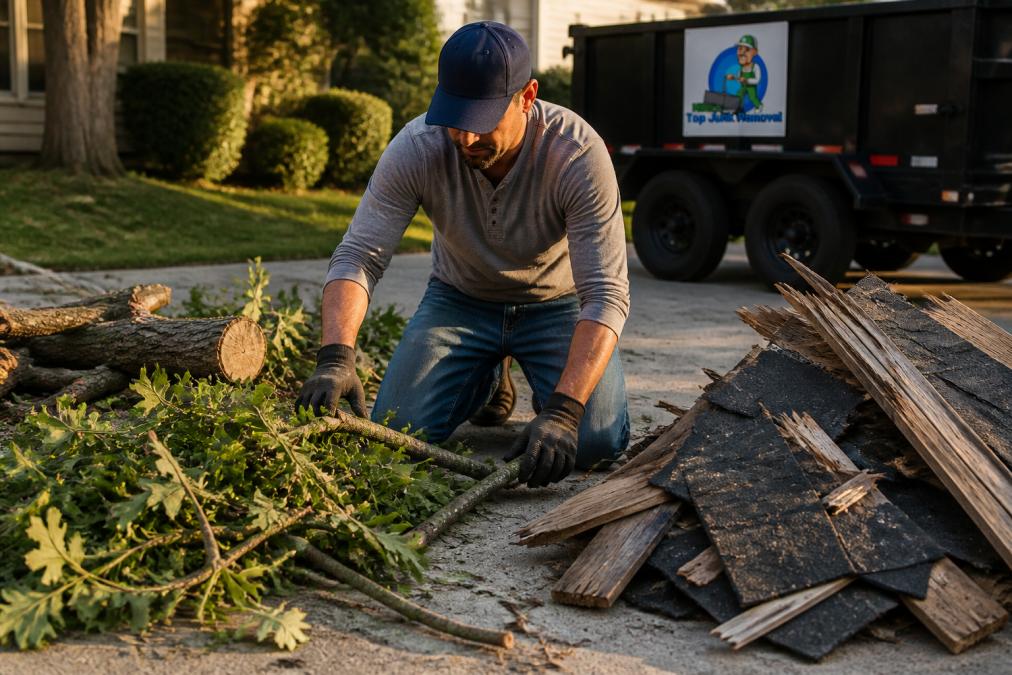
What Counts as Organic Yard Waste
Organic yard waste is any debris that once grew. That includes:
- Tree limbs and branches of any size
- Leaves, twigs, and pine needles
- Grass clippings and sod
- Hedge and shrub trimmings
- Garden plants and vines
- Logs and stumps from downed trees
Non-Organic Storm Debris That Needs Separate Disposal
Structural debris needs a different path. Keep these out of your yard waste pile:
- Fence panels, posts, and rails
- Roof shingles and flashing
- Treated lumber and plywood
- Concrete, brick, and asphalt
- Metal siding and gutters
- Glass, screens, and window frames
Bulk Yard Waste Collection Guidelines for Curbside Pickup
Curbside rules vary by city, but most bulk yard waste collection programs are built around three levers: how much you can set out, how it must be prepared, and when it can sit at the curb. Miss any one and the pile gets tagged.
How Bulk Collection Programs Usually Work
Most municipalities run yard waste collection on one of three models:
- Scheduled seasonal pickup, a set week or two each month during growing season, often spring through late fall.
- On-call bulk pickup, you contact the public works department or your hauler and request a pickup, then set material out on an assigned date.
- Storm-specific collection, after a declared event, the city or county runs a separate pass for storm debris, sometimes with different rules than routine yard waste.
Set-Out Windows and Scheduling
Most programs specify a window, not a permanent pile:
- Material goes to the curb no earlier than the evening before your collection day.
- Empty containers come back in within 24 hours of pickup.
- Bulk piles left out for more than a set number of days can be cited as a nuisance or public health issue.
- On-call pickups usually require scheduling days or weeks ahead, especially after a storm when the queue is long.
If your city runs a storm-specific pass, watch for the start date and cutoff. Material set out after the cutoff rolls into the next routine cycle or becomes your responsibility.
Weight, Length, and Volume Limits
These numbers get piles rejected. Exact figures vary, but these ranges are common:
- Branch diameter, usually capped around 4 to 6 inches. Anything thicker is treated as a log and often excluded.
- Branch length, typically 3 to 4 feet for bundled material; some programs allow up to 6 feet for loose brush.
- Bundle weight, usually 35 to 50 pounds, sized so one worker can lift it.
- Container weight, often capped around 50 pounds for a full can or bag.
- Weekly volume, many programs limit you to a set number of bags, bundles, or cubic yards per week.
Bagging, Bundling, and Container Rules
Follow these requirements to avoid a rejected pile:
- Use brown paper yard waste bags or a reusable container for loose material.
- Never use plastic bags for yard waste, plastic does not break down in a compost facility and a single bag can foul an entire batch.
- Bundle branches with natural twine, not wire, rope, or plastic strapping.
- Stack branches parallel, thick ends facing the same direction, so a claw can grab the bundle cleanly.
- Keep loose brush facing one direction rather than tangled.
- Set containers and bundles at the curb or in the designated right-of-way, never in the street or blocking a sidewalk, driveway, or storm drain.
Prohibited Items in Yard Waste Streams
These items almost never belong in a yard waste container:
- Plastic bags and wrap
- Treated, painted, or pressure-treated wood
- Rocks, dirt, and sod with soil attached
- Animal waste
- Food scraps
- Anything metal, synthetic, or construction-related
municipal yard waste and brush collection guidance
How to Bundle Tree Branches for Pickup
Bundling is where most homeowners lose a pickup. The rule: if a crew member cannot lift it with one hand, it is too heavy or too long. How to pass inspection the first time:
- Cut limbs into lengths that match your city's limit, often 3 to 4 feet.
- Stack pieces parallel to each other, thick ends on the same side.
- Tie the bundle with natural twine in at least two places.
- Keep each bundle light enough for one person to lift.
- Set bundles parallel to the curb, not blocking the sidewalk.
municipal yard waste and brush collection guidance
Safety Tips for Storm Debris Cleanup
Storm cleanup injures more people than the storm itself in many cases. Downed limbs under tension, chainsaw kickback, and heat exhaustion are the big three:
- Never touch a limb near a downed power line. Call the utility first.
- Wear gloves, long sleeves, and sturdy boots.
- Keep both hands on a chainsaw and never cut above shoulder height.
- Take breaks every 30 minutes in hot weather.
- Hydrate before you feel thirsty, not after.
Equipment Rental vs. Professional Removal
Renting a wood chipper or roll-off dumpster makes sense when the pile is manageable and you have time. But rental equipment still needs an operator, a truck, and a place to dump the load.
| Situation | Better Option | Why |
|---|---|---|
| Small pile, weekend free | Rent a chipper | Cheapest way to reduce volume |
| Mixed organic and structural debris | Call a hauler | Two waste streams, one trip |
| Downed trees near structures | Call a pro | Safety and liability risk |
| Large pile, no time | Call a hauler | Same-day or next-day pickup |
When to Call Storm Debris Removal Services
Call storm debris removal services when the pile is too large, too mixed, or too dangerous to handle yourself, downed trees near a home, debris mixed with construction material, or piles exceeding curbside limits.
FEMA guidance on debris removal after a disaster
Mulching, Composting, and Waste Diversion at Home
Mulching and composting keep yard waste out of the landfill and put it back into your soil. A mulching mower shreds leaves and small twigs in place; a home compost pile handles leaves, grass, and small branches over time, turn it every few weeks and keep it as moist as a wrung-out sponge.
- Shred leaves with a mulching mower and leave them on the lawn
- Build a compost pile for grass, leaves, and small twigs
- Chip larger branches for garden mulch
- Route the rest to a municipal compost center
Post-Storm Soil Contamination Risks
This is the step most cleanup guides skip, and it matters most after a flood. Stormwater that backed up through streets, yards, and basements can carry sewage, fuel, oil, industrial runoff, and animal waste onto your lawn and garden beds, where contamination binds to soil particles and can persist for weeks.
Which Storm Debris Is Safe to Compost
Not all storm debris is equal. Before adding anything to a compost pile or garden bed, sort by how the material got there:
- Wind-only debris, limbs and leaves blown down by wind, with no floodwater contact. Generally safe to chip, mulch, or compost.
- Flood-contact debris, anything that sat in standing or moving floodwater, including grass clippings, leaves, and soil. Treat as potentially contaminated.
- Sewage or fuel exposure, debris near a backed-up sewer line, septic overflow, or fuel spill. Do not compost. Bag it and route it to a municipal disposal stream that accepts contaminated material.
- Debris from near structures, shingles, siding, treated lumber, and painted wood. Never compost, even in small amounts.
How to Screen Your Soil Before Reusing It
If your yard flooded, do not use that soil for a vegetable garden this season. A practical screening sequence:
- Wait for the ground to dry. Saturated soil is harder to sample accurately and poses a slip risk.
- Contact your local cooperative extension office. Extension offices provide soil testing, often through a state university lab, and can tell you which contaminants are worth testing for in your area.
- Sample properly. Take multiple small cores from across the affected area, mix them in a clean bucket, and submit the composite. Single-spot samples miss hot spots.
- Test for the right things. Common post-flood panels include bacteria (E. coli, total coliform), heavy metals (lead, arsenic, cadmium), and hydrocarbons if fuel or oil was present.
- Interpret before you plant. A clean result on one panel does not clear the soil for all uses.
Keeping People and Pets Off Contaminated Ground
Until soil is tested and cleared:
- Keep children and pets off saturated ground, especially areas that held standing water.
- Wash hands after any contact with flood-affected soil, even through gloves.
- Do not track soil into the house on shoes, leave them outside and wipe paws.
- Cover bare soil with a tarp or mulch to reduce dust and runoff while you wait for results.
What to Do With Contaminated Yard Waste
Contaminated organic material, flood-soaked leaves, grass, and soil, should not go into a home compost pile or municipal yard waste stream, since both are designed for clean organics:
- Bagging it and setting it out under a storm-specific debris collection if your city runs one.
- Taking it to a municipal solid waste facility that accepts flood-contaminated material.
- Hiring a hauler for mixed or contaminated piles so it does not cross-contaminate clean yard waste.
CDC guidance on floodwater contamination and cleanup safety
Frequently Asked Questions
What should I do with too much yard waste after a storm?
Start by separating organic yard waste like tree limbs, branches, and leaves from structural debris such as shingles or fencing. Check your municipal bulk yard waste collection guidelines for curbside pickup schedules and size limits. If the volume exceeds what your city will take, contact a storm debris removal service that can haul it all in one trip.
How do I bundle tree branches for curbside pickup?
Cut branches into lengths your municipality allows, typically 3 to 4 feet, and tie them into bundles with natural twine or rope. Keep each bundle under the weight limit your waste management department sets, usually around 50 pounds. Place bundles at the curb on your scheduled pickup day, away from mailboxes and storm drains.
Will waste management pick up large tree limbs after a storm?
Many municipal waste management departments offer special bulk yard waste collection after storms, but rules vary. Some require you to schedule a pickup, while others set temporary drop-off sites. Check your city's solid waste management website for storm-specific instructions. If curbside pickup is not available, a professional hauling service can remove large tree limbs and downed trees.
When should I hire professional storm debris removal services?
Hire a professional service when your debris pile exceeds curbside limits, includes heavy items like downed trees or construction debris, or when you need same-day or next-day removal. Professionals also handle the disposal regulations and recycling facility requirements, so you do not have to sort or transport anything yourself.
Storm debris rarely arrives in a convenient size, and sorting it correctly takes time most homeowners do not have after a storm. Mike's Top Junk Removal makes the last step simple with free estimates, upfront pricing, and same-day or next-day availability. Our crew handles the heavy lifting and sorts organic and structural debris for eco-friendly disposal and recycling. Get started with Mike's Top Junk Removal and reclaim your yard without the haul.