

Table of Contents
- Quick Comparison: Bulky Item Pickup Options in Tampa
- Municipal Bulk Trash Pickup Programs
- Same Day Junk Removal for Urgent Cleanouts
- Professional Furniture Removal Service for Heavy Items
- Full-Service Junk Removal Services for Homes and Businesses
- Self-Haul and Waste Drop-Off Locations
- How to Choose the Right Bulky Item Pickup Option
- Frequently Asked Questions
Last Updated: September 16, 2026
Quick Comparison: Bulky Item Pickup Options in Tampa
Bulky item pickup in Tampa comes down to a choice: use the city's curbside program and wait for your scheduled window, or hire a private hauler for same-day service. This guide breaks down options to match your timeline, items, and budget.
| Option | Best For | Scheduling Speed | Labor Included |
|---|---|---|---|
| Municipal curbside program | Single items, flexible timing | Scheduled window | No |
| Same-day junk removal | Urgent cleanouts | Same day | Yes |
| Furniture removal service | Heavy or oversized pieces | Next day | Yes |
| Full-service cleanouts | Whole homes, offices | Same or next day | Yes |
| Self-haul drop-off | Small loads, own vehicle | Immediate | No |
Municipal Bulk Trash Pickup Programs
Municipal bulk trash pickup is a scheduled curbside service run by the city's solid waste department. It's the lowest-cost route because it's funded through existing utility fees, but comes with strict item limits, placement rules, and no help moving anything to the curb. Knowing those limits before you schedule separates a smooth pickup from a citation.
How to Schedule a Curbside Collection Window
Scheduling usually means contacting the city's sanitation department, submitting a request online or by phone, and confirming your address is in the service area. You'll get a collection window rather than an exact time, and items must be at the curb before it opens. Miss it and you'll need a new request.
A few mechanics most guides skip:
- Item caps per window. Most programs limit bulky items per collection on a rolling schedule. Over the cap, split the load across two windows or hire a private hauler.
- Placement rules. Items must sit at the curb, not in an alley, behind a fence, or blocking a sidewalk or storm drain. Some jurisdictions set specific set-out and cutoff times.
- Weight and size limits. Appliances and furniture are usually accepted within a per-item weight limit; anything over needs a separate special collection request.
- Rebooking. If items are missed because they were set out late or placed incorrectly, you generally file a new request and wait for the next window.
Accepted Items and Prohibited Materials
Accepted items generally include furniture, mattresses, and appliances within weight limits. Prohibited materials almost always include hazardous waste, electronics, tires, and construction debris. Check local regulations before setting anything out, because one prohibited item can void the entire pickup.

A practical way to sort before you stage:
- Furniture and mattresses: usually accepted, but must be dry and free of bedbugs or heavy soiling.
- Appliances: often accepted, but refrigerators and freezers may need doors removed, and some programs require refrigerant recovery.
- Electronics and tires: almost always excluded and routed to a separate program.
- Construction debris: typically excluded, even small amounts.
- Yard waste: usually handled under a separate green-waste schedule.
Apartment, Condo, and HOA Rules Most Guides Ignore
In a multi-family building, condo, or HOA community, your bulky item pickup options usually differ from a single-family homeowner's.
- Multi-family buildings often aren't eligible for curbside bulk pickup. Many municipal programs only service single-family and small multi-unit addresses; larger complexes use a private commercial contract arranged by the property manager.
- HOA rules can override the city's. An HOA may limit how long items sit at the curb, ban visible driveway staging, or require screening from the street. A multi-day pickup window can put you in violation even when you follow the city's process.
- Shared dumpster areas are not bulk drop sites. Leaving a couch beside a community dumpster usually violates the waste contract and can result in fees passed back to the unit.
- The practical fix. In a multi-family or HOA community, confirm eligibility with the property manager before scheduling. If the building isn't eligible, a private hauler is usually the only route that avoids a rule violation.
When the Municipal Route Stops Working
The curbside program fits a single couch, mattress, or appliance with no deadline. It stops working when you exceed the item cap, can't move items to the curb yourself, face a closing or turnover deadline, or your building isn't eligible. Then your options are a private hauler or full-service cleanout.
Same Day Junk Removal for Urgent Cleanouts
Same day junk removal is a private on-demand service that sends a crew within hours of your call. Use it when a closing date, rental turnover, or HOA notice leaves no time to wait on a municipal window.
Professional Furniture Removal Service for Heavy Items
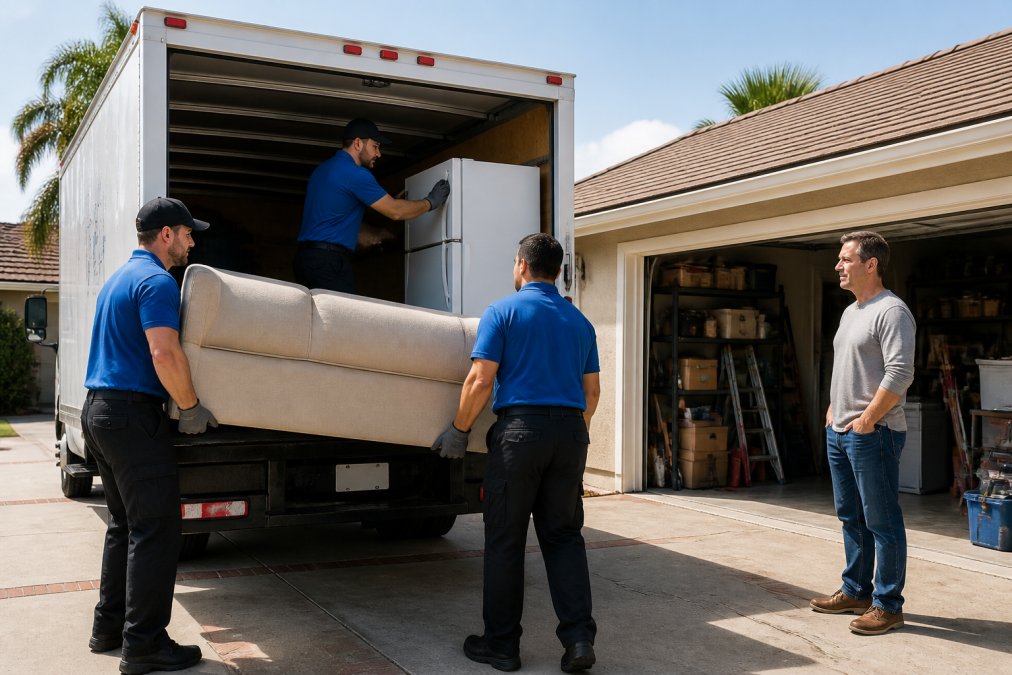
A furniture removal service handles pieces you physically cannot move: sectionals, sleeper sofas, pianos, and oversized dressers. The value isn't just hauling, it's the labor and protection of your doorframes, stairwells, and flooring during the carry-out.
Full-Service Junk Removal Services for Homes and Businesses
Full-service junk removal covers the entire job: labor, loading, hauling, and disposal, with recycling where possible. Mike's Top Junk Removal built its residential and commercial services around exactly this.
Residential Cleanouts and Appliance Recycling
Residential cleanouts handle garages, attics, basements, storage units, and whole-house situations in a single visit. Appliances get separated for recycling rather than landfilled.
Commercial and Construction Debris Removal
Commercial and construction debris removal is built for volume: office cleanouts, warehouse clearing, job site cleanup, and bulk furniture or equipment removal. Flexible after-hours and weekend scheduling keeps work from disrupting business hours, and property managers and contractors get volume pricing for repeat projects.
Self-Haul and Waste Drop-Off Locations
Self-haul means loading your own vehicle and taking items to a transfer station, solid waste facility, or designated drop-off site. It's the lowest-cost route on paper, but only works for small loads, light items, and vehicles that can carry them. The trip fails more often at the gate than on the road, so preparation matters as much as the drive.
Where Self-Haul Loads Actually Go
Most self-haulers end up at one of a few facility types, and each has different rules:
- Transfer stations. Accept household bulky items and route them to a landfill or processing facility. Usually the most flexible option for furniture and mattresses, but they enforce weight limits and accepted-material lists.
- Solid waste facilities and convenience centers. Often the closest option, but frequently restricted to residential waste and may cap trips per household per month.
- Construction and demolition debris facilities. The correct destination for renovation debris, but they typically won't accept household garbage or appliances.
- Retailer and municipal appliance or electronics drop-off events. The right route for refrigerators, freezers, and electronics that curbside programs exclude.
The Rules That Get Loads Rejected
A self-haul trip usually fails for one of a handful of predictable reasons:
- Residency proof. Many facilities require a license, utility bill, or vehicle registration showing you live in the service area. Out-of-area loads are turned away or charged more.
- Vehicle type. Some facilities don't allow trailers over a certain length, and many prohibit unsecured or untarped loads.
- Material separation. Appliances, tires, electronics, and yard waste often must be separated from general bulky items before you arrive. Mixed loads can be rejected outright.
- Refrigerant handling. Refrigerators and freezers generally require refrigerant recovery before disposal, which most residents can't do at home. That single requirement rules out self-haul for many appliance removals.
- Weight limits. Facilities weigh you in and out. A load that looks small can exceed the per-trip limit on the scale.
The Real Cost of Self-Hauling
The sticker price at the gate is only part of the math. The full cost includes fuel for one or more round trips, disposal charges by weight or item, your time, and the risk of a rejected load forcing a second trip. For a single mattress in a pickup, self-haul can make sense. For a garage full of furniture, a refrigerator, and construction debris, the math almost always favors a hauler who takes everything in one visit and handles material separation for you.
A Step-by-Step Preparation Checklist
Run through this before you stage anything:
- Confirm eligibility. Verify your address is in the service area and you have proof of residency.
- Sort by material type. Separate appliances, electronics, tires, yard waste, and construction debris from general bulky items.
- Drain and prep appliances. Empty refrigerators and freezers, remove doors where required, and confirm whether refrigerant recovery is needed.
- Dismantle oversized furniture. Break down bed frames, remove table legs, and disassemble anything that won't fit through your vehicle's opening.
- Wrap and secure mattresses. Bag or wrap mattresses where required, and tarp or strap every load before driving.
- Check weight. Weigh your load or estimate conservatively and confirm the facility's per-trip limit in advance.
- Bring documentation. Carry your license, a utility bill, and the facility's accepted-materials list.
- Confirm hours and cutoff times. Arrive well before the last accepted load time, since many facilities stop intake before the gate closes.
If any step in that list is not something you can complete safely, that is the signal to move to a private hauler rather than risk an injury or a rejected load.
How to Choose the Right Bulky Item Pickup Option
Choosing comes down to four questions: how fast do you need it gone, how heavy is it, how much is there, and do you have a vehicle and a willing back? Answer honestly and the right option picks itself.
- One light item, no deadline: municipal curbside program
- Heavy item, can't lift it: professional furniture removal
- Urgent deadline or multiple units: same-day junk removal
- Whole home, office, or job site: full-service cleanout
- Small load, own truck, want to save: self-haul drop-off
Frequently Asked Questions
How much does bulky item pickup cost in Tampa?
Costs vary by provider and volume. Municipal programs often include collection in your utility bill or charge a per-item fee, while private companies price by truckload or item count. Mike's Top Junk Removal offers free estimates and upfront pricing so you know the total before work begins, with no hidden fees added later.
Can I get same-day bulky item pickup?
Many private haulers offer same-day junk removal when you call early in the day. Mike's Top Junk Removal provides same-day and next-day availability for urgent cleanouts, including weekends and evenings. Municipal curbside programs typically require scheduling several days or weeks ahead, so same-day service is usually only available through a private provider.
What types of items qualify for bulky item pickup?
Standard bulky items include furniture, mattresses, appliances, yard waste, and construction debris. Hazardous materials like paint, chemicals, and tires are usually prohibited from curbside collection. A furniture removal service can handle heavy sofas, dressers, and appliances that municipal crews may refuse. Always confirm the accepted items list with your chosen provider before pickup day.
How should I prepare my items for pickup?
Place items at the curb or designated pickup spot by the scheduled time, remove doors from refrigerators for safety, and keep items dry and accessible. For indoor pickups, clear a path to the items. Mike's Top Junk Removal handles all the heavy lifting, so you do not need to move anything to the curb yourself.
Clearing out a home, garage, or job site is stressful enough without chasing pickup windows or hauling heavy furniture yourself. Mike's Top Junk Removal makes it simple with free estimates, upfront pricing, and same-day or next-day availability, handling everything from single-item furniture removal to full residential and commercial cleanouts. Get started with Mike's Top Junk Removal and reclaim your space without the heavy lifting.