

Table of Contents
- Why Sustainable Spring Cleaning Matters for Tampa Homes
- How to Declutter Your Home Before Spring Cleaning
- Non-Toxic Cleaning Products That Work
- Room-by-Room Spring Cleaning Checklist
- Managing Humidity and Mold Prevention in Tampa Homes
- Disposing of Large Items with Same-Day Junk Removal
- Water and Energy Conservation During Spring Cleaning
- Frequently Asked Questions
Last Updated: October 8, 2026
Why Sustainable Spring Cleaning Matters for Tampa Homes
For Tampa homeowners, sustainable spring cleaning tips protect your home from the region's unique challenges while reducing environmental impact.
Natural cleaning ingredients like vinegar, baking soda, and lemon are just as effective as commercial cleaners for most household tasks.
At Mike's Top Junk Removal, we know spring cleaning often means more than wiping surfaces: clearing out unneeded items, organizing spaces, and hauling away large furniture or appliances.

How to Declutter Your Home Before Spring Cleaning
Decluttering is the critical first step. Skip it and you end up cleaning around clutter, which defeats the purpose. Walk through each room and identify items you haven't used in the past year.
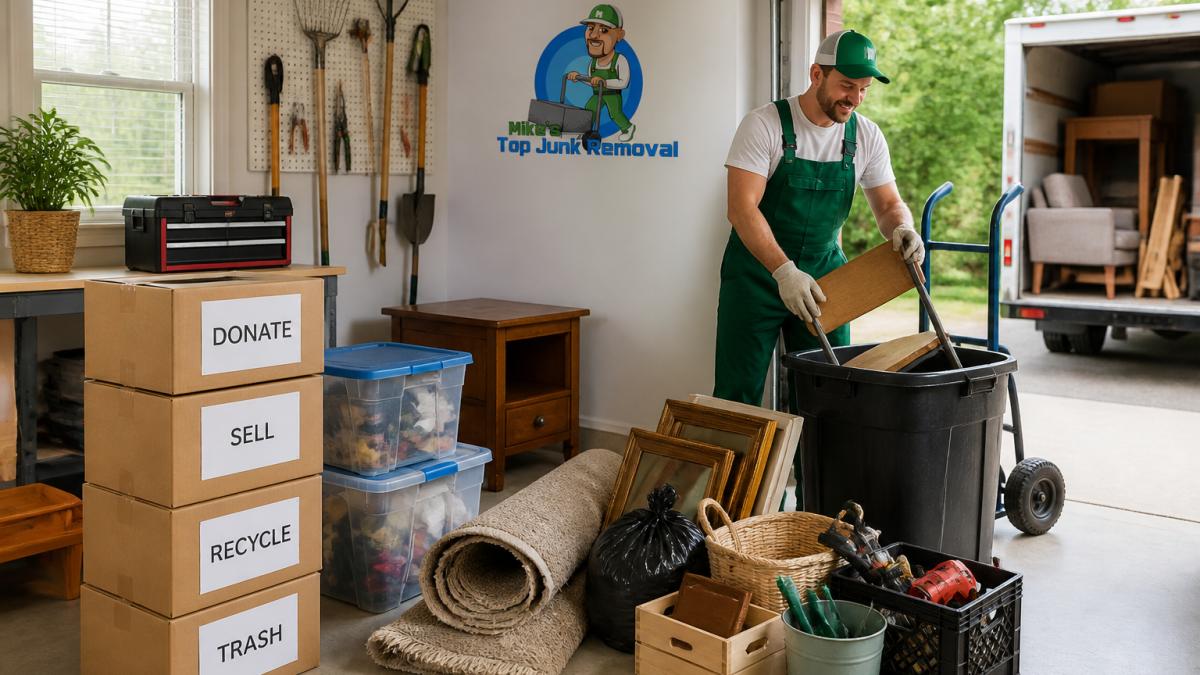
Create three categories as you sort:
- Keep: Items you use regularly or genuinely value
- Donate or sell: Items in good condition you no longer need
- Discard: Broken items, worn-out furniture, or damaged appliances
A Tampa-Specific Decluttering Order
Most guides say work top to bottom. In a humid climate, the smarter sequence is garage, shed, and attic first, then closets, then living spaces. Unventilated storage spaces trap heat and moisture through the spring warm-up, so cardboard, fabric, and particleboard degrade faster there than anywhere else. Clean the kitchen first and you'll haul damp, musty boxes through rooms you already finished.
Work in this order:
- Garage and shed, the highest-volume, highest-moisture zone. Sort tools, lawn equipment, paint cans, and holiday bins.
- Attic and crawl space access, check for water staining, pest damage, and items stored directly on concrete.
- Closets and bedrooms, clothing, linens, and anything that has absorbed humidity.
- Kitchen and pantry, expired food, duplicate appliances, plastic containers missing lids.
- Living areas and home office, cables, paper, decor, and furniture you've been meaning to move out.
The 20-Minute Rule and the Box Test
Two filters keep a declutter from stalling:
- The 20-minute rule: Set a timer per drawer, shelf, or bin. When it rings, decide on every remaining item, no "maybe" pile. Ambiguous piles turn a one-day project into a three-weekend one.
- The box test: If an item has lived in a sealed box for a full year, the box itself is the answer.
Handling the Bulky Items You Decide to Remove
This is where most spring cleaning plans fall apart: sorting is easy, removal is not. Bulky items fall into a few categories, each with a different path:
- Furniture, sofas, mattresses, dressers, and recliners are the most common spring cleanout items. A mattress removal service or furniture removal service handles these.
- Appliances, refrigerators, freezers, washers, dryers, and water heaters require appliance removal near me service because of weight, refrigerant handling, and door-removal safety. A refrigerator disposal service will typically remove doors and haul the unit out safely.
- Garage and attic overflow, a garage cleanout service or attic cleanout services appointment clears accumulated boxes, old exercise equipment, and broken tools in a single visit.
- Outdoor structures and equipment, a shed removal and demolition service covers rotted sheds, and a hot tub removal service handles the awkward, heavy units that can't go to the curb.
Decluttering frees real space. A garage buried under boxes and forgotten seasonal items becomes usable, and a closet packed with unworn clothes holds only what you wear, in a humid climate, that also means less material to absorb moisture and feed mildew.
Non-Toxic Cleaning Products That Work
Non-toxic cleaning products protect your family and Tampa's environment, and you don't need expensive specialty products. Many effective cleaners are already in your kitchen.
Natural Ingredients: Vinegar, Baking Soda, and Lemon
White vinegar cuts grease, dissolves mineral deposits, and kills many household bacteria.
Baking soda is a gentle abrasive and deodorizer. Sprinkle it on carpets before vacuuming, or mix with water into a paste for bathroom tiles and kitchen surfaces.
Lemon juice's acid breaks down soap scum and hard water stains.
Together: vinegar dissolves buildup, baking soda scrubs gently, and lemon adds fragrance and cleaning power.
Choosing Biodegradable and Septic-Safe Products
If you prefer commercial cleaners, look for biodegradable, septic-safe products that break down in your plumbing and don't accumulate in septic tanks or water treatment plants.
Septic-safe matters in Tampa because many homes use septic systems; harsh chemicals can kill the beneficial bacteria in your tank and lead to expensive repairs.
Read labels carefully, "natural" and "eco-friendly" can be marketing language. Look for specific certifications or transparent ingredient lists.
Room-by-Room Spring Cleaning Checklist
A structured approach keeps you from missing areas and makes the work manageable. Work through your home systematically rather than jumping between rooms.
Kitchen and Bathrooms
These rooms need the most attention because they accumulate moisture, soap scum, and food residue.
Kitchen:
- Wipe cabinet fronts and handles
- Clean inside the refrigerator, removing expired items
- Degrease stovetop and backsplash with vinegar solution
- Scrub sink and faucet with baking soda paste
- Clean microwave by steaming vinegar inside for five minutes, then wiping
Bathrooms:
- Scrub tile grout with baking soda and vinegar
- Remove soap scum from shower doors and tub
- Clean mirrors and fixtures with vinegar spray
- Disinfect toilet bowl with vinegar and baking soda
- Wipe down exhaust fan vents to improve air circulation
Bathrooms in humid climates like Tampa need extra mold prevention: run ventilation fans during and after showers, and wipe down wet surfaces.
Bedrooms and Living Areas
These spaces collect dust, pet hair, and allergens that affect indoor air quality. Dust all surfaces including ceiling corners and light fixtures, vacuum under beds, clean window sills and frames, wipe ceiling fans, and launder curtains. Don't forget baseboards and door frames, which collect dust that circulates through your home.
Floors, Windows, and Hard-to-Reach Spaces
Floors and windows make the biggest visual difference.
Floor cleaning:
- Vacuum thoroughly, including under furniture
- Mop hard floors with a vinegar and water solution
- Shampoo carpets or have them professionally cleaned
- Clean grout lines in tile floors
Windows:
- Wash inside and outside panes
- Clean frames and sills
- Squeegee or dry with newspaper for streak-free results
Hard-to-reach areas:
- Dust ceiling fans and light fixtures
- Clean inside air vents and returns
- Wipe window blinds
- Clean behind and under furniture
Managing Humidity and Mold Prevention in Tampa Homes
Humidity is the biggest difference between spring cleaning here and almost anywhere else. Mold and mildew don't need a leak, they need sustained moisture, organic material (dust, paper, fabric, drywall facing), and still air. Spring cleaning is the time to break that combination before the wet season.
Measure Before You Treat
"It feels humid" is not a measurement. A basic hygrometer tells you what's happening in each zone. Most indoor air quality guidance points to keeping relative humidity in the 30-50 percent range, with problems more likely above 60 percent for extended periods.
Check three places separately:
- Living areas, usually controlled by the AC.
- Bathrooms, spike during showers, then linger.
- Garage, attic, and crawl space, often the dampest and least monitored.
Where Moisture Actually Comes From
Mold prevention is moisture control, and moisture has several sources to address during spring cleaning:
- Air conditioning, the AC cools and dehumidifies, but only when it runs. On mild days when it cycles off, humidity can climb even though the house feels comfortable. Run the fan or a dehumidifier during those stretches.
- Bathroom and kitchen exhaust, fans should run during use and 15-20 minutes after. A dust-clogged fan moves far less air; cleaning the grille is part of spring cleaning.
- Clothes dryers, a partially blocked vent pushes warm, moist air back into the room. Check the exterior vent flap.
- Windows and doors, failed seals and worn weatherstripping let humid air in. Check for water staining around frames after spring storms.
- Plumbing and appliance leaks, slow drips under sinks, behind the refrigerator, and around the water heater create the damp, dark conditions mold prefers. Dry any wet area within 24-48 hours.
Surface-by-Surface Prevention
Different surfaces need different treatment:
- Grout and tile, scrub with a baking soda paste, then a diluted vinegar rinse. Keep grout sealed; unsealed grout holds water.
- Caulk lines, inspect around tubs, showers, and sinks. Cracked or blackened caulk should be replaced, not just wiped.
- Painted walls, a diluted vinegar solution (roughly one part white vinegar to one part water) handles light surface mildew. Test in an inconspicuous spot first, and never mix vinegar with bleach.
- Fabric and upholstery, wash or air out anything musty. Sunlight and airflow do real work here.
- Cardboard and paper, these are mold food. Remove damp boxes rather than storing them.
When to Call a Professional
There's a clear line between surface mildew and a problem needing assessment:
- Handle it yourself: small patches (roughly a few square feet) on hard, non-porous surfaces like tile, glass, or painted trim, with no musty smell elsewhere.
- Call a professional: mold that returns within weeks, a persistent musty odor with no visible growth, growth inside wall cavities or HVAC ductwork, or any growth larger than a few square feet. A qualified mold assessor can find the moisture source, cleaning visible mold without finding the water source just resets the clock.
Build Humidity Control Into Your Routine
A few habits keep humidity in check between deep cleans:
- Run exhaust fans during and after every shower.
- Keep interior doors open so air circulates.
- Don't block HVAC returns with furniture or storage.
- Empty dehumidifier reservoirs on schedule, or use a continuous-drain model.
- After spring storms, check for water intrusion at windows, doors, and the foundation line.
Disposing of Large Items with Same-Day Junk Removal
Spring cleaning often uncovers items you want gone: old furniture, broken appliances, boxes from the garage. Hauling these yourself is exhausting and sometimes impossible.
Our Residential Junk Removal service picks up furniture, appliances, yard waste, and general household clutter, doing all the heavy lifting so you don't strain your back moving a refrigerator or worn-out couch.
Mike's Top Junk Removal offers same-day and next-day appointments. Call for a free estimate with upfront pricing, so you know what to expect before we arrive.
Many homeowners combine spring cleaning with a junk removal appointment: you declutter, we haul it away the next day, and you clean your newly empty spaces.
Water and Energy Conservation During Spring Cleaning
Spring cleaning uses water and energy, and small changes reduce both consumption and utility costs.
Fill a bucket rather than running the tap continuously, one bucket cleans multiple surfaces before needing replacement.
Reusable microfiber cloths trap dirt and bacteria with little water and can be washed and reused dozens of times.
Spring cleaning doesn't have to be overwhelming or environmentally harmful.
Frequently Asked Questions
What is the best approach to sustainable spring cleaning?
Start by decluttering and organizing your space, then use non-toxic, biodegradable cleaning products like vinegar and baking soda. Work room by room with a checklist to stay organized. For large items you can't reuse, arrange same-day junk removal to handle disposal responsibly. This approach reduces waste, protects indoor air quality, and ensures proper recycling of unwanted items.
How can I reduce waste while spring cleaning?
Separate items into categories: donate what's usable, recycle materials like paper and cardboard, and arrange professional removal for bulky furniture and appliances. Use reusable cloths and microfiber materials instead of disposable wipes. Choose biodegradable cleaning products that break down safely in water systems. This mindful disposal approach helps manage items responsibly.
Which household cleaners are safer choices for spring cleaning?
Natural cleaning products work effectively without harsh chemicals. Vinegar cuts through grease and mineral deposits, baking soda deodorizes and scrubs surfaces, and lemon provides natural antibacterial properties. Look for products labeled septic-safe and biodegradable. These options protect indoor air quality, reduce water pollution, and are safer around children and pets compared to conventional chemical cleaners.
What should I do with bulky items I no longer need?
For furniture, appliances, and other large items, professional junk removal services handle eco-friendly disposal and recycling. Same-day or next-day pickup options make the process convenient. This ensures items are properly disposed of or recycled. It's especially helpful for renovation debris, old appliances, and broken furniture that can't be donated.