

Table of Contents
- What Counts as Hazardous Waste in a Tampa Rental
- Step-by-Step: How Renters Dispose of Hazardous Materials Safely
- Your Legal Liability for Improper Disposal in a Rental
- Hillsborough County Drop-Off Sites and Collection Events
- How Property Cleanout Services Handle Hazardous Items
- When to Book Same Day Junk Removal for Non-Hazardous Clutter
- Frequently Asked Questions
Last Updated: October 1, 2026
What Counts as Hazardous Waste in a Tampa Rental
Safe disposal of hazardous materials in Tampa rentals starts with knowing which items count as household hazardous waste. These are products that can catch fire, corrode surfaces, or poison people and pets when tossed in a regular trash bin.
Household Chemicals and Liquids You Cannot Toss
Liquid waste is banned from regular trash in most collection programs. That covers more than you might expect:
- Paint thinner, stain, and varnish
- Bleach, ammonia, and drain cleaner
- Pool chemicals and muriatic acid
- Pesticides, herbicides, and fertilizer
- Motor oil, antifreeze, and brake fluid
- Aerosol cans that still hold pressure
Electronics, Batteries, and Paint Cans
Electronics waste and batteries carry toxic substances like lead, mercury, and cadmium. Never place these in a curbside bin.
- Lithium and rechargeable batteries (fire risk in trucks)
- Car batteries (lead acid)
- Old TVs, monitors, and printers
- Cell phones and laptops
- CFL bulbs and fluorescent tubes
- Leftover paint and paint cans with liquid inside
Step-by-Step: How Renters Dispose of Hazardous Materials Safely
Here is the process that works for renters, whether you are in a house, duplex, or apartment complex.
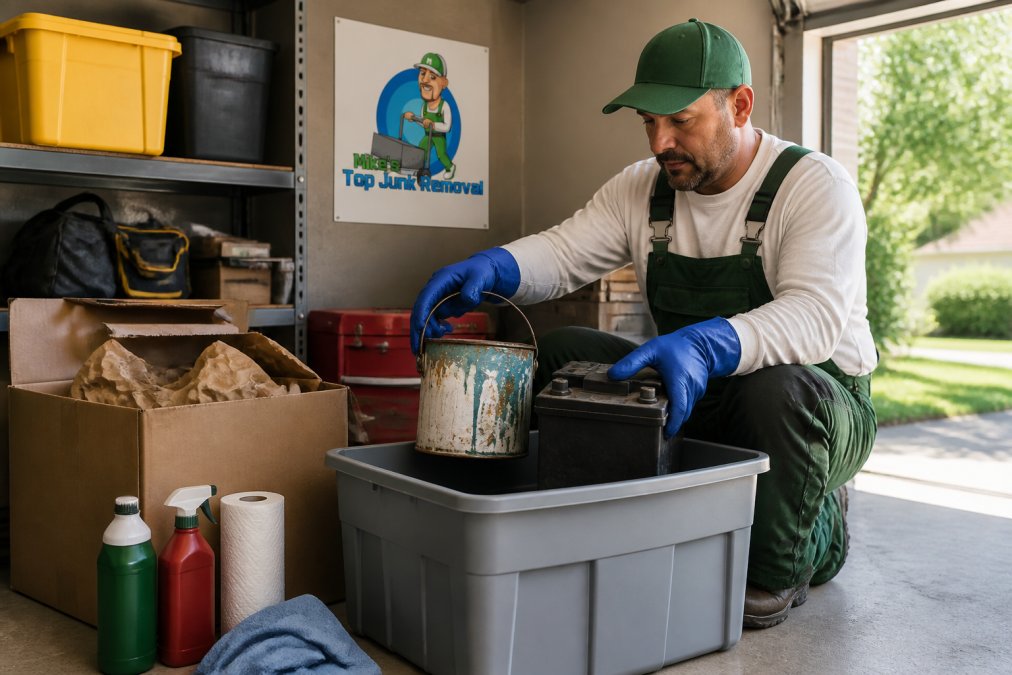
- Read the label. Look for words like flammable, corrosive, toxic, or poison. Those items need special handling.
- Set aside a staging area. Keep hazardous items in a cool, dry spot away from kids and pets. Never store them near a water heater.
- Keep items in original containers. If a label is gone, seal the item in a labeled zip bag and note what it is.
- Never mix chemicals. Combining cleaners or solvents can create toxic fumes or a fire.
- Check your lease first. Many Tampa leases ban storing hazardous items on the property, including on balconies.
- Find the right drop-off. Use a county collection site or a scheduled collection event for household hazardous waste.
- Transport safely. Seal items upright in a sturdy box, keep them in the trunk or truck bed, and drive directly to the site.
- Get help for the rest. Once hazardous items are handled, a hauling service can clear the remaining clutter.
Your Legal Liability for Improper Disposal in a Rental
Improper disposal can land a renter in real trouble. Dumping hazardous waste illegally can trigger fines, cleanup costs, and even criminal charges depending on the material and the amount.
Here is where renters get exposed:
- Lease violations. Most leases require lawful disposal of all waste. Breaking that term can support an eviction filing.
- Cleanup liability. If a spilled chemical contaminates a unit or soil, the responsible party can be billed for remediation.
- Municipal fines. Local codes prohibit placing hazardous items in curbside collection.
- Landlord claims. A property owner can pursue a renter for damage caused by improper storage or disposal.
Hillsborough County Drop-Off Sites and Collection Events
Hillsborough County operates household hazardous waste collection for residents, and renters can use the same sites as homeowners. The county runs a permanent collection site and periodic satellite events, so you have two paths depending on what you are hauling and how soon you need it gone.
Permanent Collection Site
The county's main household hazardous waste facility is the Hillsborough County Household Hazardous Waste Center at 9805 Sheldon Road in Tampa. It is typically open on select weekdays and Saturdays, and hours change seasonally, so confirm the current schedule before you load your car. You can check hours, accepted items, and any residency requirements through Hillsborough County solid waste services.
What to expect on arrival:
- Staff direct you to unload items yourself or with help
- Items must be in original or clearly labeled containers
- No business or commercial waste is accepted at household sites
- Bring proof of residency if asked
- Expect a short wait on Saturdays and around community collection events
Satellite Collection Events
The county also hosts periodic collection events in different parts of the area, often on weekends. These are useful if you live far from Sheldon Road or if you have a small load. Dates and locations rotate, so check the county's schedule before you load up. Events typically accept the same household hazardous waste as the permanent site, but they may not take every item category, so verify before you go.
What Renters Should Know Before They Go
Renters face a few extra steps that homeowners do not:
- Check your lease first. Many leases ban storing hazardous items on the property, including on balconies and in shared garages. If you are staging items before a drop-off, keep them in a locked closet or your vehicle, not a common area.
- Do not leave items unattended. Curbside pickup is not available for hazardous waste. Items left on the curb can leak into storm drains and trigger a fine.
- Bring your lease or a utility bill. If you do not own the property, a lease or utility bill in your name is usually enough to prove residency.
- Transport safely. Seal items upright in a sturdy box, keep them in the trunk or truck bed, and drive directly to the site. Do not make other stops with chemicals in the car.
- Small quantities are welcome. You do not need a full truckload. Half a gallon of paint or a single car battery is fine.
How Property Cleanout Services Handle Hazardous Items
Property cleanout services separate hazardous items from general clutter before anything leaves the property. That step protects the crew, the truck, and you. For renters, the process also protects your lease and your security deposit, because a single banned item in a load can turn a simple haul into a liability claim.
The Renter-Specific Cleanout Workflow
Most cleanout crews follow a similar sequence, but the renter version adds a documentation step that homeowners rarely need:
| Step | What Happens | Why It Matters for Renters |
|---|---|---|
| Walkthrough | Crew flags paint, batteries, chemicals | Keeps banned items out of the truck |
| Set aside | Hazmat staged in one area | Prevents leaks and mixing |
| Document | Items photographed and listed | Gives you a record if a landlord questions what left the unit |
| Route | Items sent to approved sites | Meets county and state rules |
| Haul | Remaining clutter loaded and removed | Clears the unit fast |
What Cleanout Crews Will and Will Not Take
A property cleanout service handles the non-hazardous side of the job. That includes furniture, appliances, mattresses, construction debris, and general clutter. It does not include paint, batteries, chemicals, or other household hazardous waste. Those items need a county drop-off or a collection event.
- You handle: paint cans, batteries, cleaning fluids, pool chemicals, motor oil, and anything with a flammable, corrosive, toxic, or poison label.
- The crew handles: old furniture, mattresses, appliances like fridges and washers, garage and attic clutter, renovation debris, and shed removal leftovers.
Why This Matters During a Turnover
Mike's Top Junk Removal handles the non-hazardous side of that job. We pull furniture, appliances, construction debris, and general clutter in one visit, with free estimates and upfront pricing before we start. We are family-owned and operated, serving Brandon and the surrounding area.
When to Book Same Day Junk Removal for Non-Hazardous Clutter
Once hazardous items are out of the way, the rest of the cleanout is usually a hauling job. That includes:
- Old furniture and mattresses
- Appliances like fridges and washers
- Garage and attic clutter
- Renovation debris from a remodel
- Shed removal and demolition leftovers
Frequently Asked Questions
Can I put paint or chemicals in a standard rental dumpster?
No. Paint, solvents, pesticides, and other household hazardous waste cannot go in a rental dumpster or curbside bin. Liquid waste and toxic substances can leak, contaminate groundwater, and violate local landfill regulations. In Hillsborough County, these items must go to a designated household hazardous waste drop-off site. If you are unsure whether an item qualifies, check the county's accepted items list before you toss it.
What items are considered hazardous waste in residential rentals?
Common hazardous materials in rentals include paint and paint thinners, motor oil, antifreeze, car batteries, household cleaners with bleach or ammonia, pool chemicals, pesticides, fluorescent bulbs, and electronics with lithium batteries. Aerosol cans like spray paint also count. These items require proper containment and disposal at a hazardous waste drop-off or through a licensed solid waste carrier, not regular trash pickup.
Where can I dispose of paint in Hillsborough County?
Hillsborough County operates household hazardous waste collection sites where residents can drop off paint, chemicals, and similar items. Latex paint can sometimes be dried out and placed in regular trash if your local rules allow it, but oil-based paint must go to a collection site. Check the county's waste management page for current locations, hours, and any limits on how much you can bring per visit.
Who should I contact for professional hazardous material removal?
For hazardous items, contact Hillsborough County's household hazardous waste program or a licensed hazardous waste carrier. For non-hazardous clutter like old furniture, appliances, mattresses, and construction debris, a junk removal service can haul everything in one trip. Mike's Top Junk Removal offers free estimates and upfront pricing, and can schedule same day or next day pickups for qualifying non-hazardous loads.
Clearing hazardous materials and leftover clutter from a rental takes two different plans. Handle the paint, batteries, and chemicals through a county drop-off site, then bring in a hauler for everything else. Mike's Top Junk Removal offers free estimates, upfront pricing, and same-day or next-day availability, so you can reclaim your space without the guesswork. Get started with Mike's Top Junk Removal and book your free estimate today.