

Table of Contents
- What Counts as Illegal Dumping Under Florida Law
- Why Rental Property Owners Face Liability for Illegal Dumping
- Deterrence Strategies That Keep Dumpers Off Your Property
- Physical Barriers and Access Control for Vacant Lots and Dumpster Areas
- Reporting Protocols and Evidence Collection for Illegal Dumping
- Commercial Junk Removal for Landlords and Property Managers
- Property Cleanout Services That Reduce Illegal Dumping Risk
- Frequently Asked Questions
Last Updated: September 29, 2026
What Counts as Illegal Dumping Under Florida Law
Illegal dumping is waste disposal on property you do not own or have permission to use, from a mattress at a rental curb to construction debris on a vacant lot.
Why Rental Property Owners Face Liability for Illegal Dumping
Property owner liability for illegal dumping rarely depends on who did the dumping. Under Florida law, waste placed on a property without the owner's consent is still the owner's problem to abate. Code enforcement officers do not investigate intent, they inspect the parcel, document the condition, and issue the notice to whoever holds title.
Code Violations and Fines That Land on the Owner
Code violations for trash accumulation, overgrown lots, and debris are issued to the property, not the person, the notice arrives with your name on it, and the compliance clock starts whether or not you opened the envelope.
What stays consistent is the pattern:
- A complaint triggers an inspection
- The inspector documents the violation with photos
- You receive a notice with a compliance deadline
- Miss the deadline and penalties begin to accrue
- Unpaid amounts can become a lien
- If the city abates the nuisance itself, the abatement cost is added to the lien
Cleanup almost always costs less than a prolonged violation.
What Your Insurance Actually Covers
Most landlords assume their property policy will absorb the cleanup. It usually will not. Standard commercial and dwelling fire policies typically exclude pollution, contamination, and waste-related losses, and illegal dumping sits squarely in that exclusion. Some policies cover vandalism or malicious mischief, but the carrier has to agree the dumping qualifies, and a pile of construction debris on a vacant lot rarely does.
Affirmative Defenses That Reduce Owner Exposure
Liability is not automatic. Florida code enforcement practice generally recognizes defenses when the owner shows the violation was caused by an act outside their control and they acted promptly to correct it:
- A police report documenting the dumping as a criminal act by an identified or unidentified third party
- Photographs and camera footage showing the waste appeared without the owner's knowledge
- A written record of prompt abatement once the owner learned of the condition
- Documentation that the property was secured and maintained before the incident
The Tenant-Side Risk Landlords Underestimate
Landlords also face a second layer of risk that has nothing to do with the city. Tenants beside a dumping hotspot may break their lease, withhold rent, or report the property themselves. Under Florida residential tenancy law, a landlord must maintain the premises in a habitable condition, and recurring waste accumulation can be framed as a breach of that duty.
Deterrence Strategies That Keep Dumpers Off Your Property
Deterrence works best when it raises the effort and the risk of dumping. Most illegal dumping is opportunistic. Someone with a truckload of debris picks the easiest unlit, unwatched spot they can find.
Proven deterrents for rental properties include:
- Motion-activated lighting over dumpster pads and back gates
- Locked dumpster enclosures with restricted access
- Clear signage stating no dumping and listing the penalty
- Trimmed landscaping that removes hiding spots
- Regular site checks so waste never piles up
Surveillance Cameras, Motion-Activated Lighting, and Signage
Surveillance cameras and motion-activated lighting are the two highest-value deterrents: cameras create evidence, and lights remove the cover of darkness. Place cameras where they capture license plates and faces, not just the dumpster, a camera aimed only at the bin records the act but rarely identifies the person. Post no-dumping notices at every access point noting the area is under surveillance; dumpers who see a camera and a warning usually keep driving.
Physical Barriers and Access Control for Vacant Lots and Dumpster Areas
Access control is the most reliable long-term fix. If a vehicle cannot easily reach the dumping spot, the dumping stops.
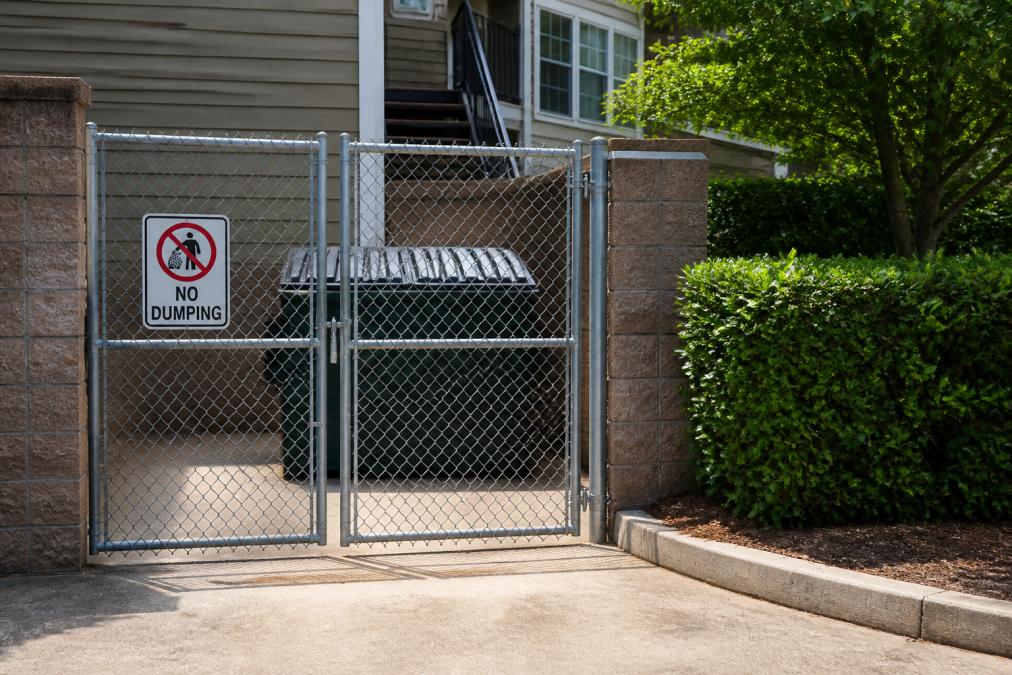
Match the barrier to the site:
Commercial Cleanouts & B2B Services →
| Site Type | Best Barrier | Why It Works |
|---|---|---|
| Shared dumpster pad | Locked enclosure | Blocks after-hours access |
| Vacant lot | Perimeter fence | Stops vehicle entry |
| Alley access | Bollards or gate | Limits truck backing |
| Single-family rental | Motion lights and signage | Low cost, high visibility |
Reporting Protocols and Evidence Collection for Illegal Dumping
A clean reporting protocol turns a frustrating incident into an enforceable case. Document first, then report through the correct channel, the report is only as strong as the evidence attached.
Where to File the Report
There is no single reporting channel. The right one depends on what was dumped and where.
- Code enforcement handles trash accumulation, overgrown lots, and debris on private property. This is the channel that generates the violation notice, so it is the one that matters most for clearing the record.
- The non-emergency police line handles criminal dumping under Florida Statutes Chapter 403. Use this when the volume is large, the waste is hazardous, or you have identifying information about the dumper.
- The county or city solid waste department handles dumping on public rights-of-way, alleys, and easements. If the waste is on the strip between your fence and the street, this is often the correct agency.
- State environmental authorities handle hazardous waste, tires in bulk, and regulated materials. Those cases carry separate penalties and should not be routed through a general code complaint.
The Evidence Standard That Makes a Case Enforceable
Enforcement depends on proof, and proof has a short shelf life. Follow this sequence after finding dumped waste:
- Photograph the waste from several angles before touching anything, including a wide shot that shows the waste in context with the property
- Capture any labels, mail, prescription bottles, shipping boxes, or documents that identify the source
- Note the date, time, and exact location, and record the weather if it affects the scene
- Check cameras and save the footage immediately, many systems overwrite on a rolling schedule
- File a report with the correct agency and request the report number in writing
- Keep your report number and all correspondence in one file
- Schedule removal so the violation clears, and photograph the cleared site
What to Do With Identifying Information
If you find mail, a receipt, or a license plate, do not confront the person, turn the information over to the reporting agency and let them run it. Confrontation creates liability risk and can compromise the case. If your camera captured a plate, save the raw file, not a screenshot; metadata matters, and a screenshot loses the timestamp and device information that makes footage admissible.
Follow-Up That Keeps the Violation Off Your Record
Filing the report is the midpoint, not the end. Follow-up determines whether the violation clears or compounds.
- Confirm the report was logged and get the case number
- Ask what the compliance deadline is and put it on a calendar
- Request a re-inspection once the waste is removed
- Keep the re-inspection confirmation with your records
- If a notice arrives anyway, respond in writing with the police report and the before-and-after photos attached
When to Bring in a Hauler
At some point the reporting and cleanup must happen in parallel. If a compliance deadline is running, do not wait for enforcement to resolve before the waste is gone. Schedule removal, document the cleared site, and attach the removal record to your report file. That combination, report, evidence, and proof of abatement, moves a violation off the property and keeps the lien from attaching.
Commercial Junk Removal for Landlords and Property Managers
Property managers with several units rarely have time to haul debris themselves. That is where commercial junk removal fits.

Property Cleanout Services That Reduce Illegal Dumping Risk
Property cleanout services remove the material that attracts more dumping. An empty, maintained property sends a signal. A cluttered one invites additions.
Frequently Asked Questions
What is considered illegal dumping in Florida?
Illegal dumping in Florida means disposing of waste on public or private property without permission. That includes furniture, appliances, construction debris, yard waste, and household trash left on vacant lots, rights-of-way, or in dumpsters you do not own. Under Florida law, dumping more than 500 pounds or commercial waste is a felony. Smaller amounts are misdemeanors. Property owners can also face code violations if the debris stays on their land.
Are landlords liable for illegal dumping that occurs on their rental property?
Yes, landlords can be held liable. In Florida, property maintenance codes place responsibility for keeping the premises free of trash and debris on the owner, not the tenant. If illegal dumping happens on your rental property and you do not remove it, code enforcement can fine you. Repeated violations can lead to liens. Your best protection is regular inspections, clear lease language, and fast cleanup through property cleanout services.
How can security cameras help deter illegal dumping at rental properties?
Security cameras work as a deterrent because most dumpers avoid sites with visible surveillance. Place cameras at dumpster enclosures, alley access points, and vacant lot entrances. Motion-activated lighting paired with cameras makes nighttime dumping riskier. Footage also gives law enforcement evidence for citations. Even a sign reading '24-hour surveillance' reduces illegal dumping without any hardware installed.
What steps should I take if I find hazardous waste dumped on my property?
Do not touch hazardous waste. Call your local fire department or the Florida Department of Environmental Protection hotline immediately. Keep people away from the area. Document what you see with photos from a safe distance. Hazardous waste like paint, solvents, or medical items requires licensed disposal, not standard junk removal. Once authorities clear the scene, schedule commercial junk removal for any remaining non-hazardous debris.