

Table of Contents
- How to Donate Furniture in Tampa: The Complete Process
- Furniture Donation Requirements and What Organizations Accept
- Furniture Items Not Accepted for Donation
- Furniture Donation Pickup in Tampa: Scheduling and Logistics
- Furniture Removal Service in Tampa: When Donation Isn't an Option
- Donation Receipts and Tax Documentation
- Local Organizations and Drop-Off Locations
- Frequently Asked Questions
Last Updated: October 8, 2026
How to Donate Furniture in Tampa: The Complete Process
Learning how to donate furniture in Tampa clears your space while helping families in need. Several organizations across the area accept household goods and furniture, and understanding what they take and how pickup works makes the process smooth.
At Mike's Top Junk Removal, we help homeowners and property managers clear out unwanted items every day. This guide covers acceptance standards, pickup logistics, and what happens when donation isn't the right fit.

Furniture Donation Requirements and What Organizations Accept
Before you contact a donation organization, understand what they're willing to take. Most charities and thrift stores have specific standards for condition and type.
Condition Standards for Accepted Items
Donated furniture must be in structurally sound condition. That means:
- No broken frames, legs, or support structures
- Cushions intact without major tears or stains
- All drawers, doors, and mechanisms work properly
- No missing parts or hardware
Organizations reject items that pose safety risks: a couch with a broken frame, a dresser with non-functioning drawers, or pieces with odors, smoke, mold, or pet damage. Gently used furniture, normal wear but fully functional and clean, is ideal. Minor cosmetic imperfections are fine; deep stains, rips, or structural problems are not.
Large Appliances and Household Goods
Many organizations accept large appliances alongside furniture:
- Refrigerators and freezers
- Washing machines and dryers
- Ovens and stoves
- Dishwashers
The catch: appliances must work. A refrigerator that doesn't cool or a washer with a broken drum is rejected, since organizations verify functionality before reselling or placing items with families.
Smaller household goods also find homes:
- Lamps and lighting fixtures
- Mirrors and wall art
- Bookshelves and storage units
- Nightstands and side tables
Anything that's clean, functional, and safe to use typically qualifies.
Furniture Items Not Accepted for Donation
Some items never get accepted, regardless of condition. Knowing this upfront prevents frustration.
Organizations universally reject:
- Mattresses and box springs (hygiene and resale concerns)
- Upholstered items with bed bugs, fleas, or pest damage
- Furniture with mold, mildew, or water damage
- Items that smell of smoke or pet urine
Donation centers decline anything they can't resell or place. When furniture doesn't meet acceptance standards, some pieces can be repaired before donation; others require professional removal. That's where junk removal services come in, they handle items charities won't accept and ensure proper disposal.
Furniture Donation Pickup in Tampa: Scheduling and Logistics
Pickup trips people up most because rules vary by organization and item. Some groups run their own trucks on set routes, some rely on scheduled crews, and some only accept drop-offs. Knowing each model before you call saves a wasted afternoon.
How Scheduling Actually Works
Start by contacting the organization directly through its donation hotline or website request form. Have this information ready before you call, because the person on the phone will screen your items in real time:
- Item type and quantity (couch, sectional, dining set, dresser, mattress)
- Condition of each piece, including any stains, tears, odors, or broken mechanisms
- Approximate dimensions, especially for sectionals and oversized pieces
- Where the item sits now (upstairs, garage, curbside, elevator building)
Most organizations confirm acceptance during that call and place you on a route, usually with a multi-hour arrival window rather than an exact time. Some offer next-day or same-week scheduling; others book out further during peak seasons. Ask whether the driver calls ahead and whether you must be home or can leave items in a garage or on a porch.
Pickup Eligibility, Minimums, and Fees
This is where donors get surprised. Pickup is not automatic just because an item is acceptable.
- Minimum item requirements. Many organizations only dispatch a truck for a certain volume, often a few large pieces or a full room's worth. A single lamp or nightstand is usually a drop-off item.
- Service area limits. Pickup routes cover a defined radius or specific counties; if you're on the edge, you may be asked to drop off instead.
- Access requirements. Crews generally won't carry items up or down more than a reasonable number of stairs, and some won't enter attics or tight basements. Tell them about access upfront.
- Possible fees. Some organizations charge for pickup to cover fuel and labor, while others provide it at no charge for qualifying items. Confirm the current policy when you book.
If your situation doesn't meet pickup criteria, a furniture removal service is the practical fallback. A local junk removal provider handles old furniture haul away, appliance removal, and mattress removal service for pieces that fail donation screening, and can often schedule same day junk removal when you need space cleared quickly.
Preparing Your Items for Pickup Day
Preparation is the difference between a five-minute load and a rejected donation. Work through this checklist the day before:
- Clear the path. Move vehicles, unlock gates, and clear hallways so the crew can carry items out without scraping walls.
- Group everything in one place. Stage donated pieces near the exit or in the garage; scattered items slow the crew and risk being missed.
- Clean and deodorize. Wipe surfaces, vacuum cushions, and air out stored items, odor is a common rejection reason.
- Disassemble where it helps. Remove table legs, break down bed frames, and take shelves off bookcases so components load faster and are less likely to be damaged.
- Secure loose parts. Bag hardware, tape drawers shut, and wrap glass or mirrors.
- Photograph each item. Photos support your donation records and any later questions about what was picked up.
- Confirm the appointment. Call or check your confirmation the day before to verify the window and any route changes.
Furniture Removal Service in Tampa: When Donation Isn't an Option
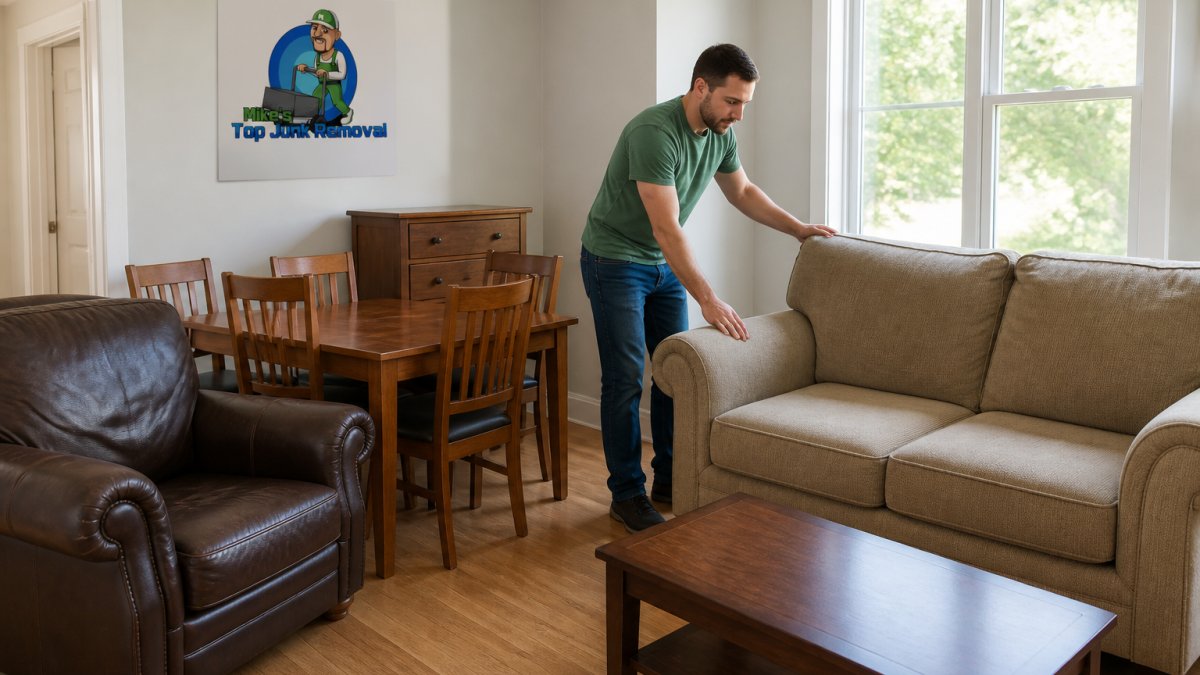
Not all furniture qualifies for donation. Damaged pieces, broken appliances, or items in poor condition need professional removal instead.
This is where Mike's Top Junk Removal comes in. We handle furniture charities won't accept, broken couches, non-functional appliances, water-damaged dressers, and anything else clogging your space, and ensure proper disposal or recycling.
We offer same-day and next-day appointments with upfront pricing, plus a free estimate before we move anything. Our eco-friendly disposal means items are recycled or properly handled, not dumped illegally.
Donation Receipts and Tax Documentation
Many donors want to claim tax deductions for furniture donations, so ask for a written receipt listing:
- Items donated (couch, dining table, dresser, etc.)
- Donation date
- Organization name and address
- Your name and contact information
Keep this receipt for your tax records if you itemize deductions. The IRS allows deductions for charitable donations, and value depends on condition and fair market value, a gently used couch might be worth $150-300, while a broken dresser has minimal deduction value. Organizations typically don't assign values, so you estimate fair market value based on condition and comparable sales.
Local Organizations and Drop-Off Locations
The organizations that accept furniture in this area fall into a few categories, each with different rules for what it takes and how fast it can schedule. Knowing the categories lets you pick the right one instead of calling down a list.
The Main Categories of Furniture Donation Options
| Organization Type | What It Typically Takes | Pickup vs. Drop-Off | What to Confirm First |
|---|---|---|---|
| Thrift and resale stores | Clean, functional furniture, housewares, small appliances | Both, often with volume minimums for pickup | Whether your item meets their condition standard and whether pickup covers your address |
| Charitable assistance organizations | Beds, dressers, tables, and household goods for families in transition | Pickup for larger donations, drop-off for small items | Current item wish list, since needs shift with demand |
| Housing and community development groups | Furniture and building-related goods for housing programs | Varies by local chapter | Local chapter contact, hours, and accepted item list |
| Religious and community organizations | Furniture and household goods for local families | Usually drop-off, sometimes pickup | Whether they are currently accepting furniture at all |
| Nonprofits serving specific populations | Furniture for seniors, veterans, or people exiting homelessness | Case-by-case | Whether your item matches their current client needs |
What to Ask Before You Commit
Every organization has its own acceptance list, and those lists change. Rather than relying on an old directory, confirm these points directly:
- Current accepted items. Ask for the specific list, not a general yes or no. Mattresses, box springs, and upholstered pieces are most commonly restricted.
- Condition standard. Most require items to be clean, structurally sound, and free of stains, tears, odors, and pest damage.
- Pickup availability and lead time. Ask how far out they're booking and whether your address is on the route.
- Drop-off hours and location. Confirm days, hours, and whether there's a dock or designated donation entrance.
How to Match Your Items to the Right Option
A quick way to sort your load:
- Gently used, complete furniture goes to a thrift or resale store or a charitable assistance organization.
- Working large appliances go to organizations that specifically accept and test them.
- Mattresses, damaged upholstery, and broken pieces are usually declined everywhere and need a removal or recycling path instead.
- Small housewares and decor are almost always drop-off items, even when the same organization picks up furniture.
If you're clearing a whole home rather than a single piece, the logistics change. A whole house cleanout, estate cleanout services, or senior downsizing cleanout involves sorting donation-worthy items from everything else, and it's often faster to have one crew handle both donations and disposal in a single visit. The same applies to a garage cleanout service, attic cleanout services, or a property cleanout services project where furniture is only part of the volume.
Never leave items outside a donation location after hours. Unattended drop-offs are treated as illegal dumping, create liability for the organization, and can result in fines. If a location is closed, take your items home and return during posted hours.
When Donation Is Not the Right Fit
Some loads simply don't qualify anywhere, and that's normal. Furniture removal service, old furniture haul away, and appliance removal near me are the practical answers for pieces that fail donation screening.
For larger projects, the same provider often covers estate cleanouts near me, hoarder cleanup near me, foreclosure cleanout, warehouse cleanout services, and commercial junk removal, so you're not coordinating three crews.
Frequently Asked Questions
What furniture items are usually rejected for donation?
Organizations typically reject furniture with structural damage, stains, odors, or missing parts. Mattresses without plastic covers, recliners with broken mechanisms, and couches with rips or tears are commonly declined. Items damaged by water, mold, or pest infestation are not accepted. Always verify condition requirements with the specific organization before scheduling a pickup.
Do furniture donation organizations in Tampa offer pickup service?
Many local organizations offer donation pickup for larger items like sofas, beds, and dressers. Pickup availability depends on the organization and your location within the service area. Contact the organization directly to confirm they serve your address and to schedule a convenient time. Some may require a minimum number of items or have specific scheduling windows.
How do I prepare furniture for donation?
Clean furniture thoroughly, removing dust and debris. Inspect for damage and ensure all drawers, doors, and moving parts function properly. For mattresses, confirm they have a protective plastic cover. Clear a path from your home to the curb or designated pickup location. Take photos of items before pickup day. Have your donation receipt ready if you've already scheduled the appointment.
What should I do if my furniture is not accepted for donation?
If an organization declines your furniture, consider professional furniture removal service. A furniture removal service in Tampa can haul away items that don't meet donation standards, handling the disposal responsibly. This option works well for damaged, stained, or structurally unsound pieces. You'll have the item removed quickly without the hassle of finding alternative drop-off locations.