

Table of Contents
- Why Bed Bug Infestation Changes Mattress Disposal
- How to Wrap a Mattress for Disposal
- Prevent Bed Bugs From Spreading During Removal
- Bed Bug Treatment Before Mattress Disposal
- Mattress Removal Service Options
- What to Do With Your Bed Frame and Bedding
- Disposal Rules and Local Regulations
- Frequently Asked Questions
Last Updated: October 10, 2026
Why Bed Bug Infestation Changes Mattress Disposal
A bed bug infestation transforms a mattress into a contaminated object requiring careful handling, and knowing how to dispose mattress bed bugs safely is essential. Standard disposal methods no longer apply, you cannot donate it or leave it curbside. The infestation demands a different approach to protect your home, neighbors, and anyone who might encounter the mattress.
Disposing of a mattress with bed bugs requires containment, safe removal, and responsible disposal to prevent spread. Bed bugs are hitchhikers that travel in fabric, seams, and crevices, one bug left behind can restart an infestation.
How to Wrap a Mattress for Disposal
Wrapping requires heavy-duty materials and careful technique to contain every bug and prevent escape during handling and transport.
Materials You'll Need
Gather these supplies before you start:
- Heavy-duty plastic sheeting (6-mil thickness minimum)
- Wide, clear packing tape
- Permanent marker
- Work gloves (disposable or washable)
- Protective clothing you can wash separately
- Mattress cover or plastic mattress bag (optional but recommended)
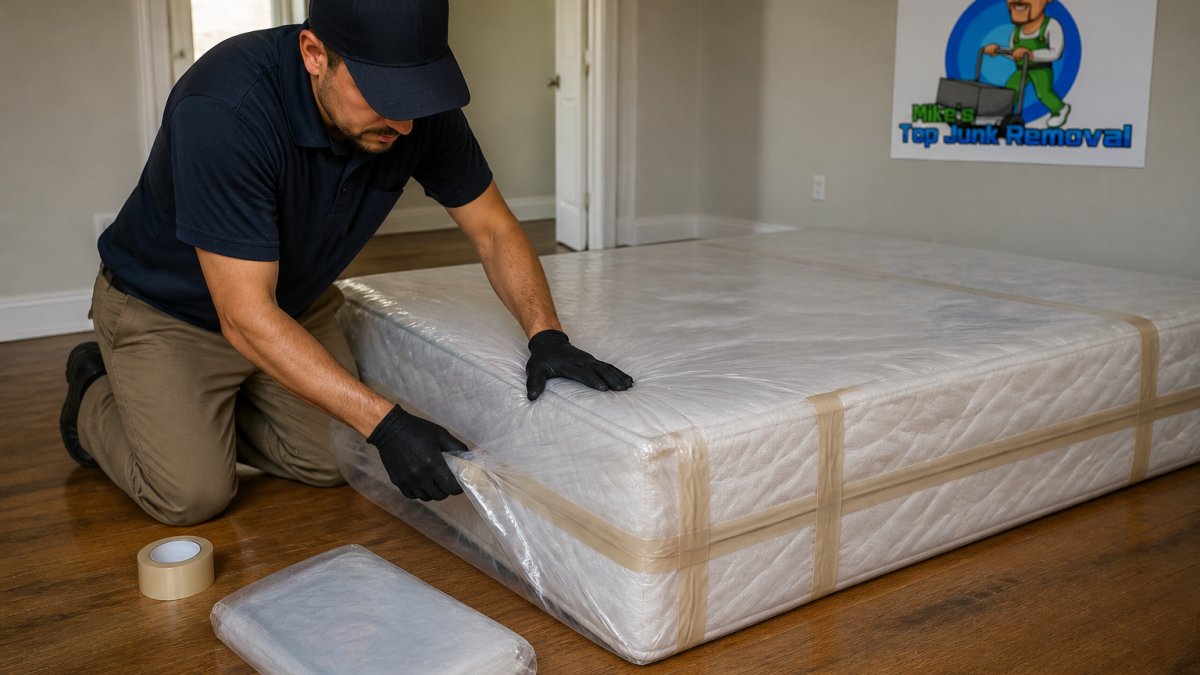
Step-by-Step Wrapping Process
Step 1: Prepare the mattress
Remove all bedding, pillows, and linens. Wash in hot water and dry on high heat to kill bugs.
Step 2: Lay out the plastic
Spread plastic on a clean floor or driveway with 12 inches of overlap on all sides.
Step 3: Roll the mattress onto the plastic
Carefully roll the mattress onto the center of the plastic sheet, working slowly to avoid scattering bugs.
Step 4: Wrap and seal
Fold plastic tightly around the mattress, starting with long sides and securing with wide packing tape. Wrap short ends and fold corners neatly.
Step 5: Label clearly
Write "BED BUGS, DO NOT OPEN" on all sides with a permanent marker to alert handlers.
Prevent Bed Bugs From Spreading During Removal
Bed bugs can migrate to clothing, hands, or other furniture during removal. Clear a path from bedroom to exit and close doors to adjacent rooms. Wear dedicated clothing you can wash immediately in hot water afterward. Vacuum the mattress area after removal and dispose of the bag immediately in a sealed plastic bag outside your home.
Inspect the bed frame, box spring, and headboard carefully. If you see bugs, droppings, or shed skin, these items also need treatment or removal. A mattress removal alone does not solve an infestation if the frame remains infested.
Bed Bug Treatment Before Mattress Disposal
Professional pest control should happen before or during mattress removal. Contact a licensed pest control professional at least one week before disposal. Many recommend heat treatment, which raises room temperature to 118°F or higher for 90 minutes to kill bed bugs at all life stages. Chemical treatments typically require multiple applications over several weeks.
Do not dispose mattress bed bugs before pest control treatment. An untreated, infested mattress can spread bed bugs to the landfill, disposal facility, or anyone who encounters it.
Mattress Removal Service Options
Removing an infested mattress yourself is risky. Professional removal services handle contaminated items safely and dispose of them properly.
Professional Junk Removal for Contaminated Items
Professional junk removal services specialize in removing infested mattresses with proper containment and disposal protocols, offering same-day and next-day availability. Municipal bulk waste collection programs may not accept visibly infested items, so check with your local waste management authority for specific rules in your area.

What to Do With Your Bed Frame and Bedding
Bed frames, box springs, headboards, and bedding can harbor bed bugs and require separate attention. Disposing of the mattress alone without addressing these items often leaves the infestation unresolved.
Inspecting Your Bed Frame
What to look for:
- Live bed bugs (small, flat, reddish-brown insects about the size of an apple seed)
- Shed exoskeletons (tan or brown, paper-thin shells left behind as bugs grow)
- Dark droppings or fecal spots (tiny black or dark-brown specks in clusters)
- Rust-colored stains (blood spots from crushed bugs)
- Musty or sweet odor (a sign of heavy infestation)
Decision framework:
- Light infestation: The frame can often be treated with heat or chemical pesticides during professional pest control. Moderate infestation: Treatment is possible, but many homeowners choose to discard the frame to eliminate uncertainty. Heavy infestation: Discard the frame, as the infestation is too established to treat reliably.
Metal bed frames are easier to treat than wood because bed bugs have fewer hiding places. If your frame is metal and lightly infested, heat treatment or chemical application is more likely to succeed.
Box Springs and Foundation
Inspect the box spring for: bugs or droppings on the fabric covering, damage to the fabric, and signs of infestation on the underside. If infested: Most professionals recommend discarding it along with the mattress. If uninfested: It can remain in the bedroom during pest control treatment, but confirm with your exterminator that the treatment plan includes the box spring.
If you keep a box spring, monitor it closely for several weeks after pest control treatment. Any sign of bugs means it must be removed immediately.
Headboards and Bed Skirts
Headboards, especially upholstered ones, can harbor bed bugs in fabric seams and wooden joints. Bed skirts that touch the floor can also become infested.
For headboards:
- Inspect seams, tufting, and any fabric covering
- Check wooden joints and crevices
- If infested, discard or treat with heat (coordinate with your pest control professional)
- If uninfested, keep it in place during treatment but monitor it for several weeks
For bed skirts:
- Remove and wash in hot water and high heat
- If the skirt is heavily infested or old, discard it
- Do not reuse the same bed skirt until pest control treatment is complete and confirmed successful
Washing and Heat-Treating Bedding
All bedding must be washed and heat-treated to kill bed bugs and eggs.
Washing protocol:
- Place all bedding in sealed plastic bags immediately after removing from the mattress.
- Wash in hot water (at least 130°F). Hot water kills bed bugs at all life stages.
- Dry on the highest heat setting for at least 30 minutes.
- Do not shake out or handle bedding in the bedroom.
- Store clean bedding in sealed plastic bags until your bedroom is fully treated.
Items to replace rather than wash:
- Old or heavily infested pillows (new pillows are inexpensive and eliminate uncertainty)
- Mattress pads with visible bugs or droppings
- Blankets or comforters too delicate for hot water or high heat
Inspecting Nearby Furniture
Bed bugs can spread to nightstands, dressers, and other furniture near the bed. Inspect these items before deciding whether to keep them in the bedroom.
Check:
- Wooden joints and crevices
- Fabric-covered surfaces or upholstery
- Drawers and the underside of furniture
- Areas where the furniture touches the wall or floor
If nearby furniture is infested, it must be treated or removed along with the mattress. If it is uninfested, it can remain in the bedroom during pest control treatment, but monitor it closely for several weeks.
Creating a Post-Removal Checklist
After the mattress and any infested items are removed, follow this checklist to prevent re-infestation:
- Vacuum the bedroom thoroughly, including under the bed frame, baseboards, and closets
- Dispose of the vacuum bag immediately in a sealed plastic bag outside your home
- Wash all bedding in hot water and high heat
- Store clean bedding in sealed plastic bags
- Monitor the bed frame, box spring, and nearby furniture for any signs of bugs
- Follow your pest control professional's treatment schedule completely
- Do not bring new bedding or furniture into the bedroom until treatment is confirmed successful
Coordinating mattress removal with inspection and treatment of related items ensures that disposing of the mattress actually resolves the infestation rather than leaving bugs behind in the frame, box spring, or nearby furniture.
Disposal Rules and Local Regulations
Mattress disposal in most areas requires specific handling, and infested mattresses face additional restrictions that standard disposal rules do not address. Understanding your local rules before you wrap and prepare the mattress prevents delays, legal issues, and improper disposal.
Municipal and County Requirements
Most municipalities prohibit mattresses in regular curbside trash. Infested mattresses often fall outside standard bulk-waste programs because of contamination risk.
Contact your local solid waste management authority to confirm:
- Whether infested mattresses are accepted in bulk pickup programs
- If the mattress must be sealed, labeled, or wrapped before collection
- If the facility requires advance notice or special scheduling
- Whether the mattress can be left curbside or must be brought to a facility
Many facilities require infested items to be clearly labeled "BED BUGS" or "INFESTED." Some refuse infested mattresses and require disposal through a licensed waste management company.
Apartment and Rental Property Rules
If you rent or live in an apartment complex, your lease and building management may have specific mattress-disposal rules. Many apartment leases prohibit residents from leaving items curbside or in common areas. Infested mattresses are often treated as a biohazard and require management approval before removal.
Notify your landlord or property management in writing with details about the infestation and disposal plan. Some properties require professional pest control before mattress removal or require the removal company to be licensed and insured. Getting written approval protects you and ensures compliance with your lease.
Waste-Hauler and Landfill Restrictions
Not all landfills and waste facilities accept infested mattresses. Some require them to be brought by a licensed waste management company rather than individual residents. Others accept them only if they are sealed and labeled.
Call the landfill or disposal facility and confirm:
- Whether infested mattresses are accepted
- What containment or labeling is required
- Whether a resident can drop off the mattress or if a commercial hauler must deliver it
- If documentation (pest control receipt, treatment confirmation) is needed
Others may refuse the mattress and direct you to a specialized medical or hazardous-waste disposal company instead. Calling ahead prevents you from arriving with a wrapped mattress only to be turned away.
Never Abandon a Mattress
Leaving a mattress on a curb or in a public space is illegal in most jurisdictions and creates a public health hazard. Professional junk removal services handle all disposal logistics, know local regulations, and have established relationships with proper disposal facilities.
Frequently Asked Questions
Can I put a bed bug-infested mattress out for regular trash pickup?
No. A mattress with bed bugs should not go out with regular curbside collection. The infestation can spread to collection vehicles and other homes in your neighborhood. Wrapping the mattress in sealed plastic and labeling it as infested is essential. Contact your local waste management or a professional mattress removal service to handle it safely and responsibly.
How do I wrap a mattress with bed bugs before disposal?
Use heavy-duty plastic sheeting or a mattress encasement designed for pest containment. Seal all edges with strong tape, ensuring no gaps. Label the wrapped mattress clearly as 'Bed Bug Infested' or 'Do Not Use.' This prevents the infestation from spreading during transport and protects sanitation workers and the community. Keep the mattress wrapped until it reaches its final disposal location.
Should I treat bed bugs before disposing of a mattress?
Professional pest control treatment before disposal can reduce the risk of spreading the infestation, but it is not always necessary if the mattress is properly wrapped and sealed. Discuss this with your pest control provider. In many cases, disposal of the infested mattress combined with treating the rest of your home is the most effective approach to eliminate the problem.
Can a junk removal service take a mattress with bed bugs?
Yes, professional junk removal services experienced in handling contaminated items can remove an infested mattress. They know how to wrap, transport, and dispose of it safely without spreading the infestation. When scheduling pickup, tell the company about the bed bug infestation so they can prepare and use appropriate containment methods.