

Table of Contents
- Why Junk Removal Costs Belong in Your Maintenance Budget
- How to Get an Accurate Junk Removal Cost Estimate
- Property Cleanout Services for Rentals and Estates
- Commercial Junk Removal for Property Managers and Contractors
- Setting Your Annual Maintenance Budget: A Step-by-Step Framework
- How to Reduce Long-Term Junk Removal Costs
- Frequently Asked Questions
Last Updated: September 30, 2026
Why Junk Removal Costs Belong in Your Maintenance Budget
Junk removal costs are a recurring line item in property ownership, not a one-off emergency expense. Mike's Top Junk Removal sees this constantly: owners treat hauling as a surprise, then scramble when a tenant leaves a garage full of debris. Buildings generate waste continuously, and planned spending beats reactive spending every time.

Treat hauling as an operating expense, not a surprise.
How to Get an Accurate Junk Removal Cost Estimate
An accurate junk removal cost estimate starts with three inputs: load size, material type, and access. Give a hauler those details and you get a real number instead of a range.

Here's how to prepare before you call:
- Photograph the pile from two angles
- Note the heaviest items (appliances, concrete, mattresses)
- Measure doorway and stair clearance
- Confirm whether items sit curbside or inside
Volume vs. Weight: What Drives the Price
Volume drives most residential pricing; weight drives the exceptions. Haulers price by how much truck space your items occupy, because that determines how many jobs fit in a day.
| Pricing Basis | Typical Items | What It Rewards |
|---|---|---|
| Volume | Furniture, mattresses, boxes | Compact, light loads |
| Weight | Concrete, appliances, tile | Small, dense loads |
| Hybrid | Mixed cleanouts | Sorting before pickup |
Property Cleanout Services for Rentals and Estates
Property cleanout services cover the full removal of contents from a unit, estate, or commercial space. They differ from a single-item pickup in scope, labor, and scheduling.
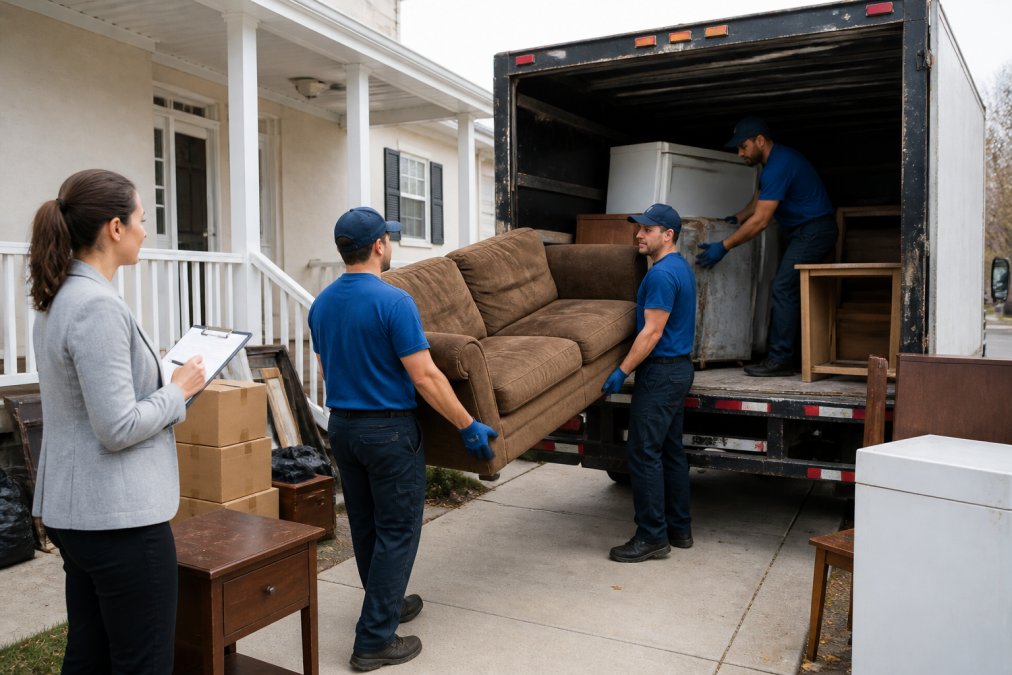
Single-Item Pickup vs. Full Property Cleanout
Single-item pickup suits one mattress, one refrigerator, or one sofa. Full cleanouts suit whole-house and estate work.
| Job Type | Best For | Scheduling |
|---|---|---|
| Single-item pickup | One appliance or piece of furniture | Same-day or next-day |
| Multi-item haul | Garage, attic, or basement | Within a week |
| Full cleanout | Estate, foreclosure, whole house | Scheduled in advance |
Commercial Junk Removal for Property Managers and Contractors
Commercial junk removal runs on schedules, not one-off calls. Property managers and contractors need recurring pickups tied to unit turnover and project milestones.
EPA guidance on construction and demolition debris
Setting Your Annual Maintenance Budget: A Step-by-Step Framework
An annual maintenance budget is a forward-looking plan that assigns spending to predictable property events. For hauling, that means estimating cleanout frequency and cost per event, then building a reserve so a single unplanned cleanout never blows a quarterly line item.
The Five Inputs Every Hauling Budget Needs
- Event frequency, how many turnovers, cleanouts, or debris events occurred in the past 12 months
- Load size per event, single-item, multi-item, or full cleanout
- Material mix, bulky, heavy, or mixed (this drives whether volume or weight pricing applies)
- Access difficulty, stairs, elevators, long carries, and tight doorways add labor hours
- Contingency reserve, a buffer for emergency cleanouts, hoarder situations, and foreclosure timelines
Build It in Five Steps
- List every turnover, cleanout, or debris event from the past year
- Group them by cause (tenant, renovation, seasonal, emergency)
- Estimate the load size for each event
- Multiply by your average cost estimate per load
- Add a contingency line equal to 10-20% of the total hauling budget
Then track actuals against the plan each quarter. If you're consistently over, your frequency estimate is low, not your cost estimate. That's the single most common budgeting error property managers make.
Annual Budgeting Template (Copy This Structure)
Use this table as a starting template. Fill the "Annual Estimate" column using your own historical averages, then reconcile against actuals each quarter.
| Budget Line | Basis | Review Cycle | Annual Estimate |
|---|---|---|---|
| Routine hauling | Loads per month | Monthly | [Your figure] |
| Turnover cleanouts | Units vacated per year | Per lease cycle | [Your figure] |
| Construction debris | Project scope | Per project | [Your figure] |
| Estate / foreclosure cleanouts | Events per year | Per event | [Your figure] |
| Contingency | Emergency events | Quarterly | 10-20% of total |
Recurring Maintenance vs. One-Off Cleanouts
Recurring maintenance is predictable: seasonal debris, routine bulk trash pickup, garage cleanout service on a set schedule. One-off cleanouts are event-driven: a tenant abandons a unit, a foreclosure cleanout is ordered, an estate needs whole house cleanout services.
Hidden Costs to Bake In
Competitors rarely mention these, but they show up on real invoices:
- Disposal fees and surcharges, many facilities add per-ton tipping fees plus environmental surcharges on appliances, mattresses, and tires
- Weight overages, a load priced by volume can flip to weight pricing if it exceeds the truck's limit
- Stair and long-carry labor, usually billed per flight or per hour
- Rejected-load fees, hazardous items like paint, chemicals, or propane tanks force a second trip
- After-hours or weekend scheduling, often carries a premium
Tax Treatment of Maintenance and Junk Removal Costs
For most rental property owners and commercial property managers, routine maintenance, including hauling, cleanouts, and disposal tied to keeping a unit rentable, is generally treated as an ordinary and necessary operating expense. Capital improvements (a full renovation, a structural repair) follow different rules and are typically depreciated over time.
Quarterly Reconciliation Checklist
- Compare actual hauling spend to the annual estimate
- Flag any event that exceeded 150% of its projected cost
- Adjust next quarter's contingency if emergency events are trending up
- Roll unused contingency into a reserve rather than spending it
How to Reduce Long-Term Junk Removal Costs
Long-term savings come from reducing volume and choosing the right service model for each job, not from hunting the lowest quote. Less stuff to haul means lower disposal fees and fewer trips.
The DIY vs. Professional Break-Even Point
Here's a framework property managers can use:
Self-haul makes sense when:
- The load fits in a personal vehicle or small trailer
- All items are accepted at a local transfer station without special handling
- You have the time, labor, and vehicle capacity to move it yourself
- The load is a single material type (all cardboard, all yard waste)
Hiring a full-service team makes sense when:
- The load includes heavy items (appliances, concrete, mattresses, hot tub removal service)
- Access is difficult (stairs, tight doorways, no elevator)
- The load is mixed-material and requires sorting
- Time matters more than labor cost (turnover deadlines, lease start dates)
- The job involves estate cleanout services, hoarder cleanup near me, or foreclosure cleanout work
The decision to use professional service often becomes more practical once a job requires more than one trip, significant labor, or any item that needs special disposal handling. Factors like your own time, vehicle wear, and the risk of a rejected load can influence the apparent savings of self-hauling.
What Actually Works
- Clear units before they fill, small loads cost less per event than large ones, and they prevent a storage room from becoming a full cleanout
- Separate materials at the source, metal, cardboard, and electronics often have separate disposal streams with different fee structures
- Batch pickups, haulers charge for the trip, so consolidating three units into one scheduled visit cuts per-unit cost without cutting service
- Schedule recurring bulk trash pickup, predictable volume often qualifies for standing-arrangement pricing
- Keep a running inventory of what's in storage, garages, and basements so you catch accumulation early
- Use the right service tier, a single-item pickup for one mattress removal service call, a multi-item haul for a garage cleanout service, a full cleanout for whole house cleanout services
Where the Money Actually Goes
Understanding the cost stack helps you target the right line:
| Cost Component | What Drives It | How to Reduce It |
|---|---|---|
| Labor | Hours on site, stair carries | Pre-stage items curbside or in a garage |
| Truck space | Volume of load | Break down bulky items before pickup |
| Disposal / tipping fees | Weight and material type | Separate heavy materials from bulky ones |
| Special handling | Appliances, mattresses, electronics | Batch them into one scheduled pickup |
| Trip charges | Number of visits | Consolidate across units or buildings |
Sustainability and Cost: The Overlooked Lever
Eco-friendly haulers that sort for recycling and reuse can help reduce landfill weight. Ask any hauler how they handle metal, electronics, and appliances.
Common Mistakes That Inflate Long-Term Cost
- Letting a storage room become a dumping ground, it quietly converts a small recurring cost into a large one-time cleanout
- Booking single-item pickups repeatedly instead of batching
- Ignoring access logistics until the crew arrives (stairs and long carries add labor hours)
- Mixing hazardous items into general loads, causing rejected pickups and second trips
- Choosing a hauler on rate alone without confirming what's included (labor, disposal fees, stair carries)
Frequently Asked Questions
How do you calculate a property maintenance budget?
Start by tracking all recurring expenses like landscaping, HVAC service, and plumbing repairs. Then add a reserve for one-time costs such as junk removal costs and property cleanout services. A common rule is to set aside 1-2% of the property's value annually. For rental units, factor in turnover frequency and the average cost per cleanout, which depends on volume and disposal fees.
What factors influence the cost of professional junk removal?
The main factors are load size, weight, labor costs, and disposal fees. Volume-based pricing means you pay for the space your items take up in the truck. Heavy materials like concrete or appliances may incur additional weight limits or landfill surcharges. Hazardous waste disposal requires special handling. Service minimums and your location also affect the final junk removal cost estimate.
How often should property managers schedule junk removal services?
Schedule junk removal during every unit turnover, after major renovations, and at least once a year for common areas. For commercial junk removal, plan quarterly or after any tenant move-out. Proactive scheduling prevents debris from piling up and reduces the need for emergency cleanouts. Many property managers align cleanouts with lease renewal cycles to keep the property presentable.
What are the benefits of hiring professional junk haulers for property cleanouts?
Professional haulers handle all heavy lifting, sorting, and disposal, saving you time and reducing liability. They have the equipment and experience to remove bulky items like furniture, appliances, and construction debris safely. They also ensure proper disposal and recycling, which supports sustainability goals. For property managers, using a full-service hauling company means fewer coordination headaches and faster unit turnover.
Can junk removal costs be tax deductible for rental properties?
In many cases, junk removal for a rental property can be considered a repair or maintenance expense and may be tax deductible. However, if the removal is part of a larger capital improvement, it might need to be depreciated. Consult a tax professional to determine how to categorize your specific cleanout expenses. Keep detailed receipts and itemized invoices for your records.